How to Match Furniture to a Warm Minimal Interior (and Keep the Boho Magic)
Warm minimalism sounds like an oxymoron until you stand inside a Tampines 4-room HDB flat at 7pm, when the late sun hits a single linen curtain and turns the whole living room into honey. I saw exactly this scene last month at my colleague Priya's place in Bedok Reservoir — a 92 sqm resale flat she had just renovated for S$48,000, including S$3,200 on a MIDHILL dining table in solid white oak that anchors the entire open kitchen. The room was sparse. A linen sofa, a low-profile walnut bed frame, two rattan chairs, and not much else. And yet it felt warm. It felt boho style, even though boho usually means colour and clutter. The trick, I realised after three cups of kopi in her kitchen, is not to choose between minimal and boho style — it is to let warm wood, natural fibre, and one or two statement pieces do the heavy lifting.
This guide is written for Singapore homeowners and tenants working with real constraints: HDB lift openings at 1.2m wide, corridor service ducts that limit sofa depth, 9% GST on imported furniture, and a market where solid wood pieces still command a premium over MDF. I will walk through the six pieces that matter most — solid wood sofa, bed frame, dining table, wardrobe, nightstand, and marble table — and show how each one can be chosen to honour both warm minimalism and boho style without blowing the renovation budget.
What does warm minimal even mean in a 90 sqm Singapore flat?
Warm minimalism is a reaction against the cold, white-grey-Scandi look that dominated Singapore Pinterest boards from 2017 to 2022. It keeps the discipline of minimal — restraint, negative space, a single material per surface — but swaps cool whites and chromed steel for warm whites, honey-toned solid wood, limewash walls, and natural fibre. The result reads less like a hotel lobby and more like a quiet beach house in Tulum.
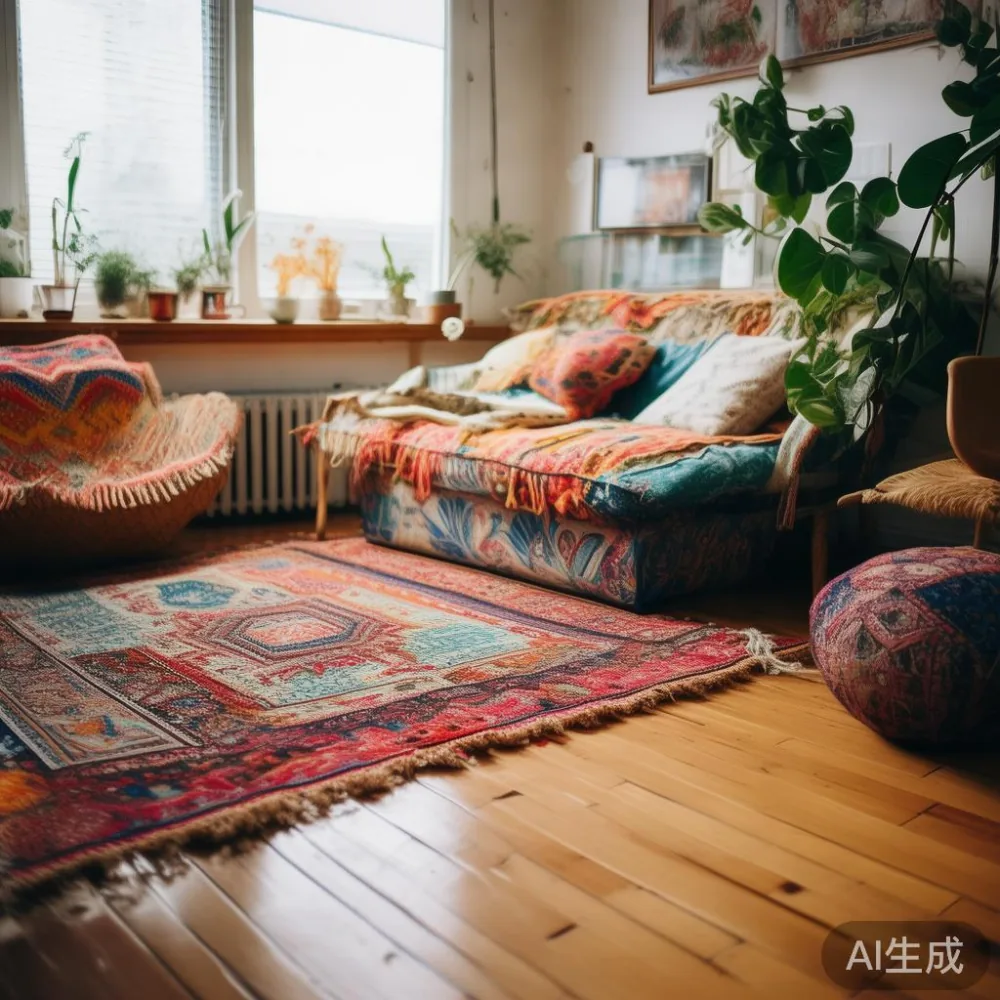
In a compact HDB context, warm minimal matters even more. A cool minimalist room in a 60 sqm Punggol BTO can feel clinical and small. A warm minimal room in the same footprint can feel generous, because warm hues visually recede. Pair this with boho style accents — a hand-thrown ceramic vase, a kilim lumbar cushion, a trailing pothos — and you get the Singapore answer to the trend: the controlled boho style home that feels lived-in but not chaotic.
The four non-negotiables of warm minimal, in my view, are: (1) one warm wood tone used in at least three pieces, (2) one natural fibre in at least two pieces (linen, rattan, jute, abaca), (3) zero high-gloss finishes, and (4) one sculptural accent per room that breaks the grid. Everything else is optional.
How should I start with the big pieces so the room does not feel like a showroom?
Start with the largest piece first. In a Singapore flat, that is almost always the solid wood sofa in the living room or the bed frame in the master bedroom. The logic is simple: these pieces set the wood tone, the seat height, and the visual weight of the room. If you choose them first, every subsequent purchase is reactive and the room stays coherent.
For the sofa, look for a solid wood sofa with a kiln-dried hardwood frame (ash, oak, or rubberwood) and a seat depth of 90–95cm. Softer seat depths around 85cm work for 3-seaters in compact Punggol or Sengkang living rooms, but anything shallower than 80cm will leave tall residents (Singapore average male height is 172cm) feeling perched. Upholstery should be linen or a linen-cotton blend in oatmeal, clay, sage, or sand. Avoid greige. Greige reads cool, not warm.
For the bed frame, the Queen is 152cm x 188cm and the King is 182cm x 188cm — measure your room first, then subtract 60cm on each side for walking clearance. A floor-standing platform bed frame in solid white oak or walnut, with a headboard no taller than 110cm, is the warm minimal default. If you want more character, a low-slung French provincial bed with a subtly carved crown and tapered legs can carry a warm minimal room beautifully. If you have been searching for the best French provincial bed for 2026, look for one with a hand-distressed limewash finish rather than a high-sheen lacquer — the matte patina is what makes the bed read warm rather than costume-y.
Which wood tones and finishes actually look warm on Singapore floors?
Three wood families consistently read warm under Singapore's equatorial light (around 12,000 lux at noon, 3,500 lux at 7pm): honey-toned woods (white oak, ash, natural teak), red-brown woods (acacia, cherry, sap walnut), and chocolate-brown woods (smoked oak, dark walnut). For warm minimal, honey tones are the safest. Red-browns can skew 1990s condo if the rest of the room is not carefully restrained, and chocolate browns compete with dark floor tiles.
Avoid two finishes in the same room: it makes the space look like a furniture showroom instead of a home. If your MIDHILL dining table is white oak with a matte hardwax oil finish, your bed frame should be the same species or one shade lighter, not one shade darker. The 1–2 shade rule applies.
Skip high-gloss polyurethane. In a HDB flat with recessed ceiling lights at 4000K, a glossy dining table reflects the downlights as hot spots and shows every fingerprint, which kills the calm of warm minimal. Matte and satin hardwax oil, or a hand-rubbed oil-and-wax, is what you want.
What is the right dining table size for a 4-room HDB and how do I keep it warm-minimal?
For a standard 4-room HDB dining area (usually 2.7m x 2.4m of usable space after the kitchen door arc), a rectangular dining table of 160cm x 80cm seats six comfortably and leaves 90cm clearance to the wall on each side. A round 120cm table seats four and works better in square dining corners or in Punggol 5-room layouts where the dining zone shares space with the dry kitchen.
My top material pick for warm minimal is solid white oak with a live edge if you can accommodate the irregularity (S$2,400–S$3,800 for a 180cm piece from direct-from-factory Foshan makers), or straight-edge white oak if you want a cleaner grid (S$1,800–S$2,600 for the same size). Solid teak is more expensive in Singapore — usually S$3,200 and up for 180cm — because of shipping weight (a 180cm solid teak table weighs around 65kg) and CITES paperwork. If you are ordering a MIDHILL dining table in solid oak, ask the supplier about the leg profile: tapered round legs in the 6–8cm diameter range read warm and Scandinavian-modern, while thicker 10–12cm square legs read more craftsman and heavier.
Pair the dining table with linen-cotton dining chairs in oatmeal or sage, on rattan seats if you want to lean further into boho style. Skip upholstered chairs with skirted bottoms — they collect dust under HDB service yard door thresholds and read more traditional country than warm minimal.
Where do I add boho style accents without ruining the calm?
Boho style in warm minimal is not about layering every surface. It is about three or four accents per room, each with a reason to exist.
The four accents I would not skip: a hand-loomed wool or jute rug (2.0m x 3.0m minimum for a living room; S$280–S$650 at local brands like Boconcept or from Bali imports), one ceramic vessel on the coffee table or console (sourced from local studios at Siglap or Tiong Bahru markets, S$60–S$220), one piece of live greenery (a 1.2m fiddle-leaf fig or a hanging pothos, around S$35–S$120 from Far East Flora or a local nursery), and one textured throw blanket draped over the sofa arm (linen or recycled cotton, S$80–S$180).
That is it. Resist the urge to add a macrame wall hanging, three throw cushions, and a gallery wall in the same room. That density kills warm minimal and turns the space into a generic boho cafe. If you want a fifth element, make it a piece of warm wood art — a framed hand-carved panel from Bali, or a sculptural wood object on the console — rather than another textile.
Where many Singapore homeowners go wrong is buying boho style accents before the warm minimal foundation is set. Always buy the solid wood sofa, the bed frame, and the dining table first. Only then add the boho style accents, and only in the colours already present in the room.
What about the wardrobe, nightstand, and marble table — do they need to be solid wood too?
Yes and no. The wardrobe and the nightstand should be solid wood or solid-wood-veneer over a hardwood core (ash, oak, walnut, or rubberwood). MDF wardrobes with paper lamination read flat and cool, and within three Singapore humid seasons they swell at the edges, especially in flat-front sliding door designs that sit flush against the wardrobe interior.
If you are choosing the best Rustic wardrobe for 2026 in a warm minimal context, look for one with a hand-planed solid wood surface, simple shaker-style recessed panels, and bronze or antique-brass pulls rather than black. Bronze pulls read warmer against honey-toned wood than matte black, which can feel stark. A 3-door sliding wardrobe in 240cm width with a solid oak frame and oak-veneer panels is a reasonable warm-minimal baseline at around S$2,800–S$4,200, depending on the internal fit-out.
The nightstand is the easiest place to introduce a little boho style without risk. A rattan-front nightstand (rattan on a solid hardwood frame) breaks up the wood monotony and adds the natural-fibre layer the room needs. A solid acacia or teak nightstand at 50cm x 40cm x 55cm height is the right scale for a Queen bed frame — too tall and it competes with the headboard, too short and it disappears.
Now, the marble table. This is the place where many Singapore homeowners overcorrect. A heavy, glossy black-veined marble coffee table in a warm minimal room reads cold and 2010s hotel lobby. What you want instead is a warm-toned marble: travertine (S$1,400–S$2,200 for a 100cm round piece), Crema Marfil (warm beige with soft veining), or Emperador Light (warm brown with cream highlights). Travertine in particular reads almost like a piece of sand, which suits boho style perfectly. Pair a round travertine coffee table 90–100cm in diameter with your solid wood sofa for the most balanced warm minimal-boho style pairing.
For an Italian light luxury coffee table — meaning a marble-top piece on a slim brushed-brass or walnut base, often under 35cm in height — travertine is the most forgiving marble to live with. Cream Marfil marble shows turmeric curry stains from your Hainanese chicken rice nights; travertine hides them. If you are searching under under 2000 Italian light luxury furniture budgets, a travertine Italian light luxury coffee table sourced from Foshan direct makers typically lands at S$1,500–S$1,900 for a 90cm round, inclusive of crating for the lift — well within the threshold.
How do I keep everything coherent when the room has five different pieces from three different suppliers?
Coherence in warm minimal comes from three constraints, applied ruthlessly: one wood tone (white oak or walnut — pick one and stay there), one metal finish (brushed brass, oil-rubbed bronze, or matte black — pick one), and one fabric family (oatmeal linen, sage linen, or sand linen — pick one).
If you break one of these constraints, the room still works. If you break two, the room fragments. If you break all three, you have a furniture showroom and not a home.
This is also where knowing how to how to style European light luxury bed in bedroom matters. A European light luxury bed frame — typically upholstered headboard in linen, with a low solid wood platform base in oak or walnut — needs to share its wood tone with the nightstand and the wardrobe. If the bed frame's wood is walnut, do not buy an oak nightstand. The eye will read the two browns as a clash even when most people cannot name why.
For homeowners buying into the broader modern Modern light luxury furniture category — which spans French light luxury, Italian light luxury, and post-modern light luxury — the warm minimal test is the same: pick the wood first, pick the metal second, pick the fabric third. A French light luxury piece in cerused oak with brushed brass pulls will sit beautifully next to an Italian light luxury travertine coffee table, as long as the brass on both pieces is the same warm yellow tone and not a cool silvery tone.
Is boho style even compatible with post-modern light luxury?
This is the question I get most often at the Tiong Bahru studio visits, and the answer is yes, with one caveat. Post-modern light luxury — think sculptural curved sofas, travertine side tables, brushed brass accents, low-slung lounge chairs in bouclé — was designed for warmer, more textured rooms than cold Scandi minimalism. Boho style accents (a hand-loomed rug, a textured cushion, a rattan stool) actually enhance the softness of post-modern light luxury rather than fighting it.
The caveat is scale. Post-modern light luxury pieces tend to be visually heavy — chunky bases, thick marble tops, dense tufting. Boho style accents should be the visual opposite. A delicate hand-thrown ceramic vase (15cm tall) next to a chunky post-modern light luxury coffee table creates the tension warm minimal needs. A chunky macrame wall hanging next to the same coffee table makes the room feel cluttered rather than curated.
What should I actually budget for a full warm-minimal living and bedroom set in Singapore?
For a 4-room HDB living room and master bedroom in warm minimal, the realistic 2025 budget for six core pieces is S$8,500–S$14,000 before GST, shipping, and lift delivery. The pieces and rough price bands:
Solid wood sofa (3-seater, 200–220cm, solid oak frame, linen upholstery): S$2,600–S$4,200. Bed frame (Queen platform in solid oak or walnut, 152cm x 188cm): S$1,800–S$3,000. MIDHILL dining table (160cm x 80cm, solid white oak, matte hardwax oil): S$1,800–S$2,600. Wardrobe (3-door sliding, 240cm, solid oak frame with oak-veneer panels): S$2,800–S$4,200. Nightstand pair (50cm x 40cm x 55cm, solid acacia or oak): S$600–S$900 for the pair. Marble coffee table (travertine or Crema Marfil, 90–100cm round, on brushed-brass or solid walnut base): S$1,400–S$2,200.
Add 9% GST on top, plus S$120–S$280 for HDB lift delivery (depending on the floor and whether a stair-climber is needed — most movers in Singapore charge S$25 per floor above the third), plus S$180–S$350 for crating on marble pieces. A complete six-piece warm-minimal set lands at roughly S$11,000–S$18,000 all-in.
Direct-from-factory sourcing from Foshan makers like MIDHILL keeps the cost down by 20–35% compared to retail Singapore showrooms, and most direct makers offer 10-year structural warranties on solid wood frames plus lifetime refinishing on hardwax-oiled surfaces — which matters in Singapore humidity, where a dining table top can dry out and need re-oiling every 18–24 months.
Which mistakes should I avoid on the first purchase?
Three mistakes account for most of the warm-minimal rooms I see fail. Mistake one is buying the dining table before measuring the corridor and lift. Standard HDB passenger lifts in Singapore are 1.2m wide x 2.1m deep with a 90cm door — a 180cm rectangular dining table will not fit unless the top is removable from the base. Always check the leg-and-apron configuration, not just the length, before paying the deposit.
Mistake two is buying a cool-toned "warm" fabric. Many oatmeals on the market are actually grey-oatmeal, which reads cool under 4000K downlights. Ask for a swatch under your actual room lighting before committing to a S$2,600 solid wood sofa.
Mistake three is treating boho style as a layer to be added at the end. It is not. Boho style is a material conversation with warm minimal — the rattan, the jute, the hand-thrown ceramic, the trailing plant. If those elements are not in the room from day one, the accents added later will look like an afterthought. Plan for them when you plan the layout, even if you buy them in month six rather than month one.
So where do I go from here?
If you are renovating or refreshing a Singapore flat in the next six months, the smartest sequence is: measure the lift and corridor widths first, pick the wood tone second (white oak is the safest warm-minimal default for 2026), choose the dining table and the solid wood sofa third, then add the bed frame, nightstand, wardrobe, and marble table. The boho style accents come last, and only in colours that already exist in the room.
For Singapore homeowners sourcing direct from Foshan, MIDHILL has been making solid wood pieces since 2008 and ships to more than 15 countries with a 10-year structural warranty, lifetime refinishing on oiled surfaces, free shipping over US$350 (roughly S$470), and a 14-day return window. That combination — direct factory pricing, multi-decade structural warranty, and post-delivery refinishing support — is hard to find in Singapore retail, and it is what makes a warm-minimal room a 10-year room rather than a 3-year room. Take the lift measurements this weekend. Everything else follows from there.