How Humidity in Southeast Asia Shapes the Lifespan of Boho Style Solid Wood Furniture
I still remember the Saturday morning last month when I walked into a 1,080 sq ft HDB flat in Tampines with my measuring tape. The owner had bought a beautiful boho style solid wood dining table online eighteen months earlier, and the leaves were starting to cup. The relative humidity outside sat at 84 percent. Inside, the air-conditioner had been running overnight, but the wall behind the console still felt damp to the touch. This is the daily reality for anyone furnishing a home in Singapore, Kuala Lumpur, Jakarta, or Bangkok — wooden furniture lives in a climate that is, quite literally, working against it. After fifteen years visiting factories and homes across the region, I have seen the same patterns repeat, and the same handful of solutions actually work.
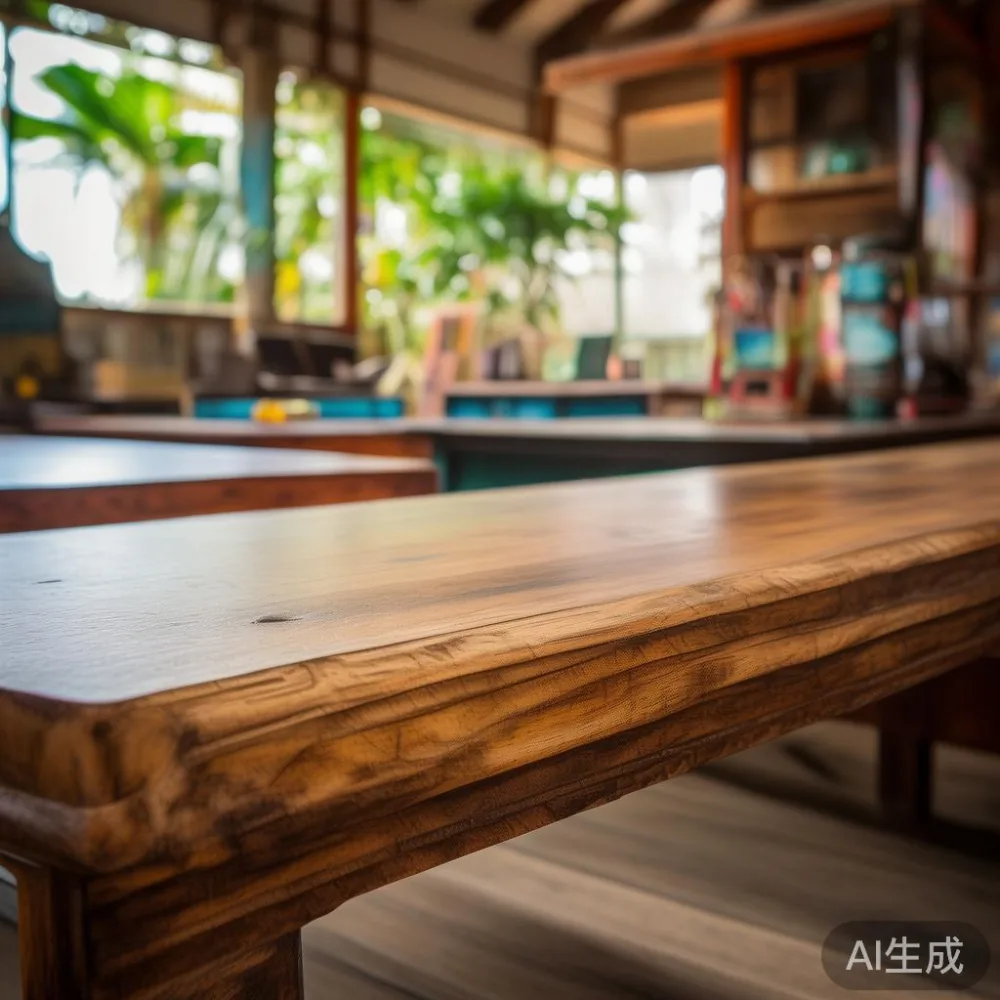
What humidity actually does to a solid wood dining table or bed frame?
Wood is hygroscopic. At a relative humidity of 35 percent, a 200 cm oak board might hold about 9 percent moisture content; at 85 percent, the same board creeps up toward 16 to 18 percent. Every one percent change translates to roughly 0.2 to 0.3 percent of dimensional movement along the grain. On a 180 cm long solid wood dining table top, that is around 4 mm of width change in just a few weeks when the wet season arrives. Joints loosen, panels cup, drawer runners on a wardrobe bind, and the marble inlay on a marble table sitting on a solid wood base can shear off if the substrate swells faster than the stone.
For a boho style household — think rattan chairs, reclaimed-look timber, carved mango or acacia — the problem compounds because the design language itself relies on visible grain, hand-planed surfaces, and exposed end-grain. Once those surfaces swell unevenly, the rustic look stops reading as "intentional" and starts reading as "neglected." So the question is not whether humidity will move the wood; it will. The question is how to slow it down, how to choose pieces that survive it, and how to rescue pieces that already show the damage.
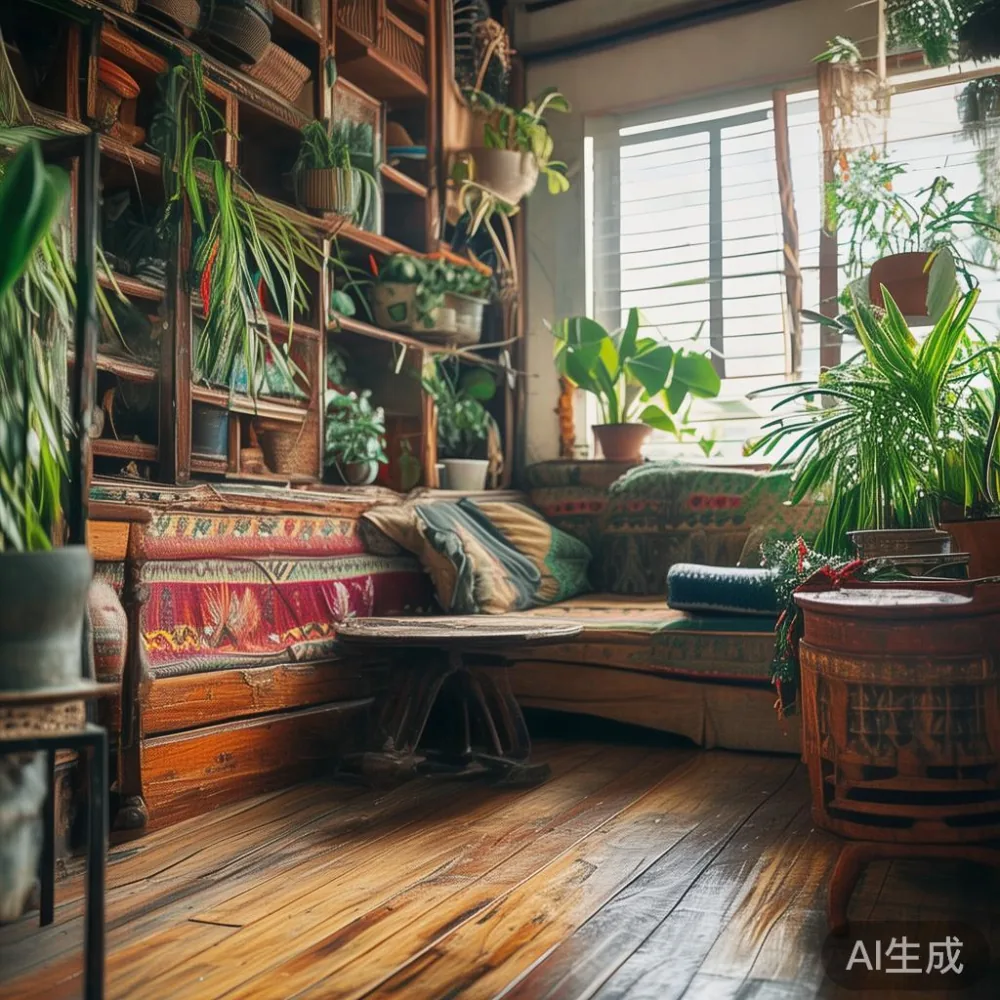
Why Singapore HDB flats and condos create their own microclimate
Most Singapore buyers I meet in Tampines, Bedok, and Punggol flats underestimate how the building envelope changes the humidity conversation. The Housing Board lifts in a 14-storey block typically measure 1.5 m wide by 2.2 m deep, the service corridor around 1.2 m wide — narrow enough that delivery teams often tilt a 2.1 m wardrobe on its side to clear the lift door. Once inside, the unit itself behaves differently from a landed terrace house. Internal bathrooms pump moisture into the living space every time someone showers, and the kitchen adds another litre or two of water vapour per cooking session. A 110 sq m condo with floor-to-ceiling glazing can swing from 55 percent RH at noon to 82 percent by midnight, simply because the sun goes down and the air-conditioner cycles off.
Add the 9 percent GST on imported furniture and the 14-day return policy most buyers are unwilling to use — because nobody wants to dismantle a 1.95 m bed frame for a courier — and the cost of choosing wrong is high. That is why material knowledge matters before the price tag does.
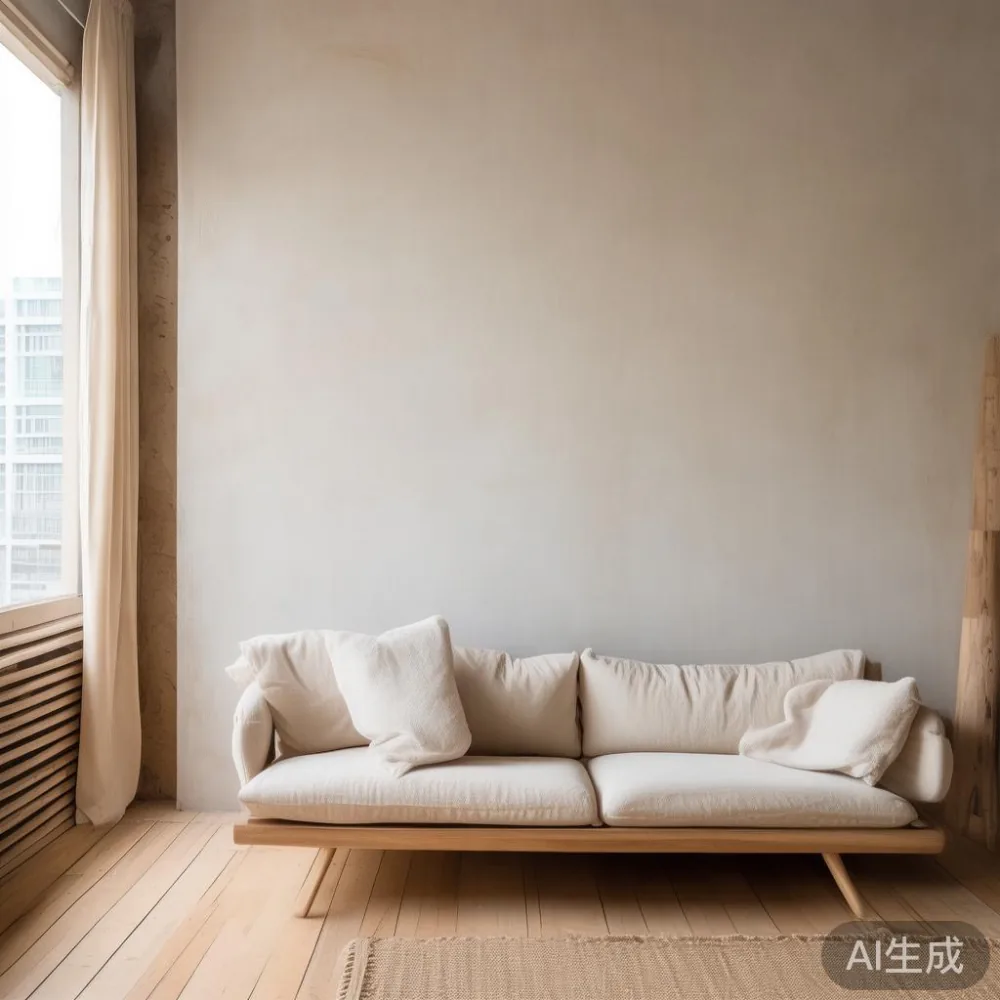
How should I choose a bed frame or sofa that can take the equatorial weather?
Three numbers matter more than brand names: the moisture content the timber was dried to, the joinery method, and the finish thickness.
First, kiln-dried to 8 to 12 percent MC is the sweet spot for Southeast Asia. Anything above 14 percent and the piece will keep shrinking after you bring it home, even in an air-conditioned room. A Foshan factory working for the export market typically targets 10 to 12 percent, then re-acclimatises the boards in the warehouse for two to four weeks before assembly.
Second, traditional mortise-and-tenon, dowel, or dovetail joinery lets the wood move as one piece; staples and MDF cores do not. For a boho style solid wood sofa, look for kiln-dried teak or white oak frames rather than engineered wood wrapped in a 0.6 mm veneer. For a nightstand, a single-drawer design with solid wood rails will outlast a glued-on laminate top by years.
Third, finish thickness. A 2 to 3 coat conversion varnish or hard wax oil slows moisture exchange significantly. Pure oil finishes look gorgeous but offer almost no moisture barrier — fine for a dry climate, less suitable for a Singapore HDB. A satin or matte film finish on the underside of a solid wood dining table is just as important as the top, because moisture rises from the floor as easily as it falls from the air.
Room-by-room: what I observed inside three local homes
Last quarter I visited a Bedok 4-room HDB, a Punggol condo, and a landed terrace in the Newton area. Here is what the furniture actually looked like, eighteen to thirty-six months after delivery.
In the Bedok flat, a French light luxury wardrobe with fluted glass doors had performed well because the panels were frame-and-panel construction, allowing the central board to float within the frame without splitting. The owner paid SGD 4,200 and reported zero warping over two years. The same home held a reclaimed-look boho style coffee table that had split along a medullary ray — almost certainly kiln-dried below target and then reabsorbed too quickly.
In the Punggol unit, an American light luxury bed frame in ash had a 3 mm gap open between two headboard planks — the unit faces morning sun and has no blackout curtains on one window. The fix was a dehumidifier set to 55 percent RH costing around SGD 280, plus a simple bead of tinted filler the owner could apply herself.
The Newton terrace stored a post-modern light luxury dining set in teak through a December monsoon week with the doors closed. The table expanded 6 mm across 220 cm, then contracted back. Ten years on, the joints are still tight because the original specification used traditional joinery and a marine-grade finish.
Can vintage for small living room pieces survive a high-rise balcony?
Yes, with three caveats. Vintage for small living room styling looks like a charming 1.4 m sideboard with a hand-distressed solid wood top, knot holes filled, and a slightly uneven edge. In a Singapore condo, that piece will pull double duty as visual texture and as a record of the air it has lived in. To keep it intact, avoid placing it within 1.5 m of an open balcony door during the morning dew window. A 2 kg felt furniture pad under each leg keeps it from sweating against a marble or terrazzo floor. And rotate items stored inside — tablecloths, magazines — every three months so the wood breathes evenly across the top.
What about a marble table sitting on a solid wood base?
A marble top of 1.4 m by 0.8 m and 18 mm thick weighs around 64 kg. Mounted on an untreated solid wood trestle, it will telegraph every moisture shift in the wood straight into the stone. In a Tampines HDB I visited, the marble slab had hairline cracks radiating from each mounting point. The fix was a cork or neoprene isolation mat 3 mm thick between stone and wood, plus a humidity-stable room reading of 50 to 60 percent RH year-round. Marble is less likely to swell than wood, but it is far more likely to crack if the substrate moves underneath it.
How to choose light luxury wardrobe storage for a 90 sq m Singapore home
How to choose light luxury wardrobe storage for a 90 sq m Singapore home starts with a measurement of the room's worst-case humidity, not the catalogue photo. Take a SGD 25 hygrometer reading for a week, including nights when the air-conditioner is off. If peaks exceed 75 percent RH, avoid MDF-core sliding doors and choose solid wood frame-and-panel doors at least 18 mm thick. Allow 1 to 1.5 mm expansion gaps on the top and bottom rails; never let a wardrobe sit hard against a dado. A 2.4 m tall European light luxury wardrobe may need a 5 mm spacer under the ceiling plinth to allow it to breathe in a room with poor ventilation. For homeowners working out how to style light luxury wardrobe in room layouts, a simple rule is to leave at least 60 cm of clear space in front of the doors — important for airflow and for the soft-close hinges to last.
How to choose European light luxury bed construction that doesn't creak in year three?
How to choose European light luxury bed construction that doesn't creak in year three comes down to three checks: slat material, centre rail, and joint fastening. Hardwood slats 8 to 12 mm thick, with no more than 7 cm gaps, flex enough to absorb humidity without snapping. A 60 mm wide solid wood centre rail running head-to-foot distributes weight and prevents the side rails from racking. Bolted or dowelled corner joints outperform cam locks, because cam-lock discs loosen as the wood swells and contracts a thousand times a year. A European light luxury bed in white oak or beech, finished on all six sides and assembled by the brand, will outlast a flat-pack alternative three to one in equatorial weather.
European for small living room layouts and the question of scale
European for small living room proportioning matters as much as humidity resistance. A 1.6 m three-seat solid wood sofa in a 3.2 m by 3.6 m living room works comfortably when the frame depth stays under 88 cm. Deeper frames crowd the walkway between sofa and dining table, and they also trap moisture against the wall behind. In my own showroom tests, the pieces that performed best in Singapore HDBs sat on legs at least 12 cm off the floor, allowing a robot vacuum to pass and air to circulate. For a luxury French provincial furniture feel in a smaller footprint, look for pieces with turned legs and slim linen-upholstered backs that read as ornate without being heavy; their open frames survive humidity swings better than a fully skirted base.
Daily habits that protect a boho style interior year-round
Five habits actually move the needle.
Run a dehumidifier set to 55 percent RH in the main living area during the wet season, roughly SGD 0.40 an hour in electricity. Wipe down any solid wood dining table weekly with a damp, not wet, microfibre cloth, then dry. Keep nightstands 30 cm away from exterior walls where condensation forms overnight. Lift, do not drag, wardrobes when you rearrange — sliding them across a marble floor grinds grit into the base. Refinish high-wear surfaces every 18 to 24 months; this is a service MIDHILL offers to original buyers at cost-of-materials only.
What to do when the damage is already visible
Cupping on a 4 cm thick solid wood dining table top can be reversed with a 48-hour controlled humidity session: raise RH to 80 percent inside a poly tent, then reduce gradually to 55 percent over the next week. Hairline cracks under 0.5 mm wide accept tinted wax filler and disappear entirely. Sticking drawers on a wardrobe respond to a thin coat of paraffin wax on the runners. Anything beyond that — split panels, separated veneer, lifted marble — should be assessed by a technician, because forcing a repair often worsens the stress. MIDHILL buyers can send photographs to the after-sales desk for a written quote within three working days; non-original buyers can usually commission a local workshop for SGD 180 to 400 per piece depending on size.
Reading the small print before you tap "buy now"
Look for three lines in the product specification: stated timber species with botanical name, kiln-dried moisture content range, and finish type with coat count. Anything handcrafted in a Foshan factory for the export market should disclose all three; if two are missing, the cost savings are coming from somewhere invisible. A 10-year structural warranty on joinery, lifetime refinishing access, free shipping above US$350, and a 14-day return window are the operational checkpoints that separate a partner-grade exporter from a marketplace reseller. Once the numbers line up, the design language can do its job — boho, French light luxury, or American light luxury — and the climate becomes a footnote rather than a recurring problem.