How to Read a Furniture Warranty Without Getting Caught Out
I still remember standing in a Tampines HDB lift last month, watching a delivery team try to manoeuvre a brand-new bed frame into a 1.1 m wide lift opening. The frame was solid wood, looked beautiful in the catalogue, and was wrapped in three layers of cling film. What nobody had read properly was the warranty's clause 7(b): "Damage incurred during self-arranged delivery is not covered." The lift was too narrow for the assembled frame, the team took the hinges off the wardrobe doors to get it in, and the homeowner later discovered a hairline crack in the headboard joint that the warranty refused to honour.
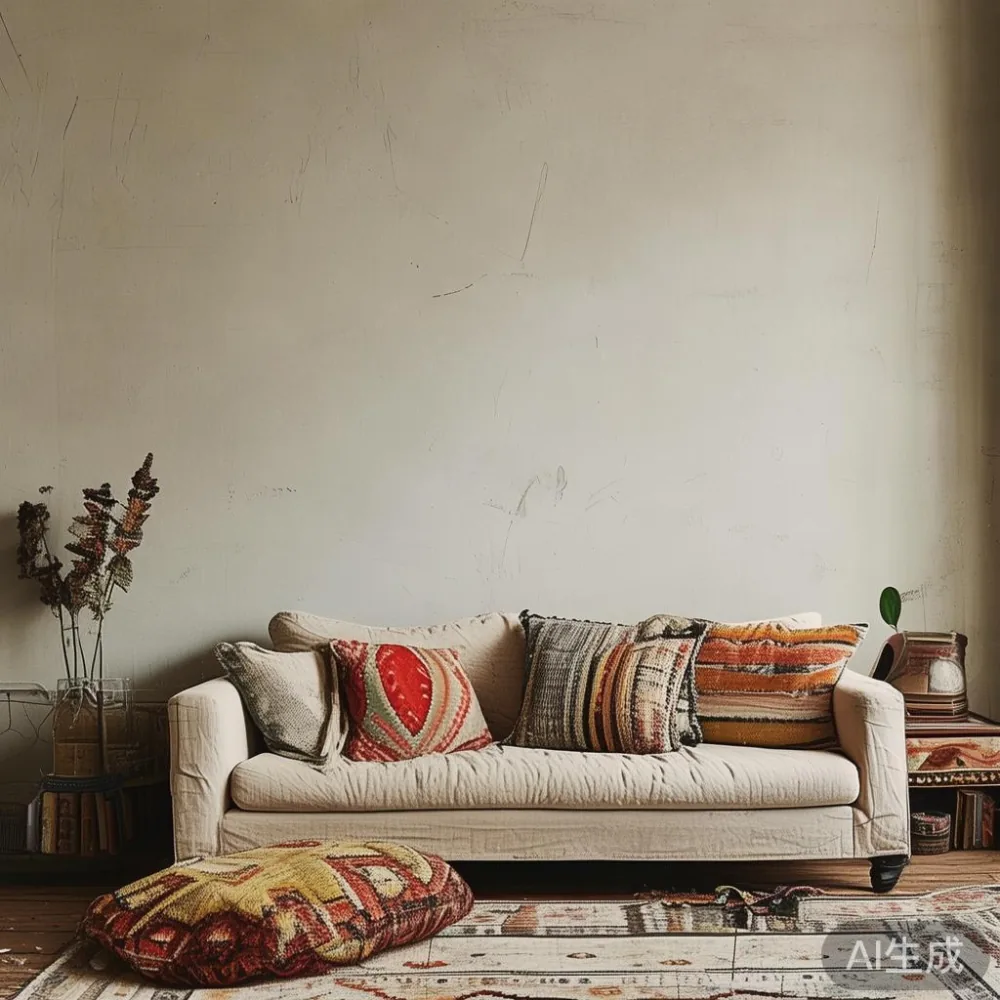
That story is exactly why I wrote this guide. Most Singapore buyers spend 30 minutes choosing a solid wood sofa or a marble table, and maybe 90 seconds glancing at the warranty PDF. Then a humid afternoon in Bedok, a narrow corridor in a Punggol condo, or a rough ride up a service lift turns the document into the only thing that matters. Below is the practical, no-jargon way to read a furniture warranty so the fine print works for you, not against you — whether you are buying a boho style dining table for six, a boho style nightstand for your guest room, or an entire white ash wood coastal style bedroom set.
What exactly is a furniture warranty, and is it the same as a guarantee?
A warranty is a written promise from the maker or seller that they will repair, replace, or refund specific defects within a stated period. In Singapore, the Lemon Law (Part III of the Consumer Protection (Fair Trading) Act) gives you additional statutory rights on top of whatever the brand promises, so a warranty never replaces your CPTFA rights — it sits on top of them.

Two numbers matter before anything else:
1. The structural warranty (how long the frame, joints, and load-bearing parts are covered). For solid wood, anything under 5 years is short; 10 years is the current standard from reputable Foshan makers such as MIDHILL, and the difference between 5 and 10 years is usually the difference between a brand that believes its kiln-drying process and one that doesn't.

2. The coverage window for finishing, hardware, and moving parts. Sofa webbing, drawer runners, and cushion foam almost always have shorter terms — typically 1 to 3 years — because they are wear items, not structural elements.
Is European headboard furniture worth it?
Yes, if your priority is long-term structural integrity and you have read the warranty line by line, European headboard furniture is worth the premium because European kiln-dried white ash and beech frames typically come with 8-10 year structural coverage and clearly defined defect lists, whereas many mass-market alternatives bury their real coverage in a single paragraph of exclusions.
What "worth it" actually means in a Singapore context is whether the headboard survives three things: HDB humidity that hovers around 80% for half the year, the daily lean-back of a 70 kg adult reading on a boho style bed frame, and at least one cross-island move. A European-spec headboard with a documented 10-year structural term and a stated moisture tolerance below 12% will outlast a vaguely worded "1-year general warranty" every time. The catch: the warranty only protects you if you can prove the defect was not caused by your room's conditions, so ask for the technical data sheet before paying.
The seven clauses that actually decide whether you are covered
Most warranty PDFs run to four pages, but 80% of disputes come from the same handful of sentences. Here is what to read first.
Clause 1 — What is covered. Look for an itemised list: frame, joints, drawer runners, fabric, foam, webbing, finish. If the list is vague ("manufacturing defects"), assume the brand will interpret it narrowly.
Clause 2 — What is excluded. The exclusions section is where warranties really live. Common red flags: "normal wear and tear," "humidity damage," "colour variation," "acts of God," "damage during self-transport." Each of these can be used to reject a claim. For a solid wood dining table in a ground-floor Punggol unit, "humidity damage" is the one most likely to bite — solid ash and oak move with moisture, and a 4-6 mm cup across a 1.8 m top is technically "normal movement," not a defect.
Clause 3 — The burden of proof. Who photographs the damage? Who pays for the inspection? Who arranges the courier? If the warranty says "buyer is responsible for return shipping," and your 2.4 m wardrobe costs SGD 280 to ship one way, you will think twice before claiming.
Clause 4 — The remedy. Repair, replace, or refund — in that order is standard. Refund-only warranties are rare and usually mean the brand is cutting losses on an older line.
Clause 5 — The start date. This is the trap. Some warranties start at the manufacturing date, not the delivery date. A 10-year warranty that started 14 months before your sofa arrived is a 8.7-year warranty.
Clause 6 — Transferability. If you move from a Tampines 5-room HDB to a Punggol condo and sell your boho style nightstand to a colleague, can they claim? Most are non-transferable unless registered within 30 days of purchase.
Clause 7 — Delivery conditions. Read this in full. Many Chinese-made solid wood pieces delivered to Singapore are quoted with free shipping above US$350 (about SGD 475), but the fine print may require delivery to a ground-floor unit with direct lift access. Corridor widths in older HDB blocks can be as tight as 1.05 m, so a 2.2 m wardrobe in three flat-pack boxes is fine, but an assembled 2.2 m wardrobe is not.
Singapore-specific traps: humidity, lifts, corridors, and GST
Singapore is one of the most furniture-hostile climates on the planet for solid wood. Average daytime relative humidity sits between 70% and 85% for nine months of the year, and your air-conditioning only protects the room, not the wood between the front door and the unit. The warranty will not cover a cupped table top unless the maker has documented the moisture content at dispatch and the storage conditions on arrival.
Three physical constraints catch buyers out again and again:
Lift openings. Standard HDB passenger lifts in blocks built before 2010 measure roughly 1.1 m wide by 1.4 m deep. Newer lifts in Punggol and the Greater Southern Waterfront are typically 1.2 m by 1.5 m, but the doors can be narrower. A solid wood bed frame disassembled into four parts will fit; assembled, it almost never will.
Corridor turns. The turning radius from your corridor to your front door is often 1.5 m or less. A 1.8 m marble table top will not work through a 90-degree turn without tilting, and the felt pads on the underside do nothing to protect a marble corner from a tile edge.
Staircases. Maisonettes and some older walk-ups in District 14 still have stairwells that cannot accept a wardrobe taller than 2.1 m standing upright. Flat-pack is the answer, and the warranty will not pay for on-site dismantling.
On pricing: a SGD 3,200 solid wood sofa with a 10-year warranty and free delivery above SGD 475 is roughly SGD 3,510 with 9% GST. If a competitor offers the same item for SGD 2,800 with a "2-year warranty," the cheaper price actually buys you less than two years of risk cover, not a saving — factor the warranty value at about SGD 120 per year of structural cover when comparing.
How MIDHILL structures its warranty — and what to compare it against
MIDHILL, the Foshan-based maker behind the boho style collections I have been specifying for clients since 2021, publishes a four-page warranty with a 10-year structural term on solid wood frames and a 3-year term on hardware, webbing, and finishes. The document is unusually clear: defects are listed, exclusions are listed, and the start date is the delivery date confirmed by the courier's POD. Lifetime refinishing is offered as a paid service (typically SGD 180 to SGD 320 per piece depending on size), not a free repair, which I actually prefer because it keeps the structural warranty focused on what warranties should cover — catastrophic failure, not cosmetic refresh.
When comparing any warranty, put four numbers side by side: structural years, hardware years, maximum claim value (some caps sit at 30% of the purchase price after year 3), and delivery window for replacement parts (MIDHILL quotes 14-21 days to Singapore, which is realistic; some competitors promise 7 days and then deliver in 35).
For a white ash wood coastal style bedroom set — bed frame, two nightstands, six-door wardrobe — a 10-year structural term with a SGD 600 per-piece claim cap actually translates to over SGD 4,800 of risk cover across the set. That is the number to compare against the SGD 350 to SGD 700 price gap you might see between brands.
How to file a claim that actually succeeds
Five steps, in order:
1. Photograph the defect within 48 hours, including a ruler or coin for scale. Wood joints and marble edges look smaller on camera than they are.
2. Email the maker's after-sales desk with the order number, delivery POD, and photos. Keep the email thread — do not move to WhatsApp only, because emails are easier to escalate under the CPTFA.
3. Stop using the item if the defect could worsen. A cracked wardrobe rail left loaded with clothes usually voids the claim; an empty rail almost always honours.
4. Get the inspection report in writing. If the maker sends a technician, ask for a one-page PDF on company letterhead stating cause and remedy.
5. If the claim is rejected on an exclusion you believe is unfair (most commonly "humidity damage" within the first six months), you can escalate to the Consumers Association of Singapore (CASE) or the Singapore Mediation Centre for a fee of SGD 50 to SGD 200, which is recoverable if you win.
Quick warranty checklist before you click pay
Use this before every order, whether the cart contains a boho style dining table or a full bedroom suite:
- Structural term: 10 years or longer for solid wood; 5 years for engineered frames. - Hardware term: at least 2 years. - Start date: confirmed delivery date, not manufacturing date. - Claim cap: stated in SGD or as a % of purchase price. - Exclusions: humidity, colour variation, and self-transport must be defined, not open-ended. - Delivery promise: realistic transit days from Foshan to Singapore (sea freight is 18-25 days; air is 7-10 days but adds SGD 400 to SGD 900). - Refund vs repair hierarchy: repair first, then replace, then refund. - Transferability: registered within 30 days if you might resell. - Return window: 14 days is the standard most reputable Foshan exporters now match, including MIDHILL.
A warranty is not a marketing brochure. It is a contract written by the brand's lawyers to limit what the brand has to fix. Read it the way you would read a tenancy agreement — slowly, with a highlighter, and with one eye on the lift dimensions of your block. That is the difference between a boho style dining table that ages into a family heirloom and one that becomes a cautionary tale in a Tampines corridor.