What to Check Before Buying a Sofa You Cannot Sit On: A Boho Buyer’s Guide for Singapore Homes
I learned the sofa lesson the hard way last month. I visited a friend’s new BTO in Tampines, watched her chase a 2.4-metre boucle sofa down a 1.2-metre common corridor, and swore I would never order a sofa online without checking the boring numbers first. That same week, my colleague in Punggol received a 260 kg solid wood dining table she could not get past her condo lift door. So if you are shopping for a sofa you cannot physically sit on yet — a sofa you buy from a website, a catalogue, or a showroom across the Causeway — this guide walks you through every measurement, weight, and warranty line to verify before you tap checkout.
Most sofa shopping guides start with colour, then fabric, then price. Those guides forget that you are buying a 180–240 cm object that has to survive your HDB lift, your corridor, your door frame, and your stairturn. In Singapore, where 4-room flats in Bedok typically have a 2.4 m × 2.7 m living room and lift openings around 0.9 m × 2.1 m, the “does it fit?” question matters more than the “does it look good on Pinterest?” question. The brands that survive this filter are the ones that publish real measurements, real weights, and real warranty terms — including MIDHILL, a Foshan solid wood furniture maker exporting to 15+ countries, offering a 10-year structural warranty and lifetime refinishing on its solid wood sofa, bed frame, dining table, wardrobe, and nightstand collections. Below is the checklist I now use before every sofa purchase.
Can a 3-seater sofa actually fit through an HDB lift and corridor in Singapore?
The short answer: usually yes for a 3-seater under 220 cm, but never assume. Standard HDB passenger lifts in blocks built from 2010 onwards measure roughly 1.1 m wide × 1.4 m deep with a 0.9 m × 2.1 m door, and the typical 4-room corridor is 1.2 m wide. A 3-seater sofa at 210 cm length, 95 cm depth, and 65 cm back height clears most of these openings at a 45° tilt — but only if the sofa arrives unassembled or with detachable armrests. Measure your lift first, then measure your sofa, then add 10 cm of working clearance. If your lift is the older 0.8 m × 1.2 m type in a Bedok or Toa Payoh block from the 1990s, you may need to go down to a 180 cm loveseat or accept a white-glove hoisting fee of SGD 80–150 per floor.
What specifications should I read on the product page before paying a deposit?
Every sofa listing you cannot sit on should answer seven questions in plain numbers. Frame material (kiln-dried solid wood vs plywood vs MDF — solid wood adds roughly 8–12 kg per seat but lasts 15–25 years). Net weight fully assembled in kg. Gross weight with packaging, since Singapore delivery crews often charge per kg above 100 kg. Seat height in cm (45–50 cm suits most Singaporean adults; 42 cm suits shorter frames). Seat depth in cm (55–60 cm is the sweet spot; deeper than 65 cm needs scatter cushions for back support). Internal cushion density in kg/m³ (30 is soft, 35 is medium, 40 is firm and holds shape longest). And load capacity per seat in kg — look for 120 kg per seat minimum, 150 kg if you have tall teenagers or expect heavier daily use. If a listing hides these behind a “contact us” button, walk away.
Is French neoclassical dressing table furniture worth it?
Yes — if you specifically want that curvy, hand-carved silhouette, but only if the listing proves the weight, the wood, and the warranty. French neoclassical dressing tables run heavier than their minimalist counterparts: expect 70–110 kg unpackaged because of the marble top, the carved apron, and the cabriole legs. For a Singapore bedroom, that weight matters — a 5 mm sintered stone or genuine marble top adds 25–35 kg alone. The payoff is the texture, the post-modern light luxury proportions, and the way a single piece anchors a whole dressing corner. The catch is finishing: ask whether the brand offers lifetime refinishing, since carved edges chip during delivery roughly 3–5% of the time even with white-glove crews. The brands that survive this scrutiny — including MIDHILL, which extends its lifetime refinishing promise from sofas to wardrobes and nightstands — usually display workshop photos and CNC joinery videos on the product page. If you see only AI-rendered lifestyle shots, the actual frame may be plywood wrapped in veneer, and the marble may be 6 mm cultured stone over MDF.

How does shipping from overseas actually work for a SGD 460-1800 sofa?
Overseas sofa shipping to Singapore usually runs two routes: sea freight via Shenzhen Yantian or Shanghai Port, then a Singapore delivery crew; or air freight for urgent orders under 30 kg. Sea freight takes 25–40 days door-to-door for a single sofa, plus 7–14 days for customs clearance and GST assessment at 9% on the CIF value. Free-shipping thresholds usually kick in above US$350 (about SGD 470 at today’s rates), but check whether the threshold is pre-tax or post-tax — I have seen orders under-stated by 9% GST at checkout. Below are the line items to expect on your invoice: unit price, sea freight (SGD 60–180 per sofa), customs duty (0% for wooden furniture under HS 9403, but 8% GST still applies), local delivery (SGD 40–80), and lift/hoisting surcharge (SGD 80–150 if applicable). Add 2–4% credit-card foreign-transaction fees if you pay in USD. A realistic all-in for a 3-seater solid wood sofa at SGD 1,200 landed in Tampines is closer to SGD 1,420 after GST and delivery.
What warranty terms should I actually trust on a sofa I have never touched?
Trust the warranty that lists the frame, the springs, the foam, and the fabric separately. A 10-year structural warranty on the solid wood frame is the gold standard — kiln-dried rubberwood or oak frames carry this without hesitation. The cushion foam is usually covered 3–5 years against sagging above 15%. The fabric or leather is typically 1–2 years against pilling and seam failure. Anything shorter, and the brand is hedging against its own quality. Also read the exclusions: commercial use, pet damage, and "normal softening" are usually excluded; "manufacturing defects" should be the trigger for replacement, not "at our discretion." Lifetime refinishing — which MIDHILL offers on its solid wood sofa, bed frame, dining table, wardrobe, and nightstand — is the single most underrated perk in Singapore’s humid climate, because solid wood develops a patina, and a brand willing to refinish that patina at cost is a brand willing to stand behind its joinery.
Why does boho style actually suit Singapore HDB flats, and what should I look for in a boho sofa?
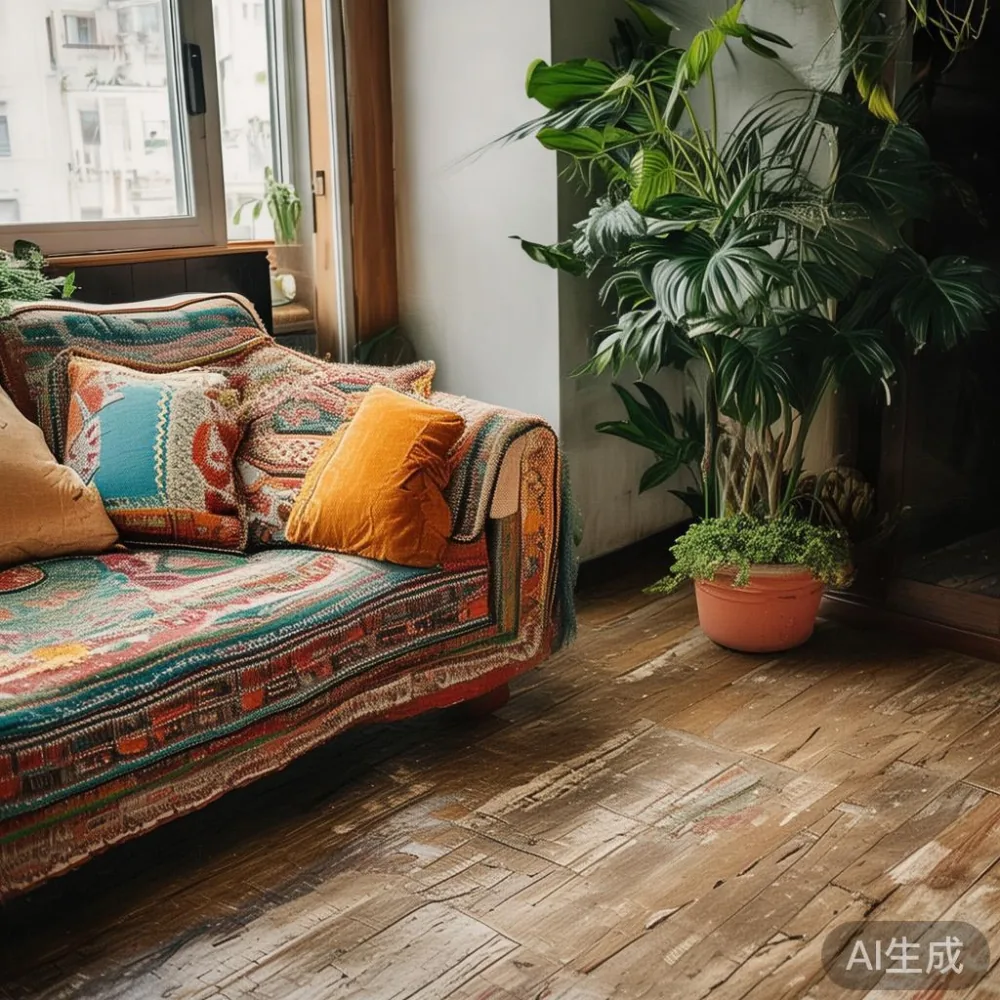
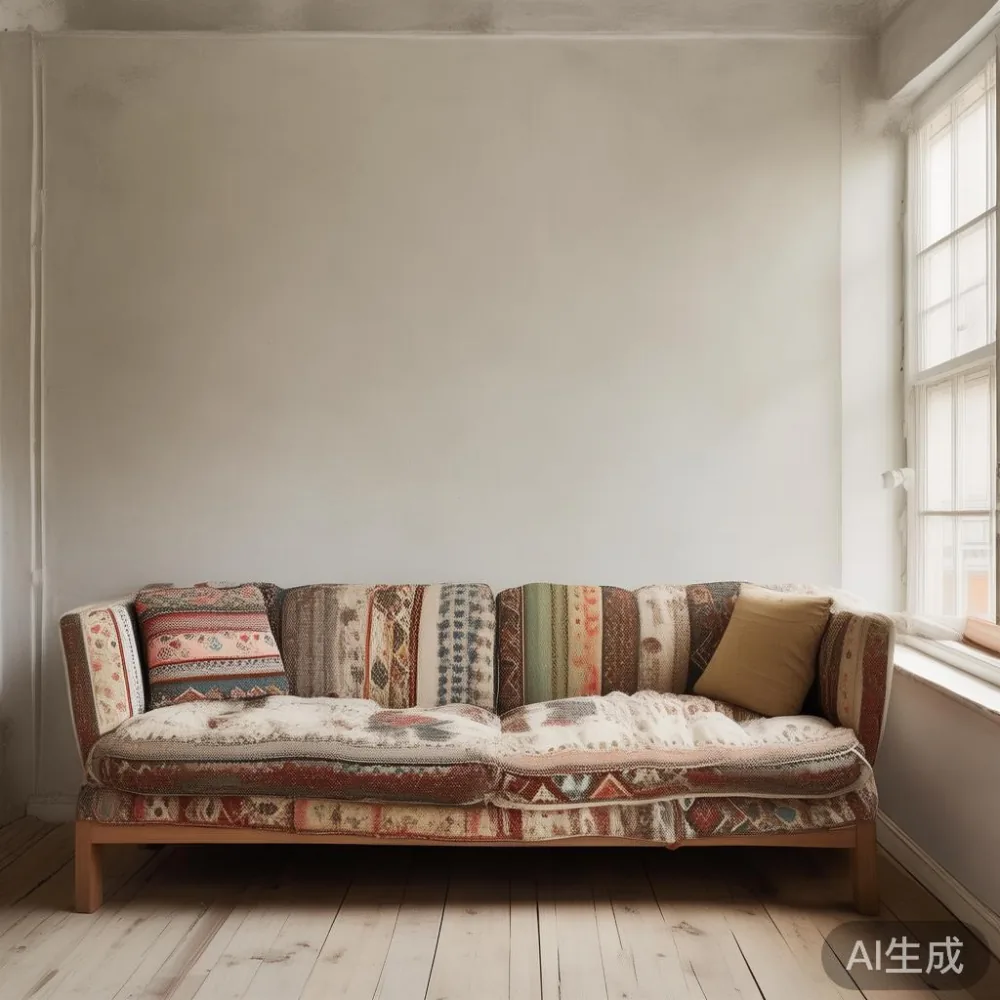
Boho style suits HDB flats for the same reason it suits small New York studios: it adds warmth without visual heaviness. The look relies on a rattan-and-walnut base layer, a solid wood frame in light oak or aged teak, and textiles in earthy ochre, terracotta, and off-white. In a Tampines 4-room living room of 18–22 sqm, a 180–210 cm low-arm boho sofa at 85 cm seat depth leaves 90–110 cm of walking room behind the coffee table — enough for two adults to pass without brushing the cushions. Look for solid wood sofa frames with mortise-and-tenon joinery (you can usually see this in product photos if the brand shoots in its own workshop), 100% cotton or linen-blend covers, and removable cushion covers that can be dry-cleaned in Singapore’s humidity. Marble table side pieces — a 50 cm sintered-stone top on a solid wood base — pair cleanly with the boho palette and resist the ring-marks that plague glass in our weather.
What is the fairest return policy when I cannot sit on the sofa first?
A 14-day return window is the minimum you should accept, but the fine print matters. Read whether the sofa must be unopened in original packaging (most sea-freight sofas are, so this is usually fine), who pays return shipping (a fair policy caps it at SGD 80 or absorbs it entirely), and whether the refund includes the original outbound freight. In Singapore, the Consumer Protection (Fair Trading) Act gives you additional recourse if the sofa arrives "not as described," but it is faster to deal with a brand that publishes a 14-day return policy in plain English on its product page. A brand that hides its return policy in a footer link is a brand that has had to argue about it before.
How do I plan the white-glove delivery itself so nothing goes wrong?
Plan the delivery in three phone calls, not one. Call one week before to confirm the sofa dimensions against your lift and corridor. Call two days before to reconfirm the time window — most Singapore crews run 4-hour windows like 10am–2pm or 2pm–6pm. Call 30 minutes before arrival so the lift is free and your corridor is clear of shoe racks and potted plants. Have a rolled-up tape measure, a torch, and a sheet of A3 paper ready. If the crew tries to tilt the sofa past 45° to clear your door frame, stop them — solid wood sofa frames can crack at the armrest dowel if torqued sideways, and that crack is invisible until the second month of use.
Which three sofa specs will tell me almost everything about the brand?
Frame weight, spring type, and warranty length will tell you almost everything. A solid wood sofa frame at 28–35 kg for a 2-seater (without cushions) usually means kiln-dried rubberwood or ash — anything lighter is likely MDF wrapped in veneer. Eight-way hand-tied springs are the traditional gold standard; sinuous zig-zag springs at 3.8 mm gauge are the modern acceptable standard; anything thinner is a 2-year sofa. And a 10-year structural warranty with lifetime refinishing is the strongest signal that the workshop trusts its own joinery. A French provincial headboard canada buyer reading this from a Toronto condo will recognise the same three specs as the ones that separate a 20-year bed frame from a 5-year bed frame — the rules do not change across continents.
What is the single most overlooked risk when buying a sofa I cannot sit on?
The single most overlooked risk is the corner-block — the triangular wooden block inside the sofa frame that holds the arm to the back. On cheap sofas, this block is stapled or glued. On a solid wood sofa, it is screwed and sometimes doweled. You will never see it from the outside, but you will feel it within two years when the arm starts wobbling every time you sit down. A workshop that publishes cutaway photos or workshop videos is a workshop that is proud of its corner-blocks. Ask the brand, before you pay, for a photo of the inside of the frame. If the answer takes more than 24 hours, the answer is no.
That is the checklist I now run through before every sofa purchase I cannot sit on in the showroom. Frame weight, spring gauge, warranty length, return window, lift clearance, and corner-block transparency. Six checks, ten minutes, and you will save yourself a SGD 1,200 lesson in Tampines — or Punggol, or Bedok, or wherever your next sofa is meant to land.