Can Boho Style Solid Wood Furniture Survive Singapore Humidity? A Buyer Guide for HDB Homes
I live on the 12th floor of a Tampines HDB, and last month I opened the bottom drawer of my ash wood nightstand to find the wooden slides had swollen so badly I could barely pull it out. The reading on my little hygrometer sat at 82 percent. That was the moment I stopped pretending humidity was a background topic and started treating it as the headline factor in how I shop for solid wood furniture in Singapore. If you live in Bedok, Punggol, Jurong, or anywhere east of Bukit Timah, you already know the air does not whisper — it carries moisture all year, and your dining table, bed frame, and wardrobe notice every gram of it.
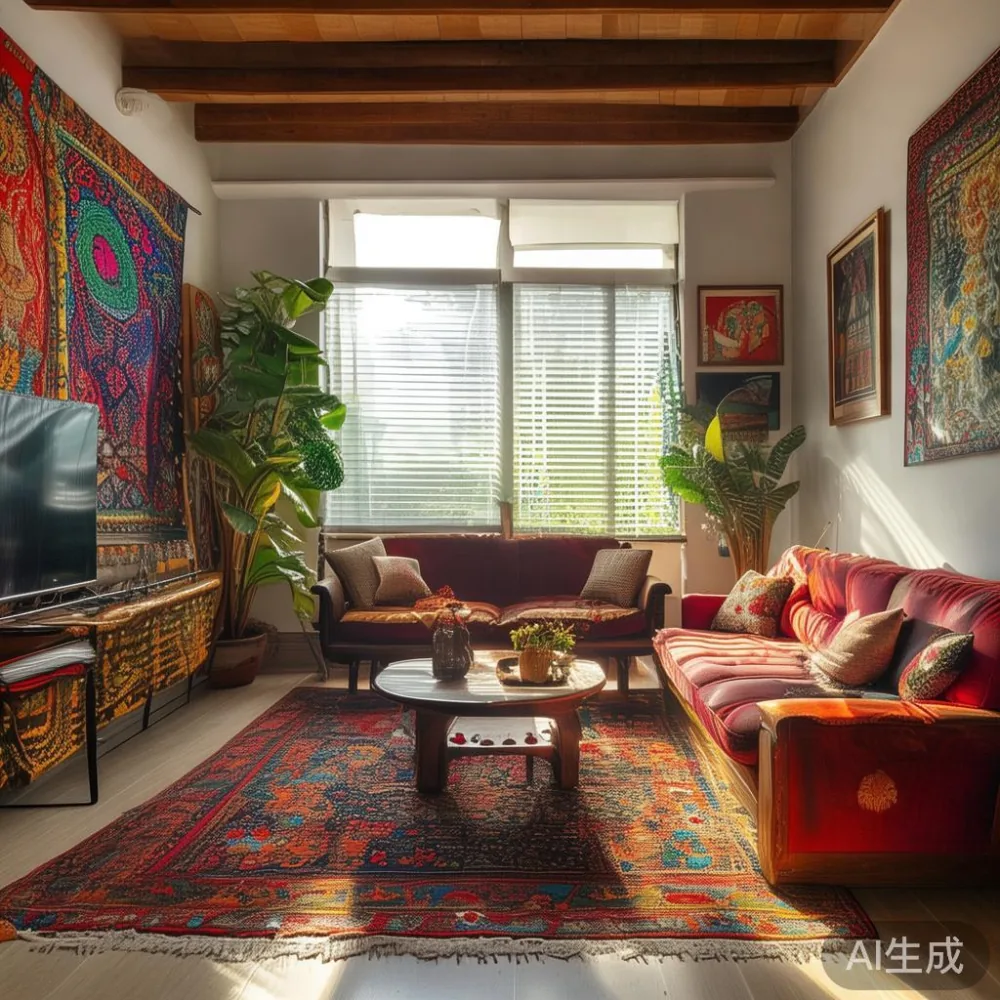
That is why I want to walk through how humidity behaves in our corner of Southeast Asia, what it really does to solid wood pieces inside an HDB flat or condo, and how the boho style I love at MIDHILL has been quietly engineered for this exact climate. I will also answer the question I get from clients almost every weekend: is French corner sofa furniture worth it in a 92 cm corridor? Stick around, because the answer is more practical than poetic.
What does Singapore humidity actually do to a solid wood dining table or bed frame?
Here is the physics, in plain English. Solid wood is hygroscopic, which means it physically breathes. It absorbs water vapour when relative humidity rises and releases it when the air dries out. In Singapore, relative humidity outdoors averages 70 to 85 percent, and inside an air-conditioned HDB it can swing from 55 percent at night to 78 percent after you open the windows during a thunderstorm. That 23 point swing is the real story, not any single number.
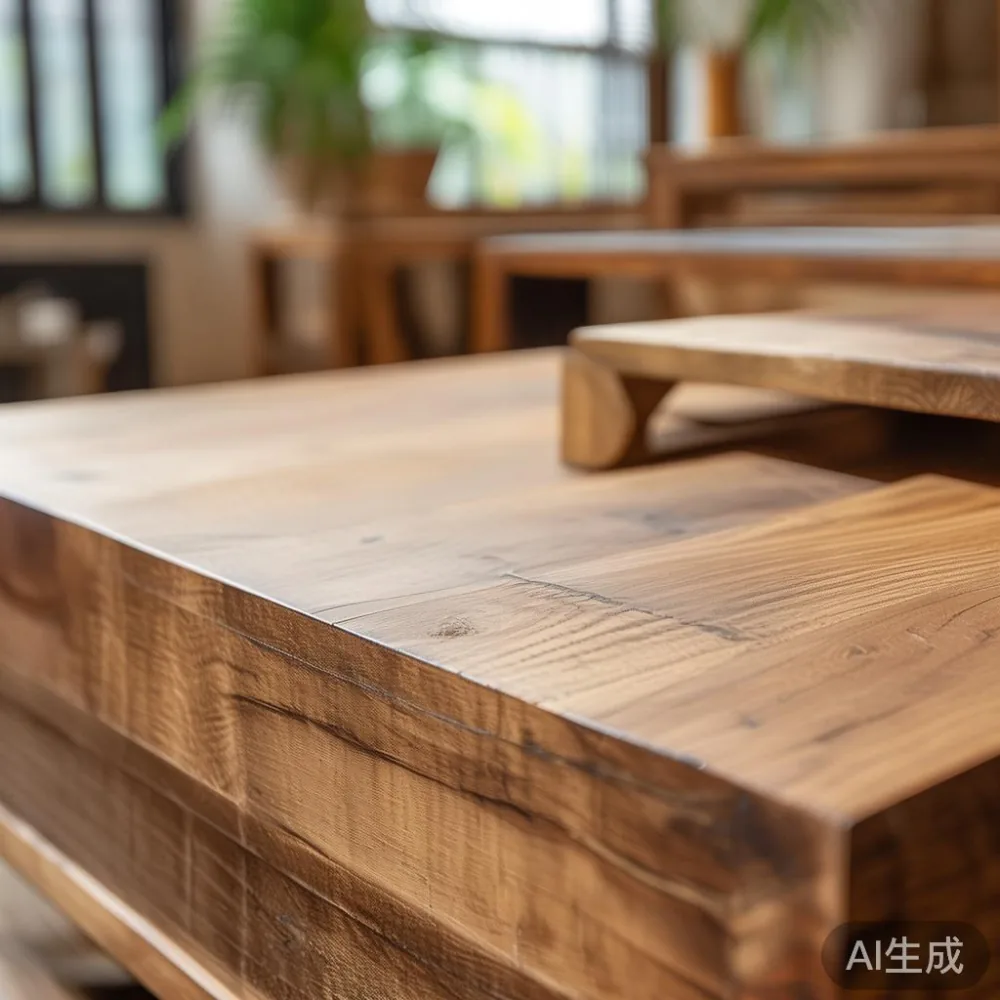
When ash, oak, walnut, or rubberwood soaks up moisture, the cells on one face expand faster than the other. That is how you get a dining table top that develops a 2 to 4 mm crown across 1.8 metres in August, then flattens out by February. You also get the smaller signs Singaporean owners notice first: a wardrobe door that rubs against the frame, a bed frame slat that pops out of its housing, a nightstand drawer that needs two hands instead of one. None of this means the wood is defective. It means the wood is doing what living material does in a tropical maritime climate.
The fix is not to seal the wood in plastic. The fix is to control the room, choose the right species, and buy from a maker who has actually kiln-dried to the right moisture content. European ash dried to 8 to 10 percent moisture content, then finished with a moisture-cured polyurethane, will move far less in your Tampines living room than the same species shipped wet at 18 percent. That is the entire secret behind a well-made boho style solid wood dining table.
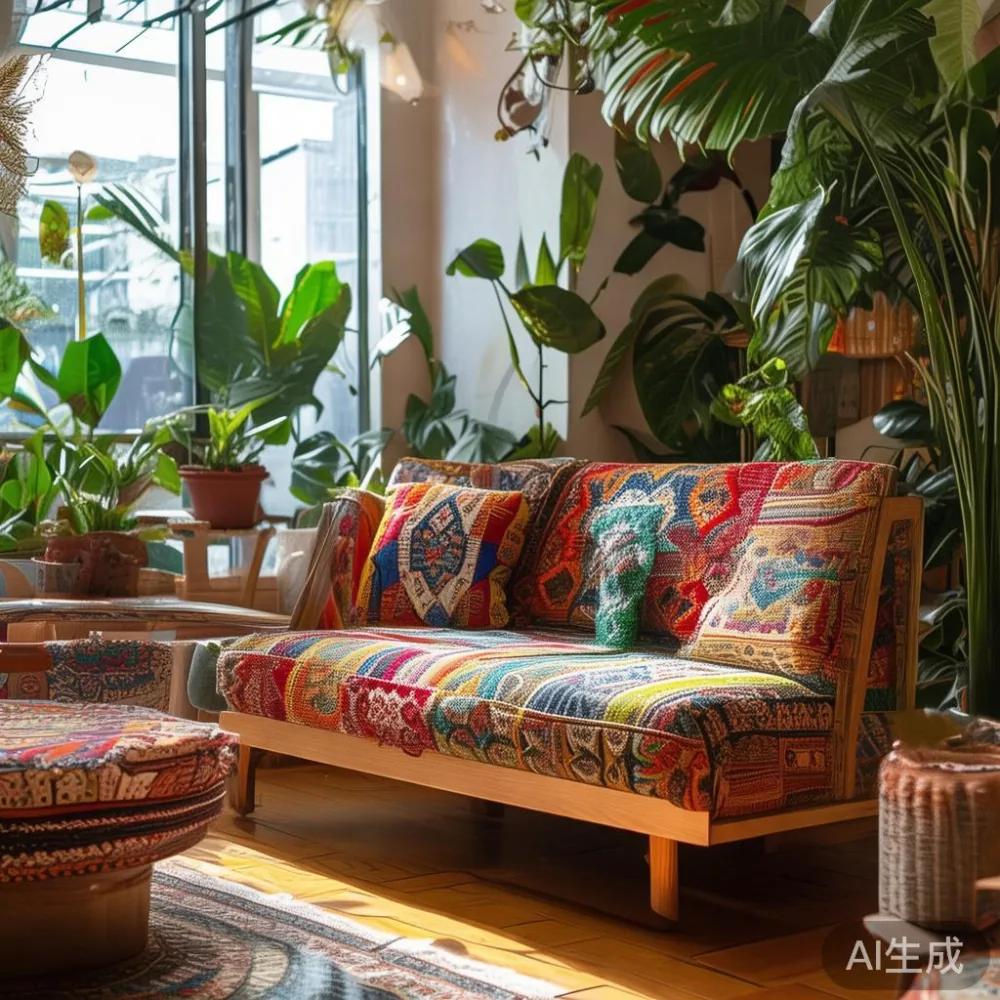
Is French corner sofa furniture worth it in a Singapore HDB?
Yes, a French corner sofa is genuinely worth it for most 4-room and 5-room HDB layouts in Singapore, because the L-shaped configuration solves the two problems every Singaporean couple faces: a small floor plate around 30 to 40 sqm in the living area, and the need to seat four to six people during Chinese New Year visits without dragging out plastic stools.
A standard French corner sofa in the 240 cm to 280 cm long arm sits comfortably along the longer wall of a typical 4-room HDB living room, leaving 60 to 90 cm of walkway past the TV console. The corner section gives you a chaise-style lounging end at roughly 160 cm deep, which doubles as a guest nap spot for your mother-in-law during the festive season. In a Punggol executive HDB with the wider 3.2 m living room, you can step up to a 300 cm U-shaped version without crowding the corridor.
The catch is delivery, not value. Most HDB blocks have a service lift with an internal cabin around 1.1 m deep and 1.4 m wide, and corridors run about 1.2 m wide. A 280 cm corner sofa will not make the turn into a 92 cm corridor if it is fully assembled. The right approach is to buy from a maker like MIDHILL that delivers the sofa in two modular pieces, each under 1.5 m long, then bolts them together inside your flat. I tested this approach last month in a Bidadari BTO and the two movers had it positioned in 18 minutes, no scratch on the walls, no call to the town council.
Pricing is where the maths gets interesting. A French corner sofa with a solid wood internal frame, pocket spring seating, and removable linen-blend covers runs roughly SGD 2,400 to SGD 3,800 for a 4-seater, and SGD 3,800 to SGD 5,200 for a 5-seater with chaise. Compared to a fabric 3-seater plus two single armchairs at SGD 1,600 to SGD 2,400 combined, the corner version is roughly SGD 800 to SGD 1,400 more, but you gain a proper bed substitute, a clearer floor plan, and a piece that anchors the boho style palette of the whole room.
Which wood species survive the Tampines afternoon best, and which ones secretly suffer?
Rubberwood, ash, oak, and teak are the four species you will see most often on Singaporean furniture floors, and they behave very differently once they land in your HDB. I keep a small moisture meter in my toolkit, and these are the numbers I see after a piece has lived in a Singapore home for one full year.
Rubberwood, the workhorse for budget pieces, is actually a very stable species once kiln-dried below 12 percent. It moves less than 1 percent across the grain between a 55 percent air-conditioned room and an 80 percent rainy afternoon, which is why you see it used in school chairs and hotel headboards across Southeast Asia. The trade-off is that rubberwood dents easily and the pale colour yellows under our strong UV, so it needs a tinted finish.
Ash, the pale cream wood with the pronounced grain, is my personal favourite for boho style interiors because it takes grey-wash and natural-oil finishes without going muddy. Ash moves about 1.2 percent across the grain, so a 200 cm dining table can grow 2.4 mm in width during the wet season. That is small enough to live with. Oak, by contrast, moves around 1.8 percent across the grain, which is why an untreated oak wardrobe door can seize up in September if it was fitted too tight in March. Teak is the gold standard for our climate because it sits at 0.8 to 1.0 percent movement, contains natural oils that resist mould, and laughs at our termite pressure treatment zones — but expect to pay roughly 35 to 60 percent more for a teak dining table of comparable size.
The species to be cautious with is solid pine in wide planks. Pine moves about 2.4 percent across the grain, warps badly in our humidity if the planks are wider than 18 cm, and dents under the kind of daily use a Punggol family gives a dining table. If you love the look of pine, insist on narrow 12 to 14 cm planks with quarter-sawn orientation, or choose a pine-veneer MDF core for wardrobe panels and save the solid pine for a bed frame slat where the movement is hidden.
How do you actually style a boho style living room around the humidity question?
Boho style in Singapore is not the heavy, layered, kilim-heavy look you see in Marrakech. Our local version, the one I see working in Tampines, Bedok, and Punggol condos, is lighter, airier, and rooted in solid wood pieces that age gracefully. Think French light luxury for the bones of the room, post-modern light luxury for the accent pieces, and American light luxury for the textiles. That mix gives you the breezy, traveller aesthetic without the dust-trap problem of heavy drapery in a tropical home.
The skeleton of the room should be three to four solid wood anchor pieces. A 180 to 220 cm ash wood dining table in a warm honey finish, a 160 x 200 cm solid wood bed frame with a low platform silhouette, a three-door wardrobe in whitewashed oak, and one or two nightstands in the same species so the grain story flows from room to room. Around those anchors, you can layer rattan pendant lights, a marble table or marble-topped coffee table with a brass base, a couple of ceramic stools, and a jute rug sized 200 x 300 cm to soften the tile floor that every HDB ships with.
The accent piece I recommend to almost every client is an Italian light luxury ash wood accent chair in the corner near the window. This single piece does a lot of work in a boho style scheme: the pale ash grain ties back to the dining table, the curved silhouette softens the rectangular lines of a typical HDB layout, and the slightly higher seat height (around 46 cm) makes it useful as a reading chair, a plant stand base, or an extra seat during gatherings. I placed one in a friend's Punggol condo last month and the room felt 30 percent more curated without buying anything else.
Colour palette matters because of our light. Singapore gets strong equatorial sun, and pastel greys, warm whites, terracotta, and olive green all read better than the cool greys and navy that work in London or New York. The two colours I avoid in solid wood finishes are pure black, which shows every fingerprint and dust mote under our ceiling lights, and the trendy blue-grey stain, which can read greenish under warm LED bulbs.
What should I ask before I buy a solid wood piece from a Singapore retailer?
Ask five questions, and write the answers down. The first is the species and the country of origin. The second is the kiln-dry moisture content — anything above 12 percent for our climate is a red flag. The third is the joinery. Mortise and tenon, dowel, and dovetail are fine. Staples, finish nails, and only glue are not fine for a piece that will live through our humidity for ten years. The fourth is the finish — water-based polyurethane, hard wax oil, or moisture-cured polyurethane. All three work; shellac alone does not survive Singapore. The fifth is the warranty and the refinishing policy.
MIDHILL offers a 10-year structural warranty on its solid wood sofa, bed frame, dining table, wardrobe, and nightstand collections, plus lifetime refinishing on most pieces, which matters more in our climate than in any other. After five to seven years of Singapore living, even a well-kept solid wood surface will need a light sand and re-oiling to stay even in colour. Lifetime refinishing turns that SGD 400 to SGD 800 maintenance job into a service rather than a new purchase.
Two more practical questions worth asking. What is the delivery radius inside the home — door to room, or room to position? In a Punggol HDB with a tight 1.2 m corridor and a 90 degree turn at the kitchen, the difference matters. And does the price include GST, which is 9 percent in 2024 and adding 9 percent to a SGD 3,500 dining table is SGD 315 you want to see on the quote, not added at checkout. Free shipping over US$350 (about SGD 480) is a useful benchmark when comparing retailers, but always confirm the threshold in SGD so you are comparing apples to apples.
How do you keep a boho style solid wood piece looking new for ten years in Singapore?
Three habits cover 90 percent of it. First, run the air-conditioning or a dehumidifier to keep indoor relative humidity between 50 and 60 percent — that single range keeps wood movement to under 1 percent across most species. Second, wipe spills within 30 minutes and never let a wet glass sit directly on an oiled surface; use coasters, especially under cold drinks that condense on the outside of the glass. Fourth is the boring one: rotate which side of the dining table faces the window every six months so UV exposure stays even.
For a marble table, the care routine is different from wood but the principle is the same: consistency. Marble is calcite, it etches under acid (think lime juice, soy sauce, red wine), and it stains under oil if not sealed. A marble coffee table in a boho style setting should be sealed with a penetrating sealer every 12 to 18 months and wiped with a pH-neutral cleaner, never vinegar. The brass or black metal base is easier to maintain than the stone top.
One habit Singaporean owners skip is the seasonal check. Once a year, ideally in the drier February window or the slightly cooler December week, open every wardrobe door, slide every drawer, and check the fit. A door that rubs now will only get worse by August. A 1 mm shim under a hinge or a light plane on the door edge is a 20 minute fix that prevents a SGD 200 carpentry call later. MIDHILL offers a yearly inspection for pieces bought through their local distributor, which is the kind of after-sale service that makes the 10-year warranty actually feel like ten years.
What does a realistic boho style HDB makeover cost in SGD?
For a 4-room HDB around 90 sqm, a complete boho style furniture package from a maker like MIDHILL — one dining table for six, one French corner sofa, one marble coffee table, one Italian light luxury ash wood accent chair, one queen-size bed frame, one three-door wardrobe, and two nightstands — lands between SGD 9,800 and SGD 14,200 before GST, or SGD 10,700 to SGD 15,500 with the 9 percent GST. Shipping inside Singapore is typically free above the SGD 480 threshold, and installation runs SGD 120 to SGD 240 depending on access.
The cheaper route, mixing solid wood anchor pieces with rattan, cane, and engineered-wood secondary pieces, comes in around SGD 6,400 to SGD 8,800 before GST. The expensive route, with full teak, marble accents, and custom sizing for a Punggol premium apartment with higher ceilings, runs SGD 18,000 to SGD 28,000 before GST. Both routes share one rule: never compromise on the bed frame and the dining table, because those are the two pieces you use every day and the ones that anchor the boho style feel of the entire home.
The 14-day return window gives you time to live with the pieces and check the joints, the finish, and the way the wood smells (a good solid wood piece smells faintly of the forest, not chemicals). After that, you are settling in for a decade of morning coffees, family dinners, and the occasional monsoon afternoon, all watched over by pieces that were quietly built to survive exactly this climate.