Veneer vs Solid Wood: A 5-Year Cost Reality Check for Boho Homes in Singapore HDBs
Last month I visited a friend's new 4-room HDB in Punggol and saw the same scene I have watched repeat itself for over a decade in this industry. A four-year-old dining table that once cost S$1,450 was bubbling at the edges where the laminate met the edge band. The legs had twisted slightly out of plane, the middle drawer no longer closed flush, and the owner was already browsing new sets. Right beside it stood a 12-year-old solid wood dining table she had moved from her previous Bedok resale flat to her Tampines condo. It had been refinished twice. It was structurally fine. The two pieces cost roughly the same when new, yet their five-year stories could not be more different.
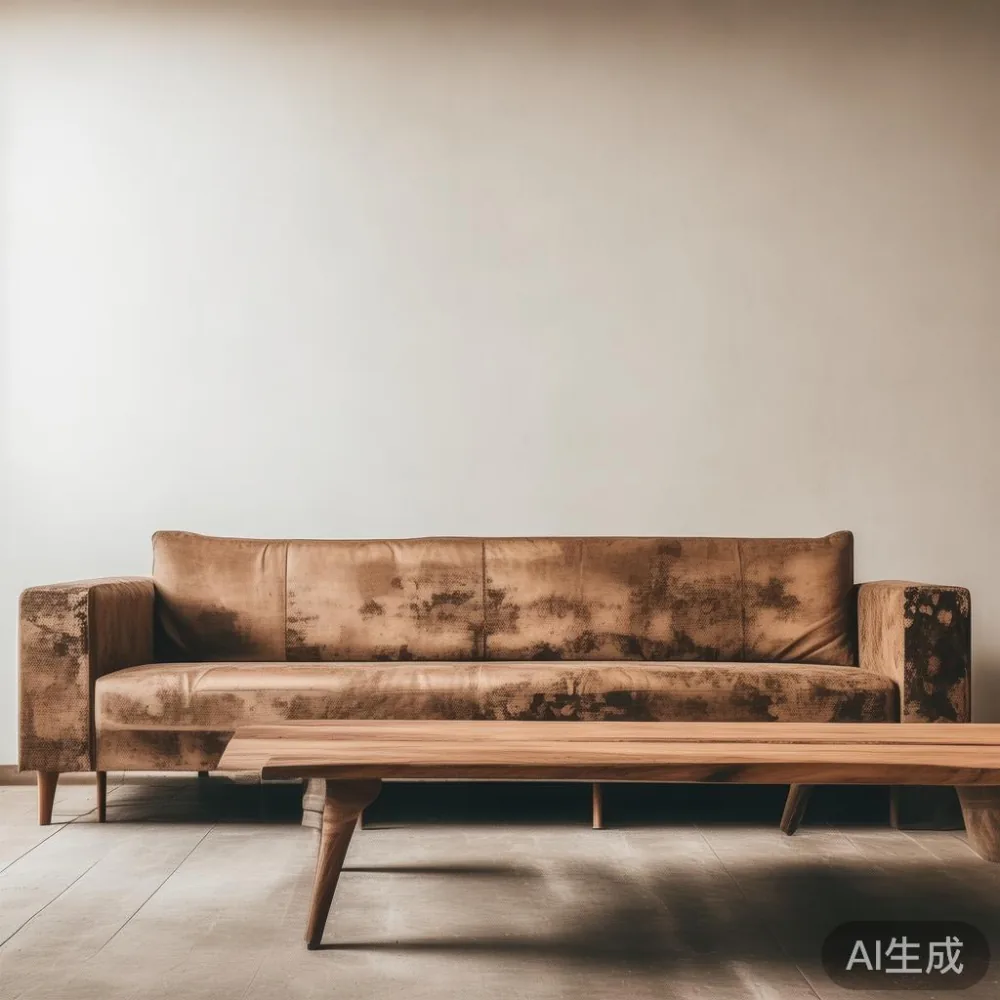
That visit is the reason for this long-form comparison. In a boho style home, where raw texture, visible grain and warm tonal layers define the look, the material underneath the cushions matters far more than in a glass-and-chrome apartment. Veneer furniture is cheaper on day one, but the boho look depends on how the surface ages, whether it can be sanded, and how it tolerates Singapore humidity between the corridor and the lift. So this guide walks through five full years of ownership for veneer versus solid wood, in SGD, in centimetres, in kilogram loads, in lift-friendly dimensions, and in the day-to-day reality of keeping a boho style home in a 90-square-metre HDB or a 1,200 sqft condo.
The real cost over five years, not the sticker price
Most shoppers see the price tag at the showroom and stop there. Over five years, that is the wrong number to use. For a fair comparison, we tally purchase price, GST, delivery, refinishing, repairs, and an estimated resale or salvage value at year five. We will use three common pieces for a typical 3-bedroom HDB or small condo: a 1.8m solid wood dining table, a 1.5 x 2.0m bed frame with headboard, and a 180cm three-seater sofa. The same exercise can be repeated for a French corner sofa for HDB flat configurations, which I will cover further down because corner sofas behave very differently when delivered up a HDB corridor.
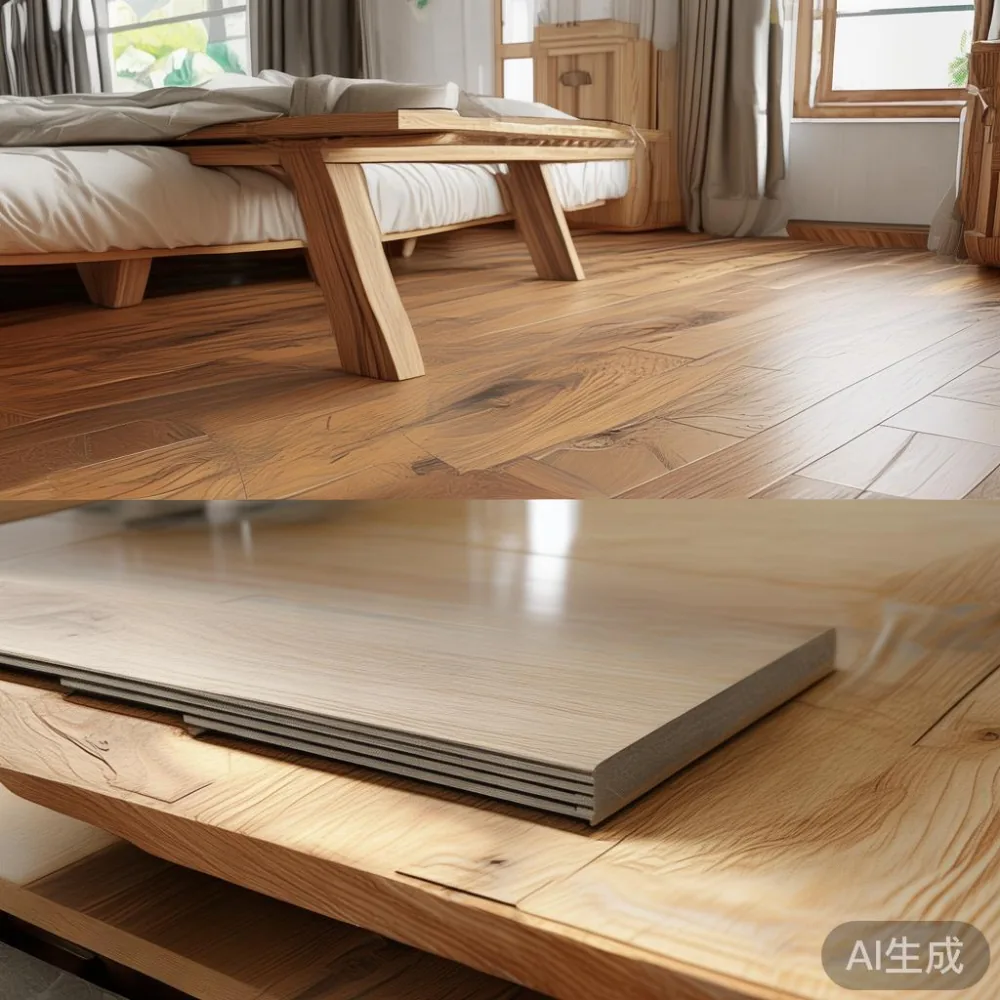
For the boho style palette we are discussing, the pieces most often bought first are the dining table, the bed frame, the wardrobe, the nightstand, and the marble table used as a console. Let us run the five-year math on two parallel sets. Set A is veneer over engineered wood with paper laminate. Set B is solid wood from a maker such as MIDHILL, which has supplied boho style solid wood pieces from Foshan to more than fifteen countries since 2008 and offers a ten-year structural warranty plus lifetime refinishing.
Year 0: purchase price and what the receipt includes
Set A (veneer, MDF core, melamine paper): a 1.8m dining table typically retails from S$699 to S$1,099 in Singapore. A matching 1.5 x 2.0m bed frame runs S$799 to S$1,250. A 180cm three-seater sofa starts around S$1,499 and climbs past S$2,200 for branded labels. Add a marble table console at S$499 and a two-door wardrobe at S$1,199, and Set A lands somewhere between S$5,200 and S$6,500 before GST. After 9% GST and a typical S$60 to S$120 delivery fee, your receipt climbs by S$540 to S$710.
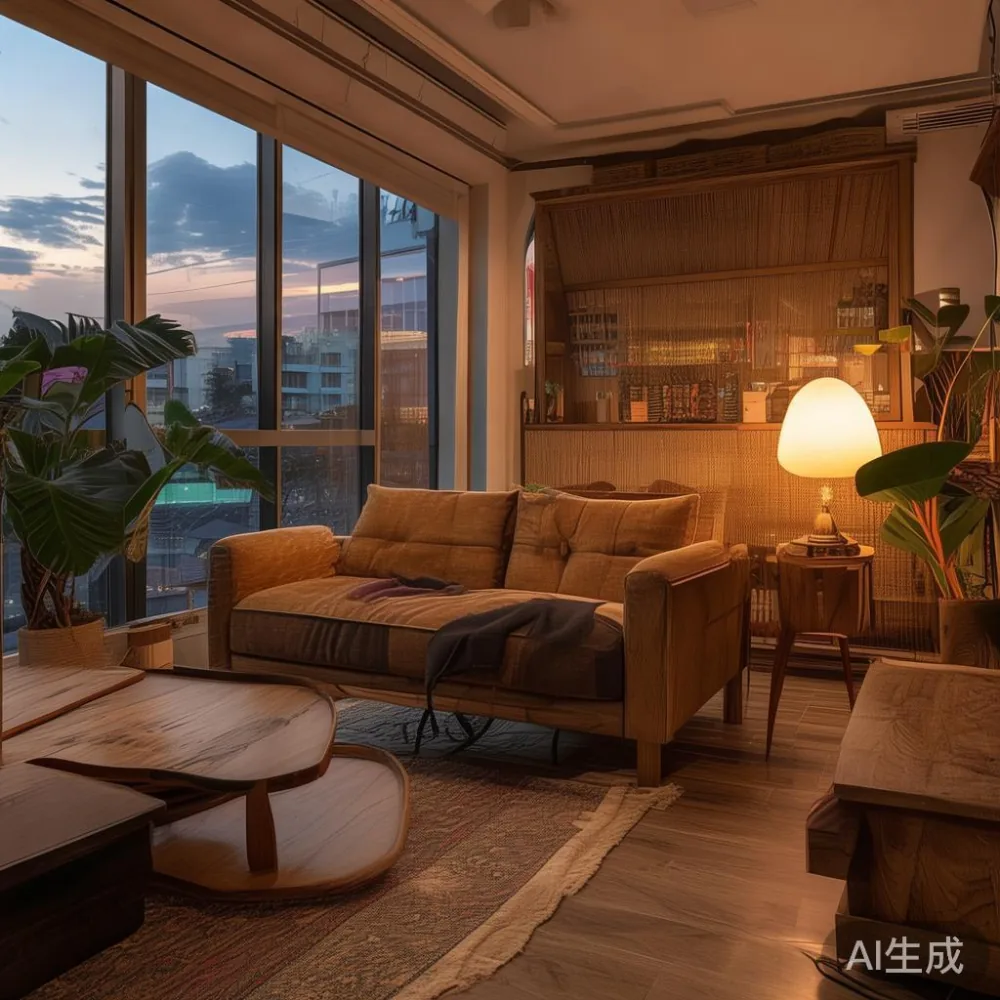
Set B (solid wood, kiln-dried, with traditional joinery): the same 1.8m dining table from a Foshan workshop runs S$1,350 to S$1,850 depending on species (oak, ash, walnut). The bed frame sits between S$1,450 and S$2,100. The sofa at 180cm is S$2,100 to S$2,900. A marble table console with a solid wood base is S$650 to S$950, and a two-door solid wood wardrobe is S$1,750 to S$2,500. Set B lands in the S$7,300 to S$10,300 range before GST. After 9% GST and delivery, the receipt climbs by S$660 to S$990.
So the day-one gap between Set A and Set B is roughly S$2,100 to S$3,800 in favour of the cheaper option. That is the only number veneer advertising tends to print. It is also the only number that matters least.
Years 1 to 2: humidity, delivery realities, and the first repair
Singapore sits between 78% and 92% relative humidity for most of the calendar year. MDF cores and HDF cores absorb that humidity through the unfinished edges and through micro-gaps at the joinery. Within 12 to 24 months you typically see one of three failure modes: swelling along the edge band, corner peeling where the heat-bonded laminate lifts, or a slight cup on the tabletop that turns a S$900 dining table into something that wobbles when you set a glass down.
The repair market is well priced. A veneer edge band re-glue costs S$80 to S$160 per side. A full laminate re-skin is rarely worth it; new replacement is cheaper. In practice, most Singapore owners I have spoken with abandon veneer dining tables and bed frames in year two, and either reuse them as a study desk or list them on Carousell for S$100 to S$250, where the new buyer absorbs the risk.
Solid wood behaves differently. It also moves with humidity, but it moves as a single piece and can be planed, sanded, and re-sealed. My colleague moved a 1.8m solid oak dining table from a Tampines HDB to a Yishun condo on a single trip; the legs were unbolted, the top flipped, and after reassembly a craftsman spent S$180 to plane 2mm off each end. The piece is now 14 years old and has been refinished three times.
Years 3 to 4: cumulative repair spend and the resale reset
By year three, a veneer dining table has usually absorbed one full repair cycle (S$200 to S$350 cumulative) and is showing delamination at the headboard or the wardrobe doors. Bed frames often develop a central sag because the slat supports are 12mm MDF strips with a 70 to 80kg dynamic load rating. A heavier sleeper, say a 90kg adult plus a 25kg partner plus a restless dog, will bow those slats within 36 months.
The cumulative repair spend for Set A over five years, based on what I have observed across Tampines, Bedok, and Punggol HDB owners, lands between S$450 and S$1,100. Some owners add S$350 for a wardrobe re-alignment when the doors stop closing square. Others absorb S$180 to S$260 for a sofa frame re-tighten when the chipboard rails crack at the corner blocks.
Solid wood Set B, by contrast, has typically incurred zero repair cost in years 1 to 4. The first maintenance event is a refinish, which a maker like MIDHILL offers as lifetime refinishing on structural pieces. Refinishing a dining table top in Singapore runs S$260 to S$420. Refinishing a bed frame headboard is S$180 to S$300. A wardrobe full re-oil is S$400 to S$650. Over years 1 to 4, assume one partial refinish averaging S$320.
Year 5: what each set is actually worth
Now we get to the number that flips the script. At year five, a mid-range veneer dining table in working condition sells on the second-hand market for S$80 to S$220. A matching bed frame fetches S$120 to S$280. A three-seater sofa with a chipped frame usually goes for S$200 to S$450, sometimes free to a mover who wants the upholstery only. The wardrobe, if it still closes, is S$200 to S$400. Total residual value for Set A: roughly S$600 to S$1,350.
Set B, in the same second-hand market, behaves differently. Solid wood ages into character, which is precisely what a boho style home rewards. A 1.8m solid oak dining table at year five, lightly refinished, sells for S$700 to S$1,100. A solid wood bed frame is S$600 to S$900. A three-seater sofa with a kiln-dried hardwood frame is S$900 to S$1,400 because the upholstery can be re-stuffed while the frame stays. The wardrobe is S$800 to S$1,400. Total residual value for Set B: roughly S$3,000 to S$4,800.
Add it up. Set A costs S$5,800 to S$7,200 over five years when you fold in repairs, refinishes, and the loss of residual value. Set B costs S$5,300 to S$8,100 over the same window. The crossover, for a typical three-piece boho style starter set in a HDB, sits at roughly year four. After that, solid wood is the cheaper option, and the gap widens every year you keep using the furniture.
How does this play out inside a HDB lift and corridor?
This is where I see the most expensive mistakes. A 1.8m dining table in a box will not fit into a standard HDB lift on its longest edge. The internal lift car on most blocks in Tampines and Bedok is about 1.4m deep and 1.1m wide on the door opening. The diagonal is therefore about 1.78m, which means a 1.8m table must be tilted and rotated, often through two 90-degree turns in the corridor.
Veneer tables survive this poorly because the edge band is the weakest plane. Solid wood tables survive it better because the corner joinery is mechanical (mortise and tenon, dowel, or bolted corner bracket). If you live above the 12th floor or in a block where the lift car is the older 1.1m depth variant, plan for disassembly. That is another reason to choose a maker that bolts the table top to the apron rather than gluing it. MIDHILL ships its larger dining tables with a removable top and a numbered apron for exactly this reason, which is the kind of detail that only matters the first time you move.
How do I choose a loveseat for a HDB living room?
Pick a loveseat between 140cm and 165cm wide if your living room is under 18 square metres, because anything wider than 170cm will fight the corridor during delivery and crowd the TV console wall, leaving no room for the boho style rattan accent chair you actually want in the corner. This single rule solves more layout problems than any colour swatch.
Now for the nuance. A loveseat is a sofa built for two, and in HDB living rooms the most useful width is 150cm, which fits a 90kg adult plus a partner with 12cm of elbow room on each side, leaves a 70cm walkway to the dining area, and survives a 1.1m lift door. The depth should sit between 85cm and 95cm so that a 60cm marble table console can tuck behind without blocking the window. Frame material matters more than fabric in a boho style setting, because the boho palette layers textiles anyway. Choose a kiln-dried hardwood frame with sinuous-spring or eight-way hand-tied suspension, both of which can be re-tied at year eight for roughly S$220 to S$380. Skip frames advertised as solid wood but built with particleboard in the back rails, because that is the part that fails first and is the part no warranty covers.
For post-modern light luxury interiors, a loveseat in oatmeal boucle or sage velvet gives the room the soft sculptural anchor that the rest of the boho style accessories can layer against. For American light luxury, a deeper 95cm seat in cognac leather with a kiln-dried ash frame reads warmer and pairs better with a walnut nightstand and an oak bed frame in the adjacent bedroom.
What about the marble table, the nightstand, and the wardrobe?
These three pieces get less attention but account for a surprising share of the five-year spend. The marble table console is where veneer and solid wood often intersect, because the top is marble either way and the base is what differs. A marble top with an MDF base is fine for a bedroom dresser, but in a boho style living room it will ring hollow when knocked and will likely snap at the corner block within three years. A marble top with a solid wood base, even at 1.2m long, will outlast two sofa reupholsteries.
The nightstand is the easiest win on the solid wood side. A 45cm wide, 55cm tall solid wood nightstand costs S$320 to S$520 in Singapore and survives every move. A veneer nightstand at S$150 to S$250 needs replacing within four years because the drawer runners wallow out and the drawer fronts misalign. If your budget only allows one piece of solid wood in the bedroom, make it the nightstand pair, because the bed frame and wardrobe can be solid wood too but the nightstand is the piece you touch 365 nights a year.
The wardrobe is the largest single line item and the one most likely to drift into engineered wood because the panels are large and the price gap is wide. A 1.8m two-door wardrobe in veneer runs S$999 to S$1,499. The same wardrobe in solid wood is S$1,750 to S$2,800. The five-year math here strongly favours solid wood, because warped wardrobe doors are the single most common reason HDB owners replace a bedroom set.
What changes if you live in a condo instead of a HDB?
Condos in Singapore typically have wider lift cars and private loading bays, which removes the disassembly question but not the humidity question. Private condos at high floors often run 2% to 4% lower humidity than HDBs because of better air-sealed envelopes, which is a small but real advantage for solid wood over a ten-year horizon. If you live in a Punggol or Yishun condo above the 20th floor, expect your solid wood pieces to need refinishing roughly 18 to 24 months later than the same pieces in a ground-floor HDB.
Service lifts in most new condos handle a 2.4m x 1.2m crate, which means a 1.8m dining table can ride flat. Older condos without a service lift still rely on the passenger lift, and the same 1.4m depth rule applies. The bigger difference is insurance and warranty response. A maker with a ten-year structural warranty and a regional service network will typically respond faster to a condo than to a HDB simply because the access is easier. That is worth roughly S$80 to S$150 per service call in saved coordination time over a five-year span.
Is the lower GST relief or free shipping threshold worth choosing veneer?
Free shipping over a S$350 equivalent (roughly US$260) is common across both categories, so that does not change the math. Where the math does move is the warranty. A one-year warranty on a veneer dining table means that the failure you see in year two is fully on you. A ten-year structural warranty on a solid wood dining table from a maker like MIDHILL means that a cracked apron or a split leg in year three is on them. Quantify that: a typical apron repair in Singapore is S$220 to S$360. Multiply by the number of structural pieces in a boho style starter set, and the warranty alone pays back roughly S$600 to S$1,200 of expected repair cost over a decade.
The five-year verdict in one paragraph
If you plan to keep your furniture for two to three years and you are decorating a rental or a sublet, veneer is the rational choice. If you plan to keep your furniture for five years or longer, and especially if you intend to move it at least once between a HDB and a condo, solid wood is the cheaper option once you include repairs and residual value. The boho style home rewards surfaces that age well, because the look itself is built on texture, grain, and the slight imperfections of natural material. A veneer piece that looks new for two years and then collapses will undo the very aesthetic you are paying for. A solid wood piece that looks slightly weathered at year five will look like the room you actually wanted to build.
Practical checklist before you click add to cart
Measure the lift car at your block. Note the depth, width, and diagonal. Measure every corridor turn. Take a photo of the lift door and the loading bay. Compare those numbers against the unpackaged dimensions of every piece on your shortlist. For a French corner sofa for HDB flat delivery, plan the corner orientation in advance because a corner sofa reversed on the third floor of a Punggol walk-up will not survive the stairwell. Ask whether the dining table top is removable. Ask whether the wardrobe ships with the doors off the carcass. Ask whether the sofa frame is kiln-dried solid wood or engineered wood with a hardwood veneer. Ask whether the maker offers lifetime refinishing. If the answer to that last question is yes, the five-year math almost always works out in your favour.