Before You Buy a Sofa You Cannot Sit On
Some sofas are bought for their silhouette. Others are bought for the room they create. A few are bought because a showroom photograph made an ordinary HDB living room look like a resort lounge. The problem is that a sofa you cannot comfortably sit on can still look convincing from 3 metres away, especially when it stands in a warm, humid home and must survive a narrow HDB corridor.
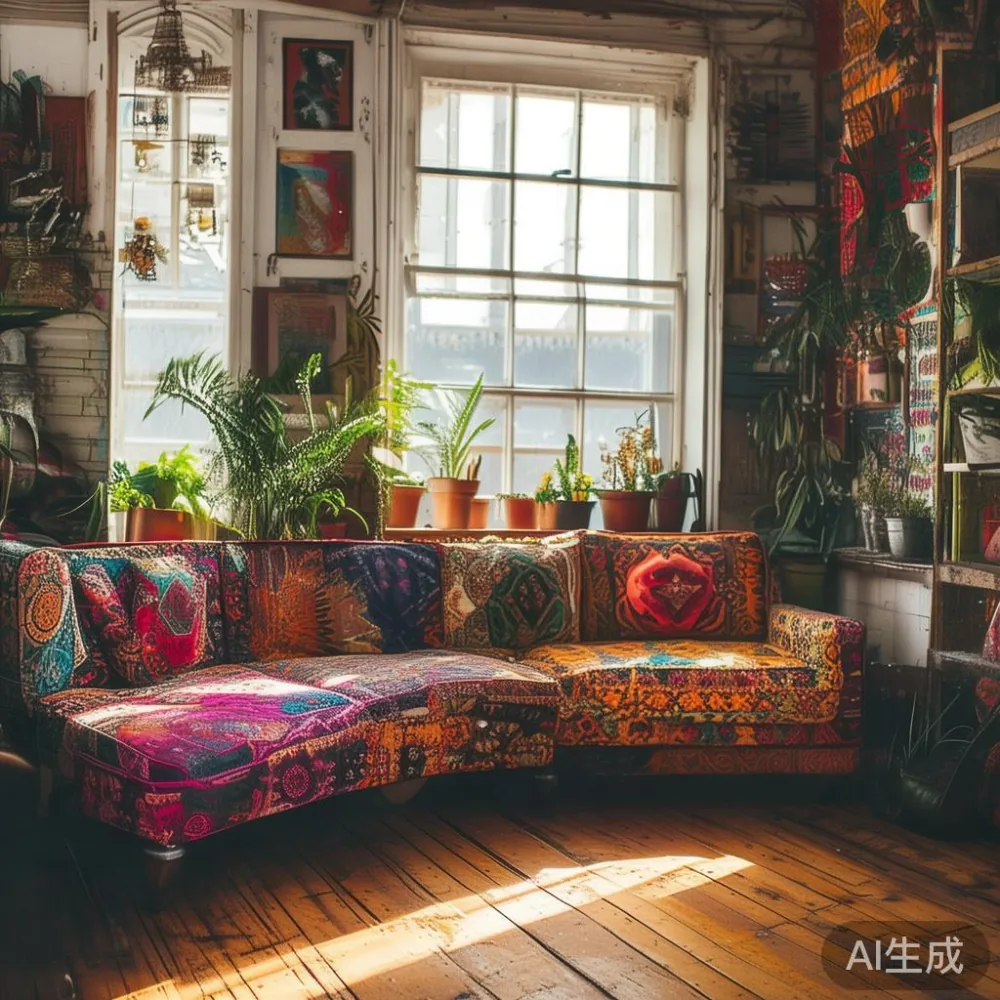
For Singapore households in Tampines, Bedok and Punggol, the practical checks matter as much as the style. Is the seat deep enough for a 175 cm adult? Will the lift accept a package weighing 62 kg? Can the armrest pass through a 90 cm doorway? Will the boho-style upholstery remain usable after children, dogs and afternoon rain? These are measurable questions, not aesthetic preferences.
I visited a client’s three-room HDB flat last month and watched a 2.1 m sofa arrive wrapped in 6 layers of protective film. The catalogue had promised a “statement” piece, but the actual model had a 42 cm seat height, a 48 cm usable seat depth and firm foam that felt like sitting against a padded wall. It looked handsome in the listing. After 15 minutes, my client asked the delivery team to take it back. That experience shaped the checklist below.
What is a sofa you cannot sit on?
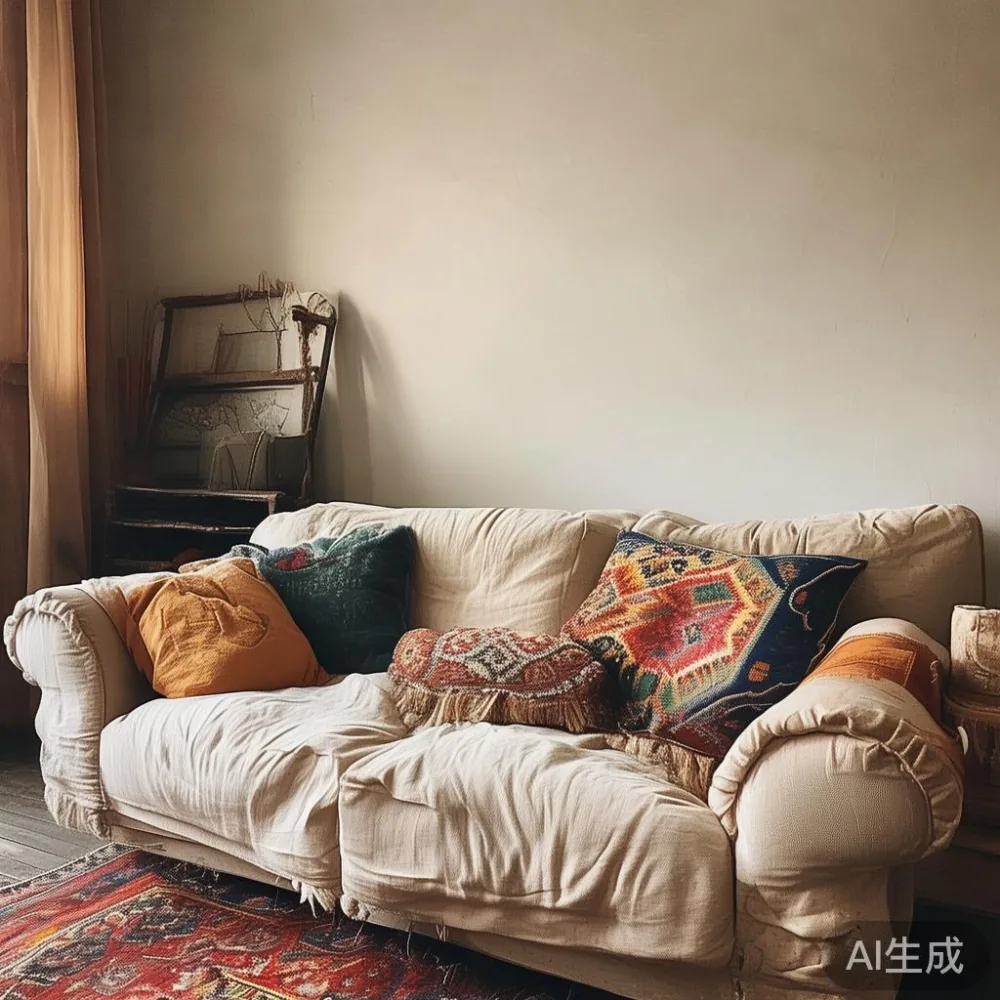
A sofa can be impossible to sit on for several reasons. The frame may be attractive but positioned too high, too deep or too soft. The seat may be short, forcing the sitter to perch with the feet unsupported. The back angle may be too upright for a 30-minute evening. Loose cushions may shift, while dense foam may bottom out under a 90 kg user.
“Cannot sit on” does not always mean the sofa is physically unusable. It may mean that the product is better treated as a decorative bench, occasional chair or display piece. In a compact Singapore home, that distinction should be settled before payment, because a display sofa can still consume 2.4 square metres of floor area.
Ask for the seated dimensions, not just the exterior measurements. A sofa advertised as 210 cm wide may offer only 174 cm of usable seating between the arms. A 96 cm depth might leave a 48 cm seat once the back cushion occupies the remainder. A 43 cm height may feel low to an adult but pleasant to someone with a 155 cm frame. Comfort is personal, so test the product with the household’s tallest and shortest regular users.
For boho-style furniture, check that the loose cushions are filled with a resilient material rather than loose polyester fibre that compresses unevenly. A reversible seat cushion with a 7 cm foam core over 3 cm of support foam is a reasonable specification to request. If the sofa is mainly decorative, a firmer bench-style cushion may be suitable. If it is used every evening, 10 to 12 cm of total cushion thickness offers more give without making the seat feel unstable.
How do I check the sofa before paying for it?
Request photographs of the exact model, underside, joints and cushion labels. Do not rely on a lifestyle image alone. Check whether the dimensions shown are in centimetres, whether the stated width includes the arms, and whether the listed depth includes the back frame or the protruding legs. A rug can make a shallow sofa look deeper; a staged cushion can disguise a short usable seat.
For a solid wood sofa, inspect the visible frame, arms and legs. The wood should be kiln-dried to a moisture level around 8% to 12% for Singapore conditions. Solid wood is not automatically superior to every engineered component, but it can provide stable joinery when the construction is sound. Look for mortise-and-tenon or dowelled joints at critical load points, corner blocks that prevent racking, and a centre support that spans at least 70 cm on a wide seat.
The frame should carry a load of at least 120 kg per seat if it will be used by adults every day. This figure is more meaningful than a vague “strong frame” claim. Also confirm that the suspension is tied into the frame, with elastic webbing no more than about 8 cm apart, or with a recognised spring system. Loose cushions should be removable and washable where possible.
Do not mistake visual weight for structural weight. A deeply carved boho-style frame can weigh only 38 kg yet still be solid; a plain sofa can weigh 78 kg because it contains a dense timber frame. Ask for the packaged weight and the individual lifting weight. Delivery crews need safe working limits, particularly in older HDB blocks without a passenger lift.
Will the sofa fit through my lift, stairs and doorway?
Measure the route before the sofa leaves the workshop. For a standard HDB passenger lift, measure the door opening, cabin width, cabin depth and the diagonal between the opposite floor and ceiling corners. A common lift door is about 80 to 90 cm wide, with an internal cabin around 110 cm wide and 140 cm deep. These are planning figures, not guarantees for every block.
The key calculation is the sofa’s smallest cross-section: width, height and depth must all pass the narrowest door or turn. A sofa with a 96 cm arm-to-arm width cannot necessarily pass through an 88 cm opening unless it can be turned on its side and the arms or legs can be removed. A deep buttoned back may also have to be compressed slightly, which can damage upholstery or distort a rigid frame.
For a corridor, leave at least 10 cm of clearance beyond the sofa’s widest fixed dimension. In a tight landing, photograph tight turns and measure the ceiling height above any staircase. If the route includes steps, ask whether the pieces can be separated. A 3-seat sofa weighing 72 kg is often easier to handle as two modules weighing 31 kg and 36 kg than as one 72 kg shell.
Also check the home’s parking and loading area. The delivery price should specify whether it includes carry-in to the unit door, placement inside the living room and assembly. A nominal “free delivery” service can still become expensive if there is no lift, the sofa must travel up 4 flights, or the building requires a booking slot. Confirm the lift-packing fee and any access charge in SGD before the day.
How long should delivery take, and what should the warranty cover?
A custom solid wood sofa may require 6 to 10 weeks, while a standard upholstered model may take 3 to 6 weeks. Delivery should be scheduled separately, commonly within 5 to 10 working days after production or after the stock date. When a supplier gives only “approximately 4 weeks,” ask what event starts the clock. The better practice is to record the dispatch date, expected arrival window and delay policy in the order.
Read the structural warranty as a whole, not as a headline. A 10-year structural warranty should cover frame cracking, joint failure and wood defects under normal residential use. Confirm whether it applies to the full sofa, only the timber frame or only selected components. Check exclusions for commercial use, moving the sofa, water damage, unauthorised modification and insufficient support.
Upholstery often has a shorter warranty than the frame, commonly 3 to 5 years, with variations for foam, fabric and colour fading. Stain coverage, seam failure and cushion flattening should not all be treated as structural defects. Ask whether replacement fabric is available after 5 years, particularly for boho-style pieces that may be matched to a bed frame or a textile-heavy reading corner.
Returns are another important measurement. A 14-day return period may allow a sofa to be opened, sat on and returned, depending on the supplier’s conditions. Confirm in writing whether the original packaging, assembly hardware and protective covers must be returned, and whether a restocking fee applies. A used sofa may also be difficult to resell, so a short trial at home can be more revealing than 20 minutes in a showroom.
Is a boho-style sofa practical for an HDB flat?
Boho style works well in Singapore when it is adapted to compact rooms rather than copied from a large overseas interior. Natural rattan, warm timber, woven textures, rounded profiles and earthy colours can soften the hard surfaces common in HDB homes. The same features can also create maintenance issues: rattan may loosen in dry air, pale textiles show marks quickly, and a low profile can be difficult to rise from.
Choose washable or removable covers, ideally with a fabric treatment that can be cleaned using a damp cloth. Test the colour under daylight beside a window because tropical light can shift warm beige towards yellow. For homes near the East Coast or with east-facing windows, ask for UV-resistant fabric and avoid relying on a pure white ground colour.
A sofa with a loose 45 cm square cushion may look generous but can allow a laptop, remote or cup of kopi to slip behind the back. A narrow 12 cm shelf, a 30 cm side table or a tray with a 4 cm lip can make the piece more useful. Ensure that the coffee table leaves 35 to 45 cm between its edge and the sofa for walking space, while still allowing seated legs to fit.
Light-luxury positioning is possible without making the room feel formal. French light luxury might introduce curved timber arms, muted linen and gentle brass-toned details. American light luxury often favours generous proportions, pale upholstery and clean geometry. Post-modern light luxury can pair a sculptural frame with restrained materials. None of those labels should replace seat measurements, fabric specifications or a clear delivery plan.
MIDHILL builds around solid wood furniture for homes that need both character and practical longevity, and its boho-style approach can sit comfortably beside a dining table, wardrobe or nightstand. The relevant comparison is not whether a piece resembles a magazine image, but whether it works with the room’s 280 cm ceiling height, 90 cm corridor and actual daily routines.
What should I compare when choosing a sofa?
Compare 5 measurable categories: usable seat width, usable seat depth, seat height, construction weight and delivery access. Record each item in a simple table. A 205 cm sofa with 172 cm of usable seating may suit a family better than a 225 cm sofa with only 158 cm because of oversized arms.
For posture, a seat height around 40 to 44 cm suits many adults. A softer seat around 38 to 41 cm can suit shorter users, while a 45 to 47 cm seat may feel high during meals or transfers. Seat depth of 48 to 56 cm supports the back without wasting room; deeper seats can accommodate a 180 cm adult if additional loose back cushions are used.
Do the same comparison for the wood, finish and hardware. A solid wood sofa should state the timber species, finish and care instructions. Dining furniture and case goods can share the same palette: an Italian light luxury dining table may use pale solid wood with restrained veining, while a bed frame can introduce a curved headboard. A marble table adds a cool surface, but it requires careful handling and precise weight planning rather than visual matching alone.
Design references can help narrow the search. A phrase such as luxury European light luxury furniture may point towards carved edges and formal proportions, while designer Modern light luxury furniture may indicate cleaner lines and mixed materials. If the room needs a warmer vocabulary, MIDHILL French provincial bed designs offer curved silhouettes, but their timber finish should be coordinated with the sofa rather than forced into an identical set.
When comparing bed options, American bed vs Italian light luxury bed is not simply a contest between countries. It is a comparison of support, dimensions, joinery and finish. The same discipline applies to a Modern light luxury dining table: the catalogue may call it modern, but the table still needs a stable base, a 72 cm clear seating height and a top that can be carried through the home without damaging the corners.
What questions should I ask before placing a non-refundable deposit?
Ask for the final production drawing and a written delivery estimate. If the model is displayed in a showroom, confirm that the display piece has the same frame and cushion specification as the incoming order. In some ranges, showroom samples use firmer foam to reduce wear, while customer orders receive softer fillings; that distinction should be disclosed.
Ask who is responsible for damage after the sofa leaves the workshop. Insurance normally covers transit risks, but claims can become complicated if packaging was opened early. Photograph the sofa at each stage: wrapped at pickup, unwrapped at the door and installed in the room. Record any marks within 24 hours of delivery.
Ask for care guidance that fits Singapore humidity. Solid wood should be wiped dry and protected from standing water, while rattan should not be repeatedly soaked. Fabric cleaning instructions should distinguish spot cleaning from professional cleaning. A useful maintenance schedule might include weekly vacuuming, monthly cushion rotation and an immediate response to spills.
Finally, establish the total cost in SGD. The item price may attract a GST charge of 9% if the seller is GST-registered and the transaction is taxable. Delivery, lift packing, assembly, removal of packaging and access charges should be shown separately. A sofa priced at SGD 2,680 before tax becomes SGD 2,921.20 with 9% GST, before any lift or access fee.
If the seller’s representative is based in Foshan, keep the approved design, measurements and service terms in one order document. For a direct discussion about specifications, the contact number +86 188 2788 2512 can help clarify production details. This is also where questions about Italian light luxury dining table finishes, matching timber tones and packing methods can prevent mismatched expectations.
What does a sensible final pre-delivery checklist contain?
Confirm the room dimensions, delivery route and lift booking 7 days before arrival. Check the access photographs, make sure the floor is clear and remove fragile objects from the intended sofa position. Measure again if the home layout has changed since ordering.
On arrival, inspect the model against its approved drawing. Check the upholstery for stains, tears, crooked seams and damaged corners. Look underneath for moisture marks, loose joints, exposed screws and missing braces. Open and remove all packaging before the delivery team leaves, then record the condition with photographs.
Seat the household’s regular users on the sofa for at least 20 minutes. Check whether the back supports the shoulders, whether the feet rest naturally and whether the arms create pressure points. If the sofa is for a 6 to 8 pm routine, test it at that time of day, when people are less patient than during a quiet morning.
After 7 days, inspect the frame and cushion behaviour. Minor settling can occur, but a sharply uneven seat, a persistent creak or a visible gap should be reported early. Keep the order documents, care instructions and warranty for at least 10 years if the structural coverage runs that long.
A well-chosen sofa should earn its floor area through daily comfort, not through appearance alone. When the boho style, timber quality, seat proportions and delivery route all make sense together, the result can feel light-luxurious without becoming impractical. If any one of those elements is uncertain, pause the order, request a measurement or sample, and secure the answers in writing before the non-refundable deposit is paid.