Boho Style Living in Singapore: How to Care for Lacquered Wood When the Humidity Never Quits
If you have ever run your hand along a freshly lacquered solid wood dining table in a Tampines HDB at 9pm and felt a faint tackiness you did not notice in the showroom, you already know what I am about to say: Singapore is a brutal testing ground for any finished surface. Relative humidity sits between 70 and 85 percent for most of the year, indoor temperatures rarely drop below 24 degrees, and the afternoon thunderstorm pushes moisture through open windows and corridor vents like nobody's business. I learned this the hard way last month when I visited a client's resale flat in Bedok. Her two-year-old walnut sideboard, bought from a designer brand I will not name, had developed a milky bloom along the top edge that no amount of wiping would shift. The piece was sound, the wood was fine, the lacquer had simply lost the fight against the climate.
This guide is for anyone who has fallen for boho style, for the warm rattan, the turned mango-wood legs, the pale ash dining chairs with cane backs, and now wants to keep that finish beautiful for the next decade. It is also written for owners of a solid wood bed frame, a wardrobe, a nightstand, or even a small marble table with a lacquered timber plinth, because the same rules apply. Where I mention a brand, it is because I have used or specified their pieces, never as a paid mention. A note on MIDHILL: their 10-year structural warranty and lifetime refinishing service, both unusually generous for the category, are two of the reasons I send clients in Punggol and Bukit Batok their way when budgets are tight but quality cannot slip. Their export background, shipping to 15 or more countries, also means their finishing room has been tuned for climates far harsher than ours.
Why does lacquer behave so differently in a tropical climate like Singapore?
Lacquer is a cured film, not a stain that soaks into the wood. It sits on top of the timber as a continuous skin, usually between 0.04 and 0.12 mm thick on a quality dining table. That skin is hygroscopic, meaning it absorbs and releases moisture with the air around it. In a dry climate, it slowly loses plasticiser and stays hard and glassy. In Singapore, where the daily humidity swing is small but the absolute moisture content is high, the film never fully relaxes. The result is a surface that feels softer under the fingernail, scuffs more easily, and can cloud when warm, wet glassware is placed directly on it. A dining table finished in high-gloss or matte lacquer from a brand that pre-conditions its timber to 10 to 12 percent moisture content will handle this far better than a generic piece that was dried to 6 percent and then shipped in a container for 30 days.
Local context matters. HDB corridor widths are typically 1.2 to 1.5 m and lift doors about 0.9 m wide, so most flat-pack lacquered furniture arrives in cartons no larger than 1.1 m on the long side. That is good news: bigger lacquered panels, such as sliding wardrobe doors above 1.8 m, are more vulnerable to flexing in transit and to post-delivery swelling once they sit in your home. If you are ordering a boho style wardrobe with full-length mirror panels, ask the supplier how the doors are balanced for a 78 to 82 percent humidity range, not just for the factory floor.
How do I choose a bean bag for a HDB living room?
Pick a bean bag that uses a removable, washable cover in a breathable cotton-linen blend, a liner bag you can open to add or remove filling, and at least 1,500 mm of seating width so two adults can sit without falling into the corridor. Bean bags are not lacquered, but they sit next to your lacquered pieces, and the wrong cover will wick moisture onto the floor and up into timber legs.
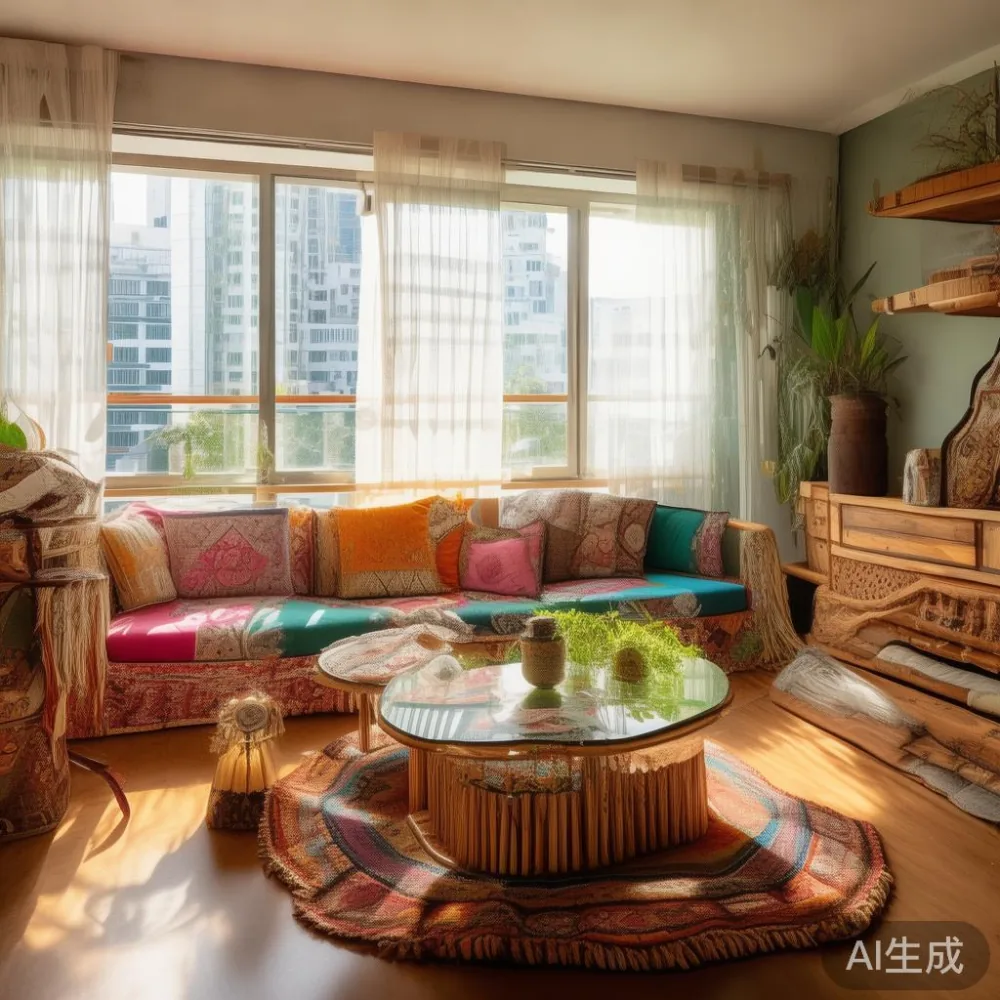
That answer covers the question, but the reasoning is worth the next two paragraphs because HDB living rooms, typically 18 to 24 square metres in a 4-room flat, demand a specific balance of softness and structure. A 1.2 m wide round bean bag in faux leather will look right for about a week, then it will start sweating onto the parquet or vinyl beneath it, and that moisture will creep into the unfinished underside of your solid wood sofa frame or the lower rails of your dining bench. Cotton, linen, or recycled canvas covers breathe. They also take the relaxed, layered look that boho style is built on: a cream linen sack on top of a jute rug, a faded kilim cushion against a pale ash nightstand, and a trailing pothos on a rattan stand. I keep a 1.4 m by 1.4 m square version in my own study in a Tiong Bahru walk-up, and the cover has been washed eight times in three years with no shrinkage, which is more than I can say for a cheaper polyester one I tried in 2022.
Two more numbers worth knowing. Filling weight matters more than people think: a 140 cm square bag should hold 6 to 8 kg of EPS beads or shredded foam. Under-filled bags feel cheap and fold the cover; over-filled bags create pressure points on the timber floor beneath. If you are putting a bean bag within 30 cm of a lacquered marble table with a wooden plinth, leave a 5 mm felt pad under each corner of the table so no humid air gets trapped.
What is the right way to clean a lacquered dining table every week?
Wipe with a damp, well-wrung microfibre cloth, then dry immediately with a second cloth, and never use a spray product that contains silicone, ammonia, or alcohol. That single sentence will carry you through 90 percent of situations. The rest of this section explains the 10 percent, because Singapore throws a few curveballs.
Frequency matters. A household of four eating two meals a day at the table should do a light dry-dusting every evening and a damp wipe three times a week. For a couple in a Punggol eco-HDB who cook most nights, daily is better. Use two cloths: one slightly damp with plain water, ideally filtered, and one dry. Fold each into quarters so you have eight clean faces to work with. Wipe in the direction of the grain, even on a glossy finish, because cross-grain micro-scratches show up under the dining room downlight at 7pm when the children do homework. Once a month, add two to three drops of pH-neutral wood soap to 500 ml of water. Brands like Bio-D or Ecover sell 1-litre refills for around SGD 18 to 22 at Cold Storage, which works out to roughly SGD 0.04 a wipe.
Avoid the temptation to use a commercial polish. Most contain silicone oils that look gorgeous on day one and slowly interfere with future re-lacquering. I have refinished three sideboards in the last 18 months where the previous owner had used Pledge or similar for five years; the lacquer had yellowed unevenly and the silicone had to be sanded off with 320-grit before a fresh coat could bond. That refinishing cost the clients SGD 480 to 720 per piece, depending on size. A microfibre cloth and water would have kept the original finish in showroom condition.
Can I put hot pots and wet glasses directly on a lacquered surface?
No, never place a hot pot, a steaming bowl, or a wet glass directly on lacquer. Use a trivet, a coaster, or a 3 to 5 mm felt pad. Heat above 60 degrees will soften most lacquers, and trapped moisture under a glass will leave a white ring within 20 to 40 minutes.
The white ring you sometimes see on a coffee table is not damage to the wood. It is moisture trapped between the glass rim and the lacquer film, which locally swells the surface. On a fresh high-gloss finish, the mark usually disappears within 24 hours once the table sits in air-conditioned air below 65 percent RH. On an older or matte lacquer, the ring can become permanent. I keep a set of 12 cm round cork coasters in a cane holder next to every nightstand I own, and a set of 18 cm square marble coasters next to the sofa. The marble ones double as small serving plates and cost about SGD 28 for a set of four at any homeware store in ION or VivoCity.
For dining use, a 90 by 40 cm linen runner down the centre of the table catches most spills and protects the highest-wear zone. Linen breathes, so any moisture wicks through and evaporates instead of pooling. Cotton-poly blends do not breathe as well. If you entertain often, a 6 mm thick tempered glass top, cut to your table size with a 5 mm radius edge, is a Singapore-friendly compromise. It costs roughly SGD 280 to 420 for a 1.8 m table at a glazier in Geylang, and it sits on six small clear silicone bumpers so air still moves under the glass. Take the glass off twice a month to wipe both surfaces.
How does air-conditioning interact with lacquered furniture, and what humidity should I aim for?
Run your air-conditioner to hold indoor relative humidity between 50 and 60 percent, with a target of 55 percent. Below 45 percent, lacquer dries out and micro-cracks. Above 65 percent, it softens and scuffs. A SGD 25 hygrometer from a Taobao pick-up locker in Tampines Hub is the single best SGD you can spend on furniture care.
Singapore homes swing harder than people realise. A 4-room HDB with the bedroom air-conditioner set to 23 degrees from 11pm to 7am can drop the living room from 78 percent RH at sunset to 52 percent by 1am. That 26-point swing over six hours is more stress on a lacquer film than a full day of stable 70 percent. Two simple changes flatten the swing. First, leave the bedroom door open an inch or two at night so humidity equalises. Second, run a dehumidifier in the living room for two hours before bed on days the afternoon humidity hits 85 percent or higher. A standard 12-litre Meaco or Mitsubishi unit costs about SGD 320 to 480 and pulls roughly 200 W. Running it for 8 hours a night at the current electricity tariff of around SGD 0.32 per kWh works out to about SGD 0.51 a night, or SGD 15 a month. Cheaper than refinishing a single drawer front.
Placement matters as well. Keep lacquered pieces at least 30 cm from any wall that faces the afternoon sun, especially on the 13th to 18th floors of a Punggol HDB where west-facing glass is unfiltered. Direct sun through a single-glazed window can heat a wardrobe door to 48 degrees, which is enough to blister a darker stain. A 180 by 250 cm linen curtain on a 28 mm pole costs around SGD 110 to 160 from a custom tailor in Joo Chiat and drops the surface temperature by 8 to 10 degrees.
Which long-term habits actually extend the life of a lacquered finish?
Rotate objects, lift instead of drag, and refinish every 8 to 12 years. Three habits, three paragraphs, three sets of numbers.
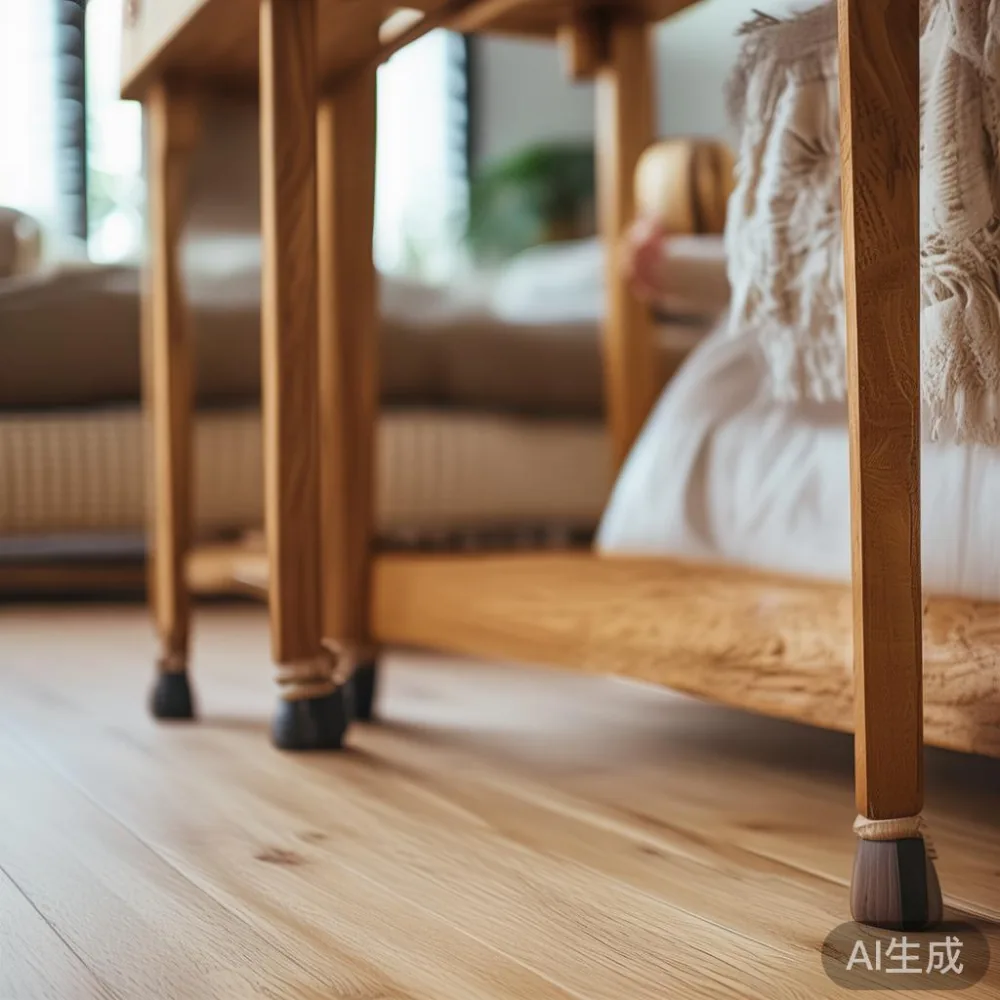
Rotation sounds fussy, but a vase that sits in the same spot for five years blocks UV light unevenly and creates a visible tan line on the wood beneath. Move decor 5 to 10 cm every quarter. The same applies to a tabletop centrepiece. Lifting instead of dragging is the single biggest cause of deep scratches I see on dining tables, especially when children drag school bags across the surface. A 30 by 30 cm felt pad under each chair leg costs about SGD 12 for a set of 16 and prevents the kind of abrasion that no amount of lacquer can mask. For a solid wood bed frame, the same pads under the four corners stop the frame from shifting on tile, which would otherwise shear the joints at the headboard over a decade.
Refinishing every 8 to 12 years sounds aggressive, but it is the right cadence for a piece you intend to keep for life. Light buff-and-coat, no sanding, costs around SGD 18 to 28 per square metre of surface and brings a tired finish back to 90 percent of new. Full sand-and-recoat, the kind you want for a heavily damaged surface, runs SGD 45 to 80 per square metre. For a 1.8 m dining table with four leaves, expect SGD 320 to 480 for a full refinish in a workshop, plus SGD 60 to 90 for transport if you are in a Punggol or Sengkang condo. MIDHILL offers lifetime refinishing on its solid wood pieces, which is unusual; most Singapore retailers offer one or two free re-polishes within the first 24 months, then charge. A ten-year cost comparison is revealing. Pay-as-you-go refinishing twice across a decade at SGD 400 a session is SGD 800. A piece from a maker that includes lifetime refinishing effectively amortises that to zero, and the lacquer chemistry is matched to the original, which avoids the compatibility issues you sometimes see when a third-party finisher applies a generic product over an unknown factory coat.
What should I do in the first 14 days after delivery to settle a new lacquered piece?
Keep the room at 55 to 60 percent RH, avoid direct sunlight, do not place any object on the surface for 48 hours, and leave 10 to 15 cm of airflow behind any wardrobe or sideboard so the back panel can equalise with room conditions. Those five steps protect your 14-day return window and your warranty at the same time.
The first 14 days are when a lacquer film is most vulnerable. It is fully cured at the factory, usually after 21 to 28 days in a temperature-controlled booth, but it is still adapting to its new environment. A solid wood dining table shipped in January from a 10 percent RH factory into a 80 percent RH HDB in Bedok will absorb 3 to 5 percent moisture in the first week, expanding roughly 1.5 to 2.5 mm across a 1.8 m width. That movement is normal, and good joinery allows for it. What is not normal is a tabletop that cups upward at the ends or splits at the breadboard ends, both of which signal that the timber was not properly conditioned before finishing. A reputable supplier will have the moisture content stamped on the quality-control sheet, and the figure should sit between 9 and 12 percent for tropical delivery.
Delivery logistics in Singapore are usually straightforward, but a few numbers help. Most HDB corridors allow a maximum package dimension of about 1.2 m on the long side before the item has to be hoisted. A king-size bed frame headboard wider than 1.5 m is sometimes delivered in two pieces and joined on site. Allow 30 to 60 minutes for assembly, more if the route includes a tight stairwell in an older walk-up. Free shipping kicks in over US$350 for several cross-border brands, which is roughly SGD 470 at current rates, a useful benchmark when comparing local retailers who may waive the fee above SGD 500 instead. Keep the original foam, cardboard, and plastic wrap for the first 30 days in case a return is needed, since a 14-day return window is standard in Singapore and proof of good packaging is often required.
One last point on value. Light-luxury positioning, whether French light luxury with its pale limed-oak finishes, American light luxury with cleaner shaker-influenced lines, or the post-modern light luxury mix of curved edges and tonal veneers, all use lacquer as the silent hero. The wood gets the Instagram post, the lacquer does the daily work. Treat it accordingly, and a boho style solid wood bed frame bought this year in Tampines will still look current when the next BTO in Punggol finishes in 2031 and the cycle starts again.