Warm Minimal Meets Boho Style: Matching Solid Wood Furniture in a Singapore Home
Last month I visited a 92 sqm BTO in Punggol with my colleague Priya, and we spent a full afternoon rearranging one Teak bedside table, one solid oak bench, and a single linen armchair until the corridor between the kitchen island and the living room finally felt like a home rather than a furniture showroom. Her husband had been complaining that the apartment looked "cold," and she had been quietly furious because every catalogue showed the same pale Scandi styling that ships flat-packed in 7 to 14 days. The fix was not a bigger sofa or a thicker rug; it was a small set of decisions about wood tone, fabric weight, and negative space. If you live in a Tampines four-room flat, a Bedok executive condo, or a Punggol BTO with a 0.9 m wide corridor and a service lift that takes 1.5 m × 2.1 m of cargo, those decisions are the entire project.
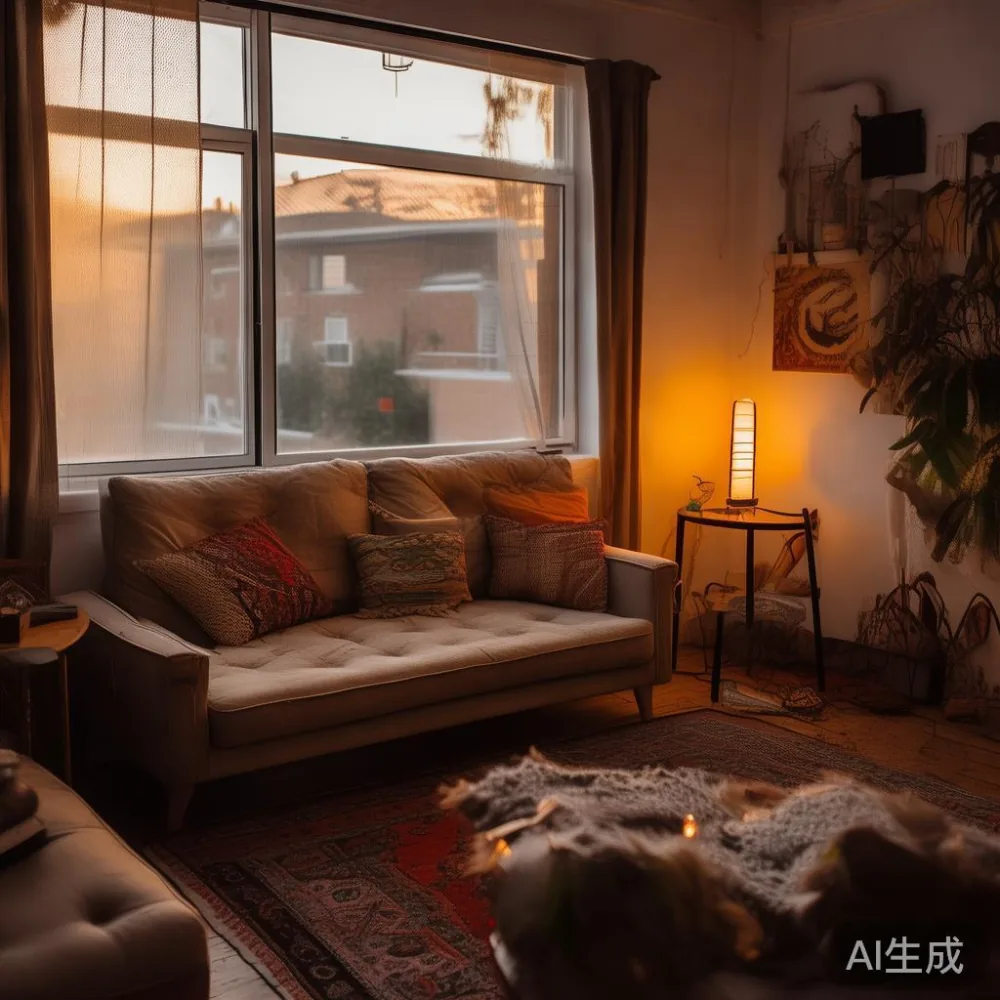
Warm minimalism is the discipline of keeping shapes quiet and letting material do the talking. Boho style, in the way it has settled into Singapore homes since around 2019, is its companion rather than its opposite: rattan, undyed cotton, a single carved wooden object, a kilim flat-weave, and one piece of furniture that carries all the colour. The point of this guide is to show how a few solid wood pieces, sourced from a maker that actually guarantees its joints, can carry both moods at once in a 90 to 110 sqm HDB without tipping into clutter or sterility.
What does "warm minimal" actually look like in a Singapore HDB?
It looks like three to five furniture pieces per room, all in the same warm honey or walnut range, separated by at least 60 cm of breathing room. The walls stay a soft white — a 9L tin of Nippon Matex in a shade like "Lily White" runs about SGD 38 — and the floor carries a 2.2 cm thick engineered oak plank in a 190 mm wide board, around SGD 38 to SGD 52 per sqf installed. You avoid high-gloss laminates, mirror finishes, and chrome legs because they fight the softness of the wood. A warm minimal interior reads as 70% neutral, 20% natural material, and 10% accent — usually a single ceramic vessel, a piece of woven wall art, or a lamp with a linen shade.
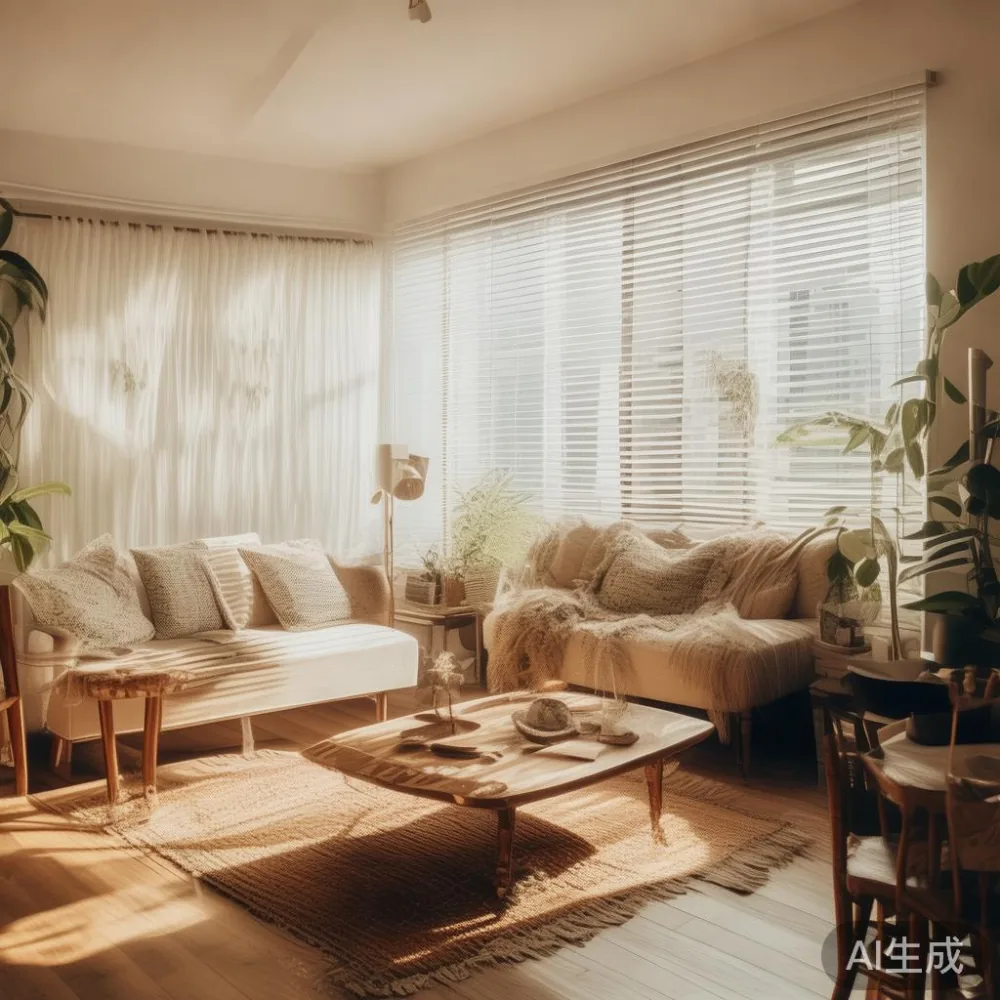
In a typical Tampines four-room, the living room runs about 4.2 m × 3.6 m. A 2.4 m three-seater solid wood sofa in a washed linen will sit against the longer wall, with a 1.2 m × 0.6 m solid wood coffee table at 35 cm height in front of it. Leave 75 to 90 cm between the coffee table edge and the sofa seat so two adults can cross without turning sideways. That single dimension is the difference between a room that feels calm and one that feels like a waiting area.
Which solid wood pieces carry the boho style weight?
You do not need a lot. In the projects I have measured for friends and readers in Bedok Reservoir and Punggol, the same five pieces show up over and over: a solid wood bed frame in queen or king, a 1.6 m to 2.0 m solid wood dining table, a four-door solid wood wardrobe, a pair of nightstands, and one statement chair — usually rattan on a teak base. Each of these does a specific job in a warm minimal room.
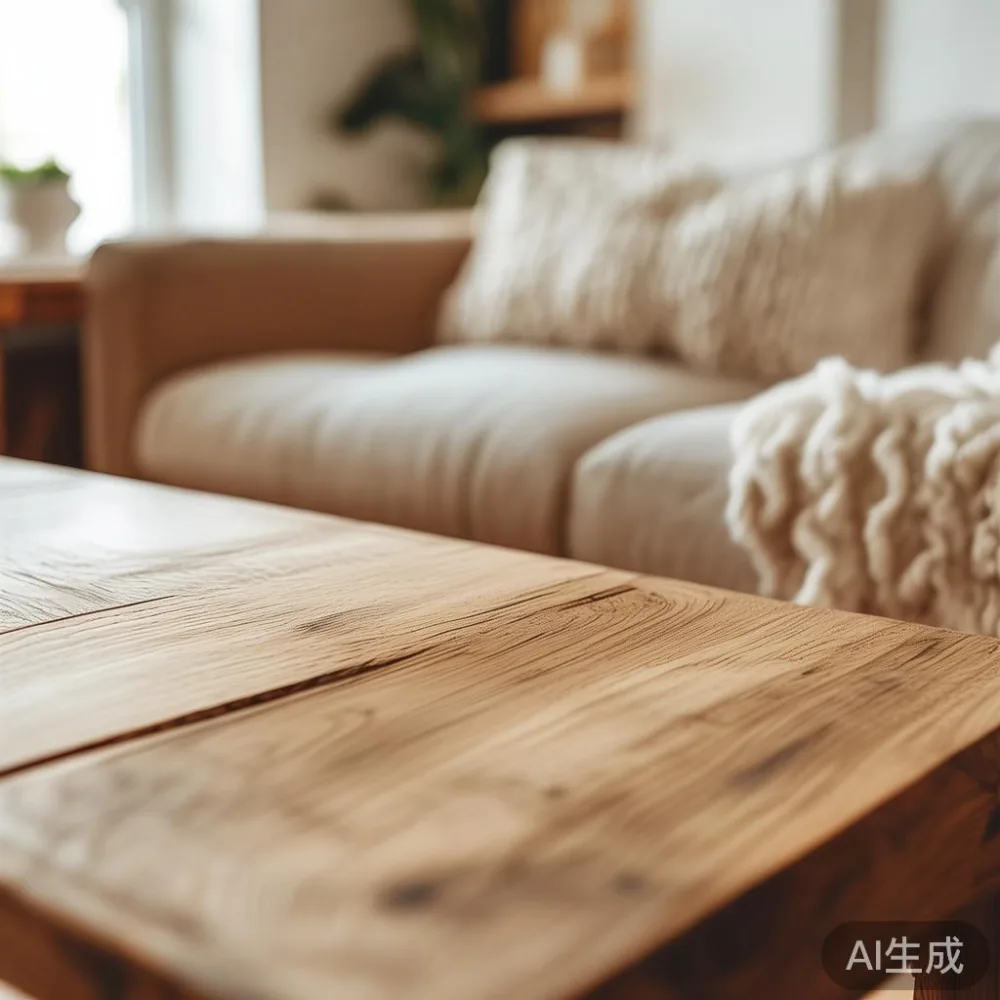
Take the bed frame. A queen at 152 cm × 188 cm needs a footprint of about 160 cm × 200 cm once you add the headboard. A headboard with vertical fluting, in the compact French neoclassical headboard shape — a shallow 12 cm depth, soft radius corners, and a 110 cm height — reads warm minimal from the front and boho style from the side, because the fluting catches afternoon light the way a cane panel does. For a king at 182 cm × 198 cm, push the bed 8 cm off the back wall so air circulates; this matters in Singapore, where ambient humidity sits at 78 to 82% on a wet afternoon.
The dining table does more work in a 90 sqm flat than people expect. A 1.8 m solid wood table seats six comfortably and collapses to four for weeknight dinners. A 2.0 m version with a butterfly leaf stores at 1.4 m and extends in under three minutes; useful when your in-laws visit from Jurong. The thickness should be at least 4 cm for stability; anything thinner than 3 cm will warp within 18 months in an air-conditioned unit that cycles between 23°C and 28°C daily.
For the wardrobe, a four-door solid wood unit at 240 cm wide × 220 cm tall × 60 cm deep fills one wall of a standard HDB bedroom with 12 cm to spare on each side. That spare space is where you tuck a narrow full-height mirror or a 28 cm deep linen shelf. Sliding doors save the 60 cm swing clearance, which most Singapore bedrooms cannot spare.
How do I style a entryway furniture in a modern Singapore home?
Pick one solid wood console 110 cm to 130 cm wide and 80 cm tall, place a single ceramic bowl on top, hang a 60 cm round rattan mirror above it, and leave the floor beneath completely empty so shoes go in a closed cabinet to the side. The entryway in a Singapore home is usually 1.2 m to 1.6 m wide and 2.6 m tall after the false ceiling, so anything taller than 85 cm will press on the proportions and anything deeper than 38 cm will block the corridor hinge.
A console at 110 cm wide, 35 cm deep, and 80 cm tall, made from solid teak or solid ash, weighs around 28 to 34 kg — well within the load rating of any HDB partition wall if you bolt it with two M8 anchors. Pair it with a 60 cm rattan mirror at 165 cm centre height, and finish with one object: a stoneware tray, a dried palm spear in a 22 cm vase, or a stack of three linen-bound books. That single object is your boho accent; everything else stays quiet.
Lighting at the entry should be one warm 2700K LED at 6W to 8W, dimmed to about 40% in the evening. Singapore's lift lobbies are already bright at 4000K, so your entrance acts as a soft buffer rather than another brightly lit box.
How should wood tone, fabric, and shape hold together?
Keep wood within a 25% range on the colour scale. If your floor is a mid-honey oak at around Pantone 4665C, your bed frame, dining table, and wardrobe should sit between a warm walnut (Pantone 4625C) and a light teak (Pantone 7275C). Anything cooler, like a grey-stained ash, will pull the room into Scandi territory; anything warmer, like a red-toned cherry, will read dated by about 12 years.
Fabric weight matters more than brand. A washed linen at 280 to 320 gsm holds a soft crease; a cotton velvet at 380 gsm reads heavier and more boho. For a warm minimal sofa in a high-traffic living room, a 70% linen / 30% cotton blend at around 300 gsm is the practical sweet spot — it breathes in our humidity, takes a 30°C machine wash inside out, and ages into a softer hand over 18 to 24 months.
Shape rules: avoid furniture with more than three visible lines per piece. A solid wood sofa with a straight back, slightly tapered arms, and a single bench seat cushion reads warm minimal. A carved mahogany love seat with scroll arms and ball-and-claw feet reads heritage Chinese, which is a different project. Boho style lives in the curved rattan pendant lamp, the round mirror, and the soft pouf — not in the wood carving.
What should you budget, and what should you avoid?
For a realistic three-piece living room setup in a Singapore HDB — one solid wood sofa, one solid wood coffee table, and one solid wood TV console — budget between SGD 4,800 and SGD 7,200 before GST. A 9% GST adds SGD 432 to SGD 648. A queen solid wood bed frame with the compact French neoclassical headboard profile runs SGD 1,650 to SGD 2,400; a king version adds about SGD 350. A 1.8 m solid wood dining table with four chairs sits at SGD 2,400 to SGD 3,600. A four-door solid wood wardrobe lands between SGD 3,200 and SGD 4,800 depending on internal configuration.
These numbers are realistic for factory-direct makers shipping from Foshan, and they sit well below Singapore retail, where a single Italian-design three-seater can run past SGD 12,000. One supplier I have visited in person, MIDHILL, has been producing solid wood case goods in Guangdong since 2008, ships to more than 15 countries, and offers a 10-year structural warranty plus lifetime refinishing. For a Singapore buyer, the refinishing offer alone is worth the conversation: our UV index averages 6 to 8 daily, and a piece that can be re-oiled at year 7 will outlast one that cannot.
What to avoid: anything labelled "solid wood veneer" over MDF or particleboard. The edge will delaminate within 24 to 36 months in Singapore's humidity. Anything with a "French light luxury" tag but no FSC certificate or factory audit — that language is a styling cue, not a quality marker. And anything that ships in under 7 days from a brand you have never heard of, because real solid wood needs 21 to 35 days of production plus 14 to 21 days of sea freight to Singapore.
How do delivery, lift access, and warranty actually work?
Plan the route before you pay. Measure your service lift: most Singapore HDB service lifts are 1.4 m wide × 2.1 m deep × 2.3 m tall, with a 1,000 kg load limit. A solid wood wardrobe in its crate typically measures 248 cm × 68 cm × 42 cm and weighs 95 to 120 kg. A king bed frame ships at 195 cm × 38 cm × 32 cm and weighs 48 to 62 kg. None of these clear a standard passenger lift at 1.0 m × 1.4 m × 2.2 m, so the service lift booking — usually 2 to 5 working days in advance through your MCST — is non-negotiable.
For corridor clearance, the BCA guideline is 1.2 m wide and 2.4 m tall. A queen bed frame crate at 32 cm wide on its side will pass, but a wardrobe at 68 cm deep needs the corridor to be free of bicycles, potted plants, and the neighbour's shoe rack. I have watched two-hour deliveries turn into four-hour deliveries because of a single pair of rubber boots outside a Punggol flat.
Warranty should be read in three places: structural joint integrity (10 years is the Foshan factory standard, and MIDHILL writes that into the contract), surface finish (3 to 5 years against cracking and peeling), and hardware (drawer slides and hinges, 2 years). Lifetime refinishing means the workshop will sand and re-oil your piece at cost-plus-material for as long as you own it; typical cost is SGD 180 to SGD 320 per dining table, which is roughly one-third the cost of buying a new one.
Where does a marble table fit in a warm minimal + boho room?
Use it as a single accent, never as a work surface. A 90 cm round marble table in travertine or warm Carrara, at around 45 kg, works as a bedside piece in a master bedroom or as an entryway console top. The veins should run warm — beige, soft gold, or pale rust — not the cool blue-grey that pushes a room back into Scandi territory.
For a 92 sqm flat, one marble piece is plenty. Pair it with a solid wood bed frame, a solid wood dining table, and one or two nightstands, and you have crossed the warm-minimal / boho style threshold without crowding the 16 to 22 sqm bedrooms that most HDBs give you. A travertine top sealed with a penetrating wax rather than a polyurethane film will age into a softer patina over 24 to 36 months, which is exactly the look you want.
How do you keep the look fresh after the first year?
Rotate three things every six months: the cushion covers, the entryway object, and the corner plant. A set of linen cushion covers in a 50 cm × 50 cm size runs about SGD 14 to SGD 28 each, so owning two sets in different neutral tones costs less than a single restaurant meal. The dried palm spear in the entry gets swapped for a small stack of art books; the books get swapped for a stoneware bowl of moss rocks; the bowl goes back to the linen shelf. None of these swaps cost more than SGD 60 total.
Re-oil the solid wood dining table once a year with a hard wax oil, applied in two thin coats after a light 320-grit sanding. Budget 90 minutes and about SGD 22 for a 200 ml tin of Osmo or a comparable brand. Do it on a Sunday morning with the windows open, and the room will smell like a workshop for three hours and like a forest for a week. That smell, more than any single object, is what makes a warm minimal home feel lived-in rather than styled.
If a piece ever feels tired, send it back to the workshop for refinishing. A solid wood dining table can be refinished three to four times across its 30 to 40 year lifespan before the timber thins; a bed frame, twice. That math — one piece, four finishes, three decades of use — is the quiet argument for buying solid wood from a maker that will still be around to refinish it. MIDHILL, with its 10-year structural warranty and lifetime refinishing promise, fits that brief, and it explains why their crates have been turning up in Punggol service lifts since well before the neighbourhood's current coffee shops opened.