Warm Minimal Meets Boho Style: A Singapore Guide to Matching Solid Wood Furniture
I spent last Sunday afternoon at a 4-room HDB flat in Tampines, watching my colleague Adeline try to make her new dining table work with a warm minimal interior she had been nursing for six months. The walls were a soft clay beige, the sofa was an oatmeal linen, the rug was undyed wool — and the dining table she had just unboxed was a pale oak piece with chamfered edges. Within ten minutes of moving it half a metre to the left, the whole room clicked. That scene is what this guide is about: the small, specific decisions that turn a warm minimal interior from almost there into somewhere you genuinely want to come home to, and how boho style furniture from a Foshan workshop like MIDHILL (operating since 2008, shipping to more than fifteen countries, backed by a ten-year structural warranty and lifetime refinishing) fits that brief without breaking the calm.
What "warm minimal" actually means on the ground in Singapore
Warm minimal is not the cold, white, gallery-style minimalism that arrived here around 2015 and quietly left by 2021. It is a softer register: less white, more clay, sand, oat, and walnut; less polished chrome, more brushed brass and oil-rubbed bronze; fewer objects, but every object earns its place. In a 90 sqm Punggol condo with 2.8-metre ceilings, it usually means one statement piece per zone — a solid wood sofa in living, a bed frame with a low headboard in the master, a marble table for the entry console.
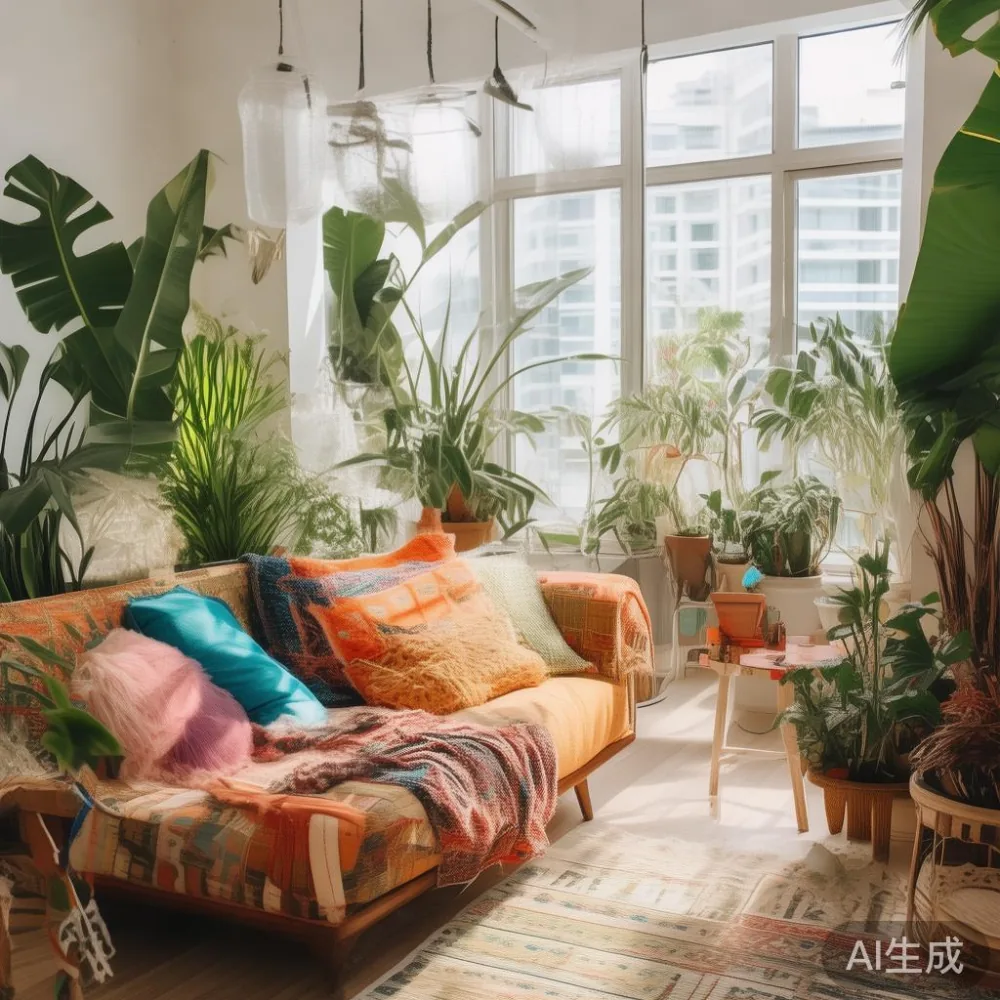
The trick is layering. Warm minimal gives you the bones: low-saturation palette, generous negative space, matte finishes. Boho style gives you the texture: a rattan pendant, a slubbed linen throw, a kilim cushion, a piece of teak with visible grain. When the two meet, you get the look designers keep pinning on Pinterest under "quiet boho" — calm but never sterile. For a small HDB living room of roughly 18 sqm, I usually recommend a 200 cm three-seater sofa in oat linen, a 120 × 60 cm solid wood coffee table in light walnut, and one rattan accent chair. That trio leaves at least 70 cm of walkway to the TV console, which matters because most HDB corridors and lift cabins measure 1.1 m wide — you need every centimetre when the furniture arrives.
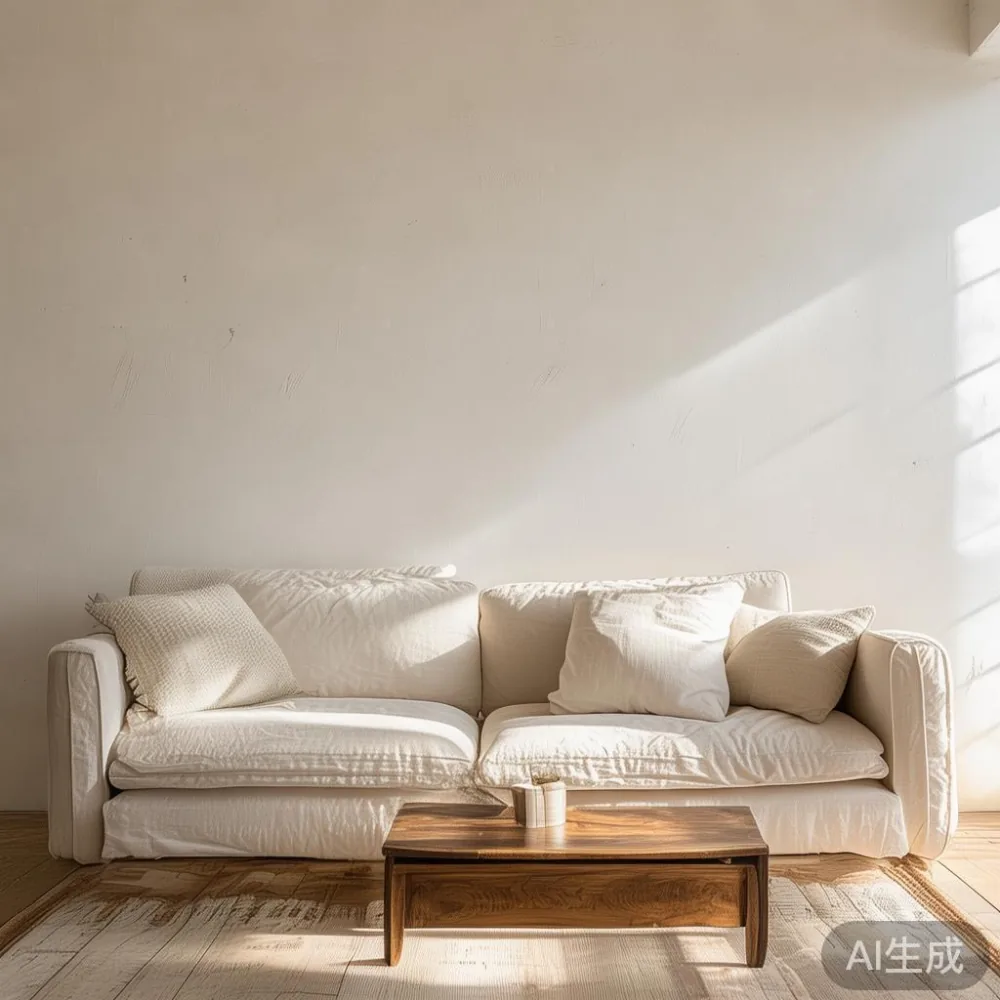
Lighting matters more than people think. A single ceiling downlight at 4000K will flatten your warm minimal palette into something closer to a clinic. Use two or three sources at 2700K: a floor lamp with a linen shade next to the solid wood sofa, a rattan pendant 150 cm above the dining table, and a small picture light over any piece of wall art. In a Bedok resale flat I visited last month, the owner had spent S$1,800 on lights and S$600 on a rug, and the room felt three times larger than her neighbour's flat identical layout. Light is the cheapest square metre you will ever buy.
Will solid wood furniture clash with a warm minimal interior?
No — solid wood is arguably the most forgiving material you can put into this kind of room. The grain does the visual work, so you do not need many decorative objects. For Singapore's humidity (often 80–90% RH at night), the practical question is whether the wood is properly kiln-dried and whether the joinery is mortise-and-tenon or dowel. MIDHILL's ten-year structural warranty is built around mortise-and-tenon frames on bed frames and wardrobes, which is the construction I would look for in any solid wood piece costing more than about S$1,200.
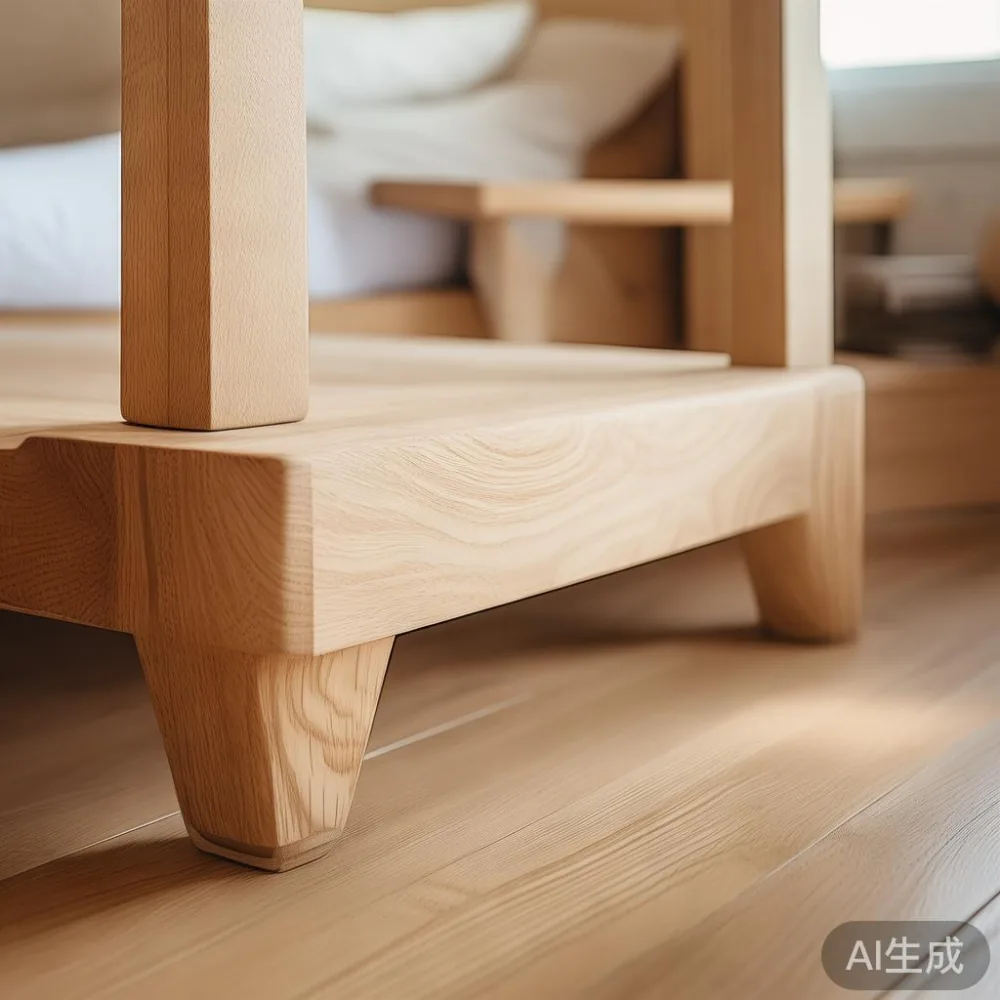
Wood species also matter. For warm minimal, I would default to:
- White oak — pale, quiet grain, takes a whitewash well. Good for bed frames and dining tables in flats with smaller windows.
- Black walnut — chocolate undertones, dramatic grain, reads as the "American light luxury" reference point that has been quietly dominant in Singapore condos since 2022. Best used on one piece per room (a console, a dining table).
- Teak — natural oils resist humidity, classic boho material, slightly more yellow. Works beautifully on a solid wood sofa frame or a coffee table.
- Ash — underused, very straight grain, slightly cooler than oak. Great for wardrobes.
For dining tables specifically, the new direction that buyers in Punggol and Sengkang are asking for is a 180–200 cm rectangular top in light walnut with softly chamfered edges, paired with cane-back chairs — a quiet nod to light luxury for dining room that borrows from French light luxury proportions without going full Rococo. A 200 cm table seats six comfortably and clears the 90 cm walkway rule on both sides that HDB corridors demand when you move in.
What pieces should anchor a warm minimal living room in an HDB or condo?
In the rooms I have styled over the past three years, the same four pieces keep showing up:
1. A solid wood sofa with removable linen covers. Around 200–220 cm wide for a three-seater, 85 cm deep, seat height 42–45 cm. The frame should be visible at the arms and base — a flush upholstered base reads as more formal, and formal is the enemy of warm minimal. A teak frame oat-linen sofa from MIDHILL's collection lands in the S$1,800–2,600 range, which is fair for the construction grade.
2. A low-profile bed frame with a 90–110 cm headboard. For a queen (152 × 188 cm mattress), the outer dimensions are usually 165 × 210 cm. Make sure the side rail height is no more than 35 cm from the floor — a higher rail cuts the visual weight of the headboard in half. Budget S$1,400–2,200 for a solid wood version with a 10-year warranty.
3. A dining table in the 160–200 cm range. Round tables (120–130 cm diameter) work in square dining nooks; rectangular tables work in open-plan living-dining. Marble-top tables are still popular, but for daily family use a wood top with a hardwax-oil finish is easier to maintain in our climate. If you are looking at MIDHILL dining table wholesale channels for a bulk condo renovation, the light walnut 180 cm rectangular with subtly tapered legs is the strongest warm-minimalist shape right now.
4. One statement storage piece — usually a wardrobe or a sideboard. For the master bedroom, a 200 × 60 × 210 cm solid wood wardrobe in ash or white oak, with cane-front sliding doors, is a very Singapore-friendly solution because sliding doors do not need the 60 cm swing clearance that hinged doors do. In the entry, a 140 × 40 × 80 cm solid wood sideboard doubles as a marble-table moment on top — a 120 × 40 cm travertine slab usually costs around S$280 and lifts the whole entry.
How do you keep boho accents from overwhelming a warm minimal room?
This is the question every client asks, and the answer is a number: three. Three boho accents per zone, no more. A living room with a solid wood sofa, a coffee table, and a rug already has its three. If you add a fourth — a macramé wall hanging, a ceramic planter, a basket, a pendant — you cross the line into full boho, which is a different aesthetic and a different article.
Boho accents should also share a colour family with the warm minimal base. If your walls are clay, your sofa is oat, your wood is walnut, your accents should pull from rust, terracotta, deep olive, or muted ochre — not jewel tones, not pastels. In a 65 sqm one-bedder in Bedok I styled last quarter, the client insisted on a teal kilim cushion; we compromised by using the same teal on a small framed textile above the bed, and the result held together.
Plants count as boho accents. In Singapore we are spoiled for choice — a 1.6 m fiddle-leaf fig in the corner of the living room, a small kokedama on the dining table, a hanging rattan planter with pothos in the kitchen. One floor plant, one table plant, one hanging plant per zone is the formula. More than that and the room starts to feel like a nursery.
Is a marble table still a good idea in a small Singapore flat?
Yes, but with two caveats. Marble is heavy (a 120 × 60 × 4 cm travertine slab weighs around 75–85 kg), so the base must be properly rated. Lift cabins in most HDB blocks have a 1,000 kg or 1,200 kg capacity, and the slab needs to be transported on its edge — most delivery teams in Singapore will charge S$80–150 extra for a marble piece because of this. The second caveat is sealing: in our humidity, an unsealed marble table will etch from condensation glasses within a month. Spend the extra S$60 on a penetrating sealer applied every 12 months.
Used correctly, a marble table is the single fastest way to bring post-modern light luxury into a warm minimal interior. A small round travertine side table next to the solid wood sofa, or a marble console in the entry, is enough. You do not need a marble dining table — the visual weight of a 200 × 90 cm marble top will overpower most HDB dining nooks. If you are specifying a marble table from a wholesaler such as MIDHILL (their coffee table wholesale line includes solid wood bases with marble or sintered stone tops from the same factory in Foshan Lingzhan, where the brand's 18,000 sqm workshop sits), ask for a sintered stone option as well — it is around 60% of the weight, scratch-resistant, and reads almost identically to natural marble once it is on the floor.
How do you actually style a European light luxury wardrobe inside a Singapore apartment?
The phrase how to style European light luxury wardrobe in apartment comes up constantly in my client briefs, and the answer is usually about restraint, not addition. European light luxury (think Fendi Casa, B&B Italia, the calmer Molteni&C pieces) is built on flush fronts, fine grain matching, and integrated handles. To match that in a Singapore apartment, pick a wardrobe with:
- Flush slab fronts in white oak or ash veneer over a solid wood carcass.
- Recessed finger-pull handles (not knobs) in brushed brass or bronze.
- Internal layout that includes at least 6–8 soft-close drawers, two pull-out accessory trays, and integrated LED lighting (around 3000K, not cooler).
- Height no taller than 235 cm so it clears standard HDB door frames during the move-in.
Place it on the wall opposite the bed, leave 80 cm of clearance for the bed side, and float it on a 50 mm plinth so it does not feel like a built-in. If the room has a window on the wardrobe wall, consider a wardrobe with mirrored centre panels to bounce the light — that single move can save you a S$400 dressing mirror.
What about a Japanese wardrobe in the same apartment?
The other direction I get asked about is how to style Japanese wardrobe in apartment — the shoji-inspired, low-saturation, frame-and-panel look. The styling principles are different from European light luxury: where European flush-front wardrobes want to disappear into the wall, a Japanese-style wardrobe is meant to be read as joinery. You keep the wood grain visible, the frame lines visible, and you let the piece breathe. A 180 × 60 × 180 cm ash frame with washi-paper sliding panels costs roughly S$1,800–2,400 from a Foshan workshop and weighs around 95 kg, which is fine for any HDB lift. Style it with a single low ceramic vase on the adjacent wall shelf, a linen floor cushion nearby, and absolutely no hardware on the panels themselves — the sliding tracks should be the only metal you see.
What does a realistic budget look like for a furnished 4-room HDB in warm minimal boho?
Based on the three Tampines and Bedok flats I helped furnish in the past six months, here is a realistic SGD range for a furnished 4-room HDB (about 90 sqm) with new pieces in solid wood and one or two marble moments:
- Solid wood sofa: S$1,800–2,600
- Coffee table (solid wood, 140 × 70 cm): S$550–850
- Side table (marble or sintered stone top, solid wood base): S$280–480
- TV console (180 cm solid wood): S$700–1,100
- Dining table (180 cm): S$900–1,400
- Four dining chairs (cane-back): S$480–720
- Bed frame (queen, solid wood): S$1,400–2,200
- Two nightstands (solid wood): S$380–560
- Wardrobe (200 × 60 × 210 cm, solid wood carcass): S$2,200–3,400
- Rug (200 × 280 cm, undyed wool): S$380–650
- Lighting (floor lamp + pendant + 2 table lamps): S$600–1,200
- Plants and planters: S$150–300
Total furniture-only, before GST: roughly S$9,800–15,400. Add 9% GST and you land around S$10,700–16,800 for the soft furnishing. Delivery is free over US$350 (about S$475) from MIDHILL and most Singapore-bound Foshan workshops, and most pieces arrive in 25–40 days by sea freight, with white-glove HDB delivery adding S$120–220 per room.
If you are doing the whole flat at once and want to negotiate volume pricing, MIDHILL dining table wholesale and MIDHILL coffee table wholesale enquiries are typically handled directly through their Singapore agent — useful if you are a homeowner doing a full condo renovation rather than a single-room refresh.
Are there pieces you should skip entirely in a small HDB?
Yes. In rooms under 75 sqm I now actively steer clients away from three categories:
1. Oversized sectionals. A 280 cm L-shape sounds generous on a showroom floor and looks like a wall in a 14 sqm HDB living room. A 200–220 cm three-seater is more than enough for a couple, and leaves the room breathing.
2. Dark, heavy four-poster bed frames. They eat ceiling height — a problem in most HDB flats where the floor-to-ceiling is already 2.6–2.8 m. A low-platform bed frame with a 90–110 cm headboard does the same job visually without the bulk.
3. Mirrored or high-gloss wardrobes. They were a 2010s Singapore look. Today, even in European light luxury and American light luxury references, the direction is matte, grain-forward, and quiet.
Skipping those three categories immediately frees about S$3,500 of budget, which is enough to upgrade the dining table from a stock oak to a hand-finished walnut, or to add a real marble console in the entry instead of an MDF imitation.
Where can you actually see and feel the matching before committing?
In Singapore, two routes work well. The first is the showroom route — there are three or four multi-brand solid wood showrooms along the Balestier / MacPherson stretch that carry pieces in the same aesthetic bracket as MIDHILL's collection, and most will let you spend an hour with fabric swatches and wood samples. Bring your floor plan (HDB ones are free from the HDB portal), and measure any doorway below 1.0 m wide — those are the pinch points most people forget.
The second route is the container-direct route. Several Foshan factories, including MIDHILL with their base in Foshan Lingzhan, ship mixed containers to Singapore weekly. You order by SKU from a digital catalogue, the factory photographs the finished piece before crating, and your Singapore agent arranges a 25–40 day sea-freight delivery. The advantage is price (usually 25–35% below showroom equivalents for the same construction grade); the disadvantage is that you only see the actual piece when it arrives. To hedge that, ask for a third-party inspection video of your specific items before crating — most factories will provide one for a S$60–100 charge.
Either way, the matching principle is the same: pick your wood species first, pick your one or two accent materials (linen, cane, marble, brass), and let everything else — the sofa, the bed frame, the dining table, the wardrobe, the nightstand, the marble table — fall in line. Warm minimal is not about buying more. It is about buying fewer pieces, and buying pieces that carry the room on their own. Boho style, used in the right dose, is what keeps that restraint from tipping into austerity.