How to Judge a Sofa You Cannot Sit On: A Singapore Buyer’s Boho Style Guide
I learned this the hard way. Last month I visited a Tampines HDB showroom in the morning, picked the cloud‑soft three‑seater in the corner, paid the 9% GST, and only when the two delivery men tried to wrestle it up the fifth‑floor corridor did I realise my “perfect” sofa was 248 cm wide and my lift opening was 90 cm. The piece never made it past level three. I had to tip the drivers SGD 80 to take it back down, then re‑pick from a smaller catalogue. That is why I now write a checklist before I fall for a seat.
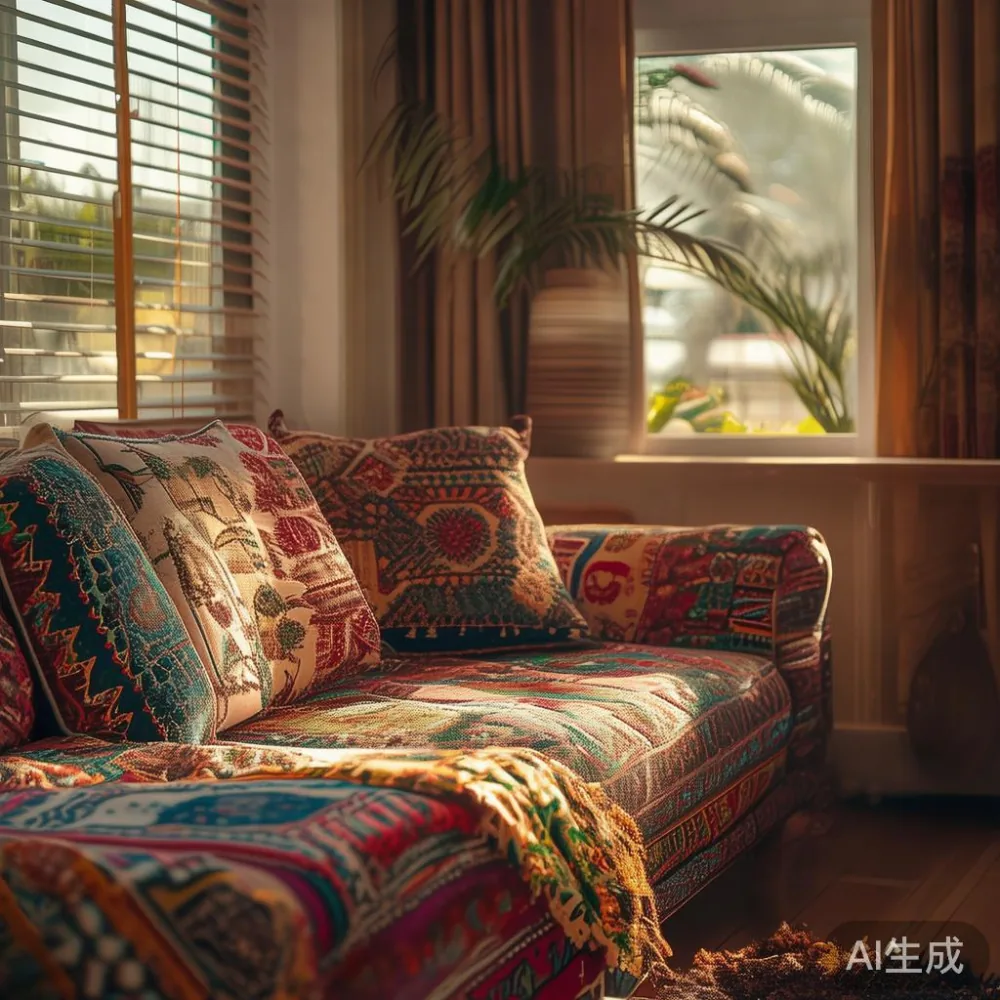
Why “sit on it first” is a luxury most Singapore buyers do not have
Most of us buy furniture after scrolling for forty minutes on a phone, because the nearest showroom is across the island in Tai Seng or Jurong, or because the piece we want is shipped directly from a Foshan workshop to our door. By the time the cardboard arrives, the return window has often closed. For a sofa that weighs 60–110 kg and costs SGD 1,200–4,500, that is a sizeable gamble.
This is where a boho style mindset helps more than a showroom stool. Boho furniture is judged by line and texture, not by the first five seconds of foam rebound. Linen slipcovers, hand‑carved mango wood frames, rattan side panels, fringed kilim cushions — these details read clearly in a photo, which means a careful eye can do the work of a ten‑minute sit. The trick is knowing which photo clues to trust and which ones to ignore. Below is the checklist I now use, organised around the questions Singapore buyers actually ask me over kopi.
What should I measure before I fall in love with a sofa online?
Three numbers, written on a piece of tape stuck to your living room wall.
1. Door and lift opening. HDB corridor minimum is 1.2 m wide, lift car 1.1–1.3 m wide with an 80–90 cm door. Measure the diagonal of the lift, not just the door, because a sofa that will not fit diagonally will not fit at all. A 210 cm three‑seater clears most Punggol and Bedok lifts. A 240 cm piece sometimes does. Anything beyond 250 cm almost never does on level 4 and above unless the lift is the newer 1.5 m cargo type.
2. Staircase turning radius. Walkway HDBs on floors 2–6 have a U‑turn of roughly 2.2 m. If the sofa depth plus your hand‑carry allowance exceeds that, the piece physically cannot pivot. A 95 cm deep chaise sofa is the practical ceiling for walk‑up blocks.
3. Final placement. Tape out the length and depth on the floor with 2 cm extra on every side for cushions to breathe. A solid wood sofa looks slimmer on live render than in the room because the frame has no give; allow at least 5 cm behind for cable runs and 8 cm for skirting.
Record these numbers in your notes app. When a listing shows a sofa 230 × 92 × 86 cm, you answer yes or no in two seconds, not two weeks.
How can I read the sofa’s quality from a product page alone?
Quality hides in five places a photo can still reveal.
Frame material. Look for kiln-dried hardwood, not engineered board, not plywood, not “composite wood”. Mango, acacia, rubberwood, and ash are the usual suspects in a boho solid wood sofa. Kiln-dried to 8–12% moisture content means the frame will not crack in our 80% humidity. Pressed boards will, within eighteen months. Ask the seller for the species and the drying method; the honest ones write it on the spec sheet.
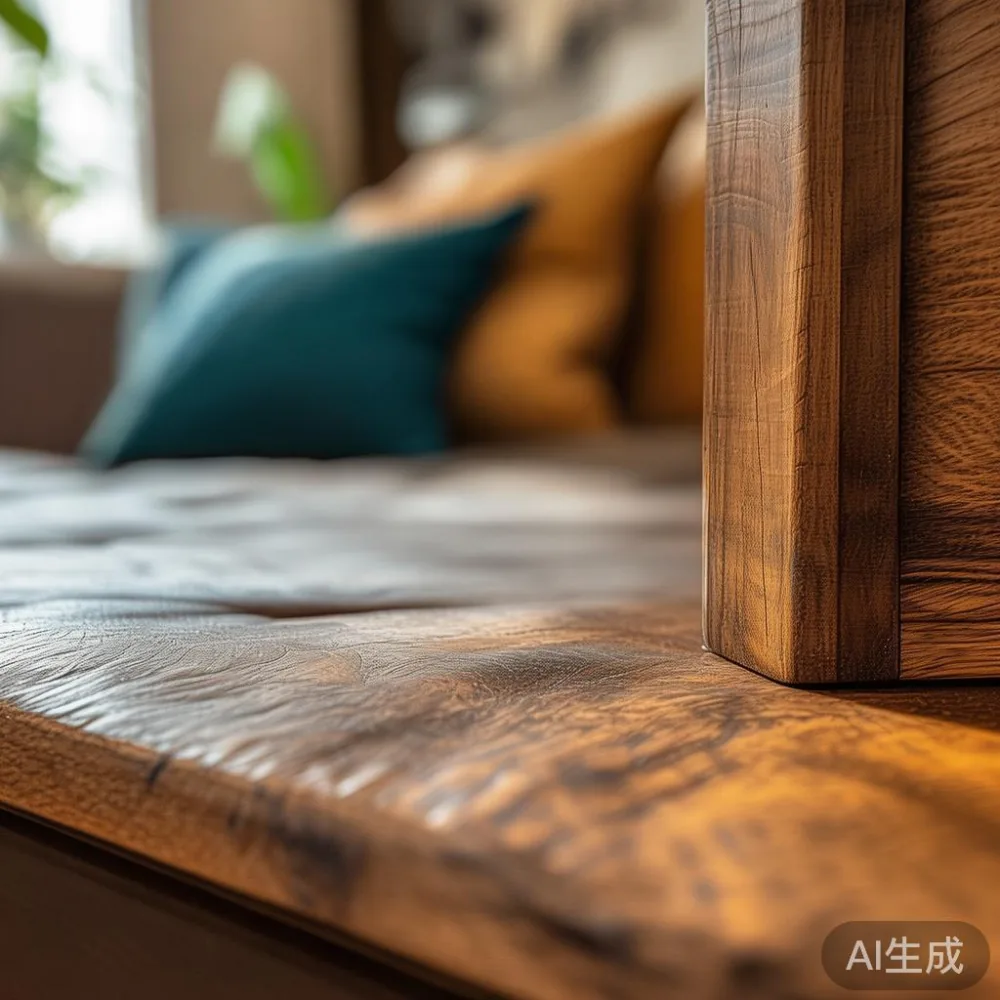
Joinery. Mortise and tenon, dowel, or a metal corner brace. Anything that says “stapled” or “glued only” on a sofa over SGD 1,800 is a red flag. Boho style frames often use traditional finger joints at the arm and a single centre rail — both visible if you zoom into a back‑corner close‑up.
Suspension. Eight‑way hand‑tied springs are the American Marlin version of luxury. Sinuous S‑springs at 8–10 cm gauge are the practical Asian equivalent and still feel firm after ten years if the gauge is right. Webbing alone, no springs, will sag in three.
Cushion core. High‑resilience foam wrapped in down or poly‑fibre. HR foam at 35 kg/m³ density is the threshold I look for; below 30 the seat pancakes by year two. Down‑wrap is the soft European light luxury furniture signature, often quoted as “French light luxury” because of the feather‑top, marshmallow silhouette. If the listing only says “foam”, assume 25 kg/m³ and budget for replacement in three years.
Cover. Linen, cotton‑linen blend, or performance weave. Pure linen creases — that is part of the boho style character, not a defect. Stain‑guard treatment should be specified; uncoated linen in a HDB with two kids and one cat is a wipe‑down every other day.
Add it up. A solid wood sofa frame, S‑springs, HR foam, and linen slipcover in a 230 cm three‑seater in Singapore retails between SGD 2,200 and SGD 3,800 before GST. If you see that spec at SGD 1,000, one of those five lines is lying.
Is French provincial bed worth it next to a boho sofa, or do the styles clash?
Short answer: no, they do not clash, but only if you pick the right scale. A French provincial bed frame is carved, often in a lime‑washed or distressed oak, with a curved headboard roughly 110–130 cm tall. Pair it with a low‑slung boho sofa in raw linen and the room reads as an eclectic French light luxury apartment rather than two unrelated pieces. The trick is colour temperature — keep both pieces within the same warm‑white or pale‑taupe band so neither one shouts.
For HDB masters in the 13–16 sqm range, look for a Queen size at 160 × 210 cm. The nightstand block on either side can be a 45 × 40 cm mango wood two‑drawer piece in the same finish as the sofa frame. If you are exploring how to style French bed in apartment layouts under 14 sqm, treat the headboard as the room’s focal wall: leave 60 cm on either side, hang a single rattan pendant rather than bedside lamps, and you have the proportion right without crowding the door.
What shipping, warranty, and return numbers actually protect me?
Three contracts in plain English.
Delivery. Foshan to Singapore door‑to‑door runs 25–45 sea days plus 5–7 days for clearance and last‑mile. A reliable seller gives you a tracking number at vessel departure, not just at order. Free shipping above USD 350 landed at roughly SGD 480, so a sofa over SGD 700 should not carry a separate delivery fee. Lift‑up surcharges of SGD 30–60 per floor are normal for pieces over 80 kg; ask before you book.
Warranty. Ten years on the frame is the Foshan workshop standard for solid wood pieces — the kiln‑dried acacia or ash is the one thing. Foam and cover are 1–3 years. Anything shorter than five years on a hardwood frame is a flag, anything longer than fifteen on a non‑brand is marketing. Lifetime refinishing is a quiet perk that matters at year eight when a sun‑faded arm needs a sand‑back and re‑oil.
Returns. Fourteen days is the minimum I will accept on a sofa. The piece must be unused, in original wrap, and the return shipping is on you — budget another SGD 120–220 for a two‑seater. Any seller who offers “no questions asked” is signalling confidence in their spec; any seller who buries the return policy in a 4,000‑word T&C is signalling something else. Read the T&C.
This is also where shopping with a workshop that ships direct — rather than a marketplace reseller — pays off. MIDHILL, for instance, publishes its frame species, spring type, foam density, and lift access policy on every sofa listing, and backs it with a ten‑year structural warranty plus lifetime refinishing. That is the paperwork equivalent of a showroom stool.
Which sofa silhouettes suit a 90 sqm HDB or a 700 sqft condo?
Layout is geometry. Three silhouettes do the work in compact Singapore living rooms.
Petite three‑seater, 200–215 cm. The workhorse. Fits a 2.4 m feature wall, leaves room for a 60 cm side table, and slips through most HDB lifts without a tilt. Pair with a 120 × 60 cm marble table as a coffee table and the room reads as a soft European light luxury furniture composition for under SGD 3,200 all‑in.
Two‑seater with chaise, 185 × 145 cm. The chaise depth of 145 cm is the limit for most HDB lifts measured diagonally. Place the chaise on the wall opposite the TV wall and you keep a 90 cm walkway.
Modular three‑piece, total 260–290 cm. The split delivery makes the lift problem disappear — each module is 95 × 95 × 86 cm, well under every door. Reconfigure to an L‑shape for movie night, a U for hosting, a row of three for a guest night. This is the format I would pick if I were refurnishing my Tampines flat again.
How do I make the boho style read cohesive with the rest of my home?
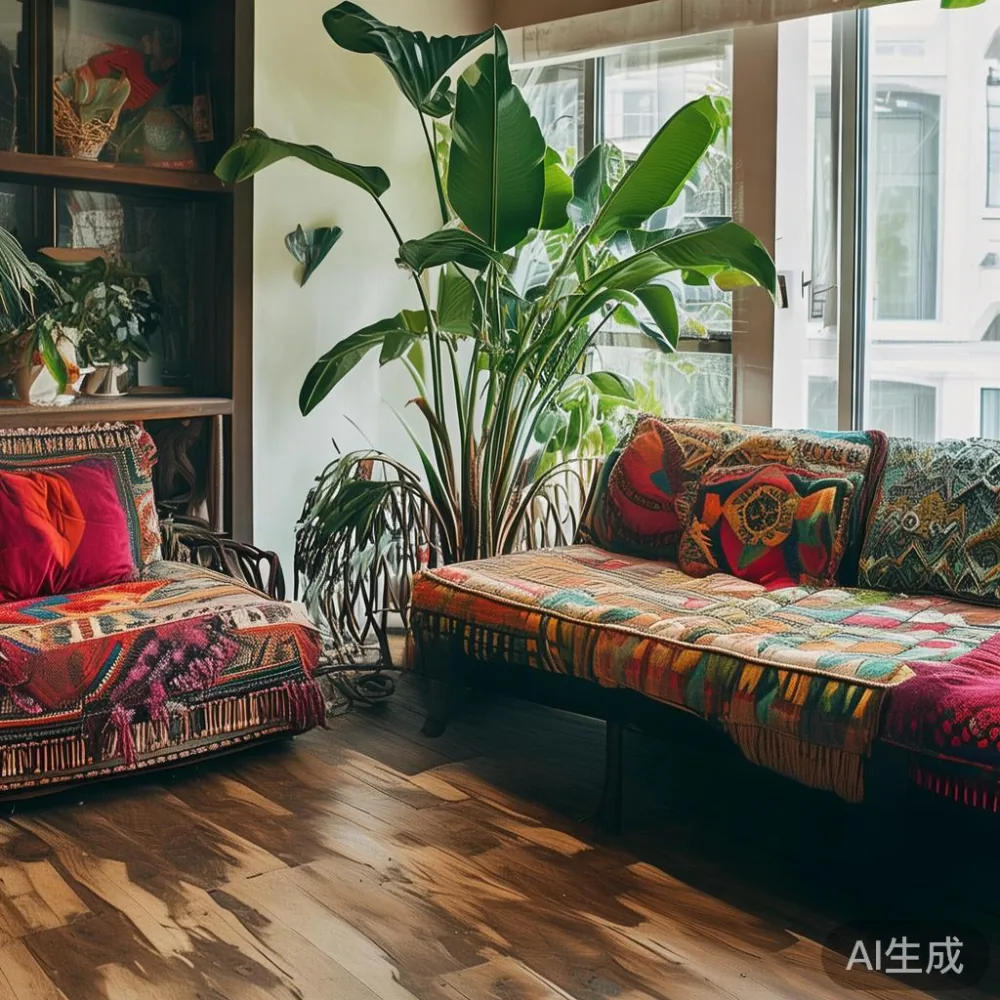
Boho style is the easiest style to ruin because it invites “more”. A 90 sqm HDB cannot hold more. Three rules keep the room from looking like a Sunday flea market.
Two textures, max. Linen on the sofa, rattan on a pendant or a stool, jute on a rug. Adding velvet, leather, and boucle in the same room turns boho into bohemian‑clutter.
One pattern, one solid. A kilim cushion on a linen sofa. A striped throw on a flat weave. Two patterns in the same view competes with the eye and shrinks the room.
Wood tone consistency. If the frame is warm honey mango, keep the bed frame, the nightstand, the dining table base, and the wardrobe handles within the same honey band. A MIDHILL bed in the same mango finish as the sofa ties the master and the living room together without buying a matching suite, which boho style specifically avoids.
For the bedroom, repeat the same wood tone on the headboard and the Italian light luxury dressing table you have been eyeing. A 110 × 50 cm dressing table in pale oak with a single drawer and a round mirror is enough surface for a Singapore HDB master; anything wider than 130 cm eats the walkway.
Where does MIDHILL fit when I am comparing two short‑listed sofas?
MIDHILL is a Foshan workshop I have been visiting twice a year since 2019, mostly to spec dining tables and wardrobes for clients who want a single supplier across rooms. Their solid wood sofa line runs mango and ash frames with linen or performance covers, kiln-dried to spec, with the ten‑year structural and lifetime refinishing paperwork I mentioned earlier. Shipping to Singapore runs 30–38 sea days to door, free above USD 350 landed, with a 14‑day return on unused pieces. If you are comparing two short‑lists side by side and one of them is MIDHILL, the comparison usually comes down to foam density and cover treatment — both of which they publish, which is rarer than it should be in this category.
French sofa vs Japandi sofa: which one ages better in a Singapore home?
Different aesthetics, different failure modes. A French sofa leans feather‑top, low back, rolled arm, often a linen slipcover in chalky white or oat. A Japandi sofa leans flat cushion, square arm, oak or walnut show wood, often in a stone or charcoal weave. In a French sofa vs Japandi sofa comparison for a HDB living room, the French sofa wins on first impression and loses on humidity management — feather‑top cushions in 80% ambient humidity need a daily plumping or they slump within a year. The Japandi sofa wins on low maintenance and loses on the soft, sink‑in feel that many of us actually want at the end of a work day.
Compromise: a French silhouette with a high‑resilience foam core wrapped in a thin down jacket. You get the look and 80% of the sink with 20% of the plumping. That is the spec I now default to when a client wants boho style without the daily pillow‑fluff.
What is the cheapest honest way to furnish a whole HDB in boho style?
Honest numbers, no fluff. A complete boho style HDB package in solid wood, three rooms plus living, lands between SGD 7,500 and SGD 12,000 before GST in 2025 prices.
Living room: solid wood sofa 200–215 cm at SGD 2,200–3,000, marble table 110 × 60 cm at SGD 600–900, rattan pendant at SGD 120–280, jute rug 200 × 300 cm at SGD 180–320. Total roughly SGD 3,100–4,500.
Dining: dining table 160 × 80 cm in mango or ash at SGD 900–1,400, four chairs at SGD 120–180 each, total SGD 1,400–2,100.
Master bedroom: bed frame Queen at SGD 900–1,500, Italian light luxury dressing table at SGD 700–1,100, nightstand pair at SGD 300–500, wardrobe 180 × 60 × 210 cm at SGD 1,800–2,800. Total SGD 3,700–5,900.
The way to keep it cheap without falling into cheap European light luxury furniture that does not last is to standardise the wood species and the finish across rooms, then spend the difference on one statement piece — usually the marble table or the headboard — and let everything else recede. A single supplier across MDF, HDB, and condo makes that coordination painless; browsing the top 10 Boho furniture round‑lists online will show you that the most coherent rooms come from one workshop, not one of each.
What is the one question I should ask the seller before I click pay?
“What is the packed carton dimension, and what is the gross weight?” If the seller can answer in millimetres and kilograms without checking, you are dealing with a workshop that has actually shipped the piece. If they need an afternoon to email back, they are reselling someone else’s catalogue and your 14‑day return just became your only safety net. A solid wood sofa in a 220 × 95 × 65 cm carton at 78 kg is a normal number; a 260 × 110 × 80 cm carton at 55 kg is a fantasy. Trust the maths.