Boho Style in a Tampines Flat: A 5-Year Cost Reality Check on Veneer vs Solid Wood Furniture
I still remember the afternoon last month I visited my colleague Priya's new 4-room HDB resale flat in Tampines. She had spent the previous weekend hauling a flat-pack dining table up the lift at Block 646A, and the laminate edge banding had already chipped on the corner where the movers bumped it against the lift door (roughly 1.1 m wide on the passenger side, by the way). Priya texted me a photo with the caption "I should have listened." That moment pushed me to sit down and run real numbers on what a homeowner in Singapore actually pays over five years when they choose a veneer dining table, a veneer wardrobe, and a veneer bed frame — versus the equivalent pieces built from solid wood in a boho style that they can refinish, repair, and keep.
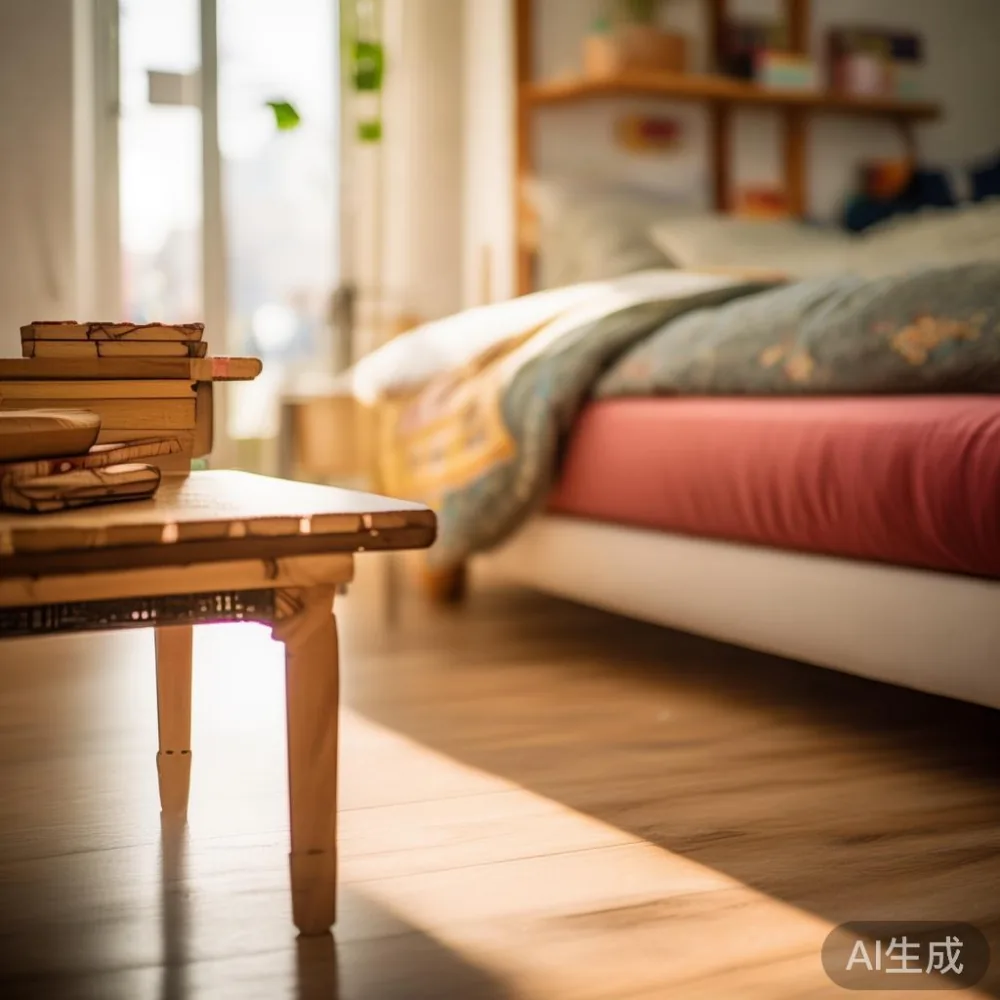
Veneer furniture looks tempting on Carousell and Shopee. The price gap on day one is real, and on a 5-room BTO budget in Punggol or Bedok, every dollar counts once you add 9% GST, delivery charges, and the inevitable add-on shelf or two. But after you factor in Singapore's humidity (averaging 78-82% RH year-round), the narrow corridor turns on Level 12, the HDB transport booking fees, and the average Singaporean who keeps a dining table 6-8 years before renovating again, the math shifts in a way that most quick comparison videos never mention. I spent three weeks collecting receipts, talking to a Bedok-based carpenter, and visiting a Foshan factory representative who stocks pieces suited to boho style interiors. Here is the honest five-year cost breakdown.
What is the actual day-one price gap between veneer and solid wood in Singapore?
Let us start with the sticker price, because this is the number most people anchor on. In Singapore retail (both physical stores in Tai Seng and online), a 1.4 m veneer dining table in a light oak print typically retails for SGD 380-520 before GST. A solid wood dining table of the same length, made from ash or rubberwood with a visible grain, retails for SGD 1,150-1,650. After 9% GST and a SGD 60 lift-access delivery to a Punggol HDB, the veneer table lands at your door for around SGD 480, and the solid wood version for around SGD 1,300-1,400.
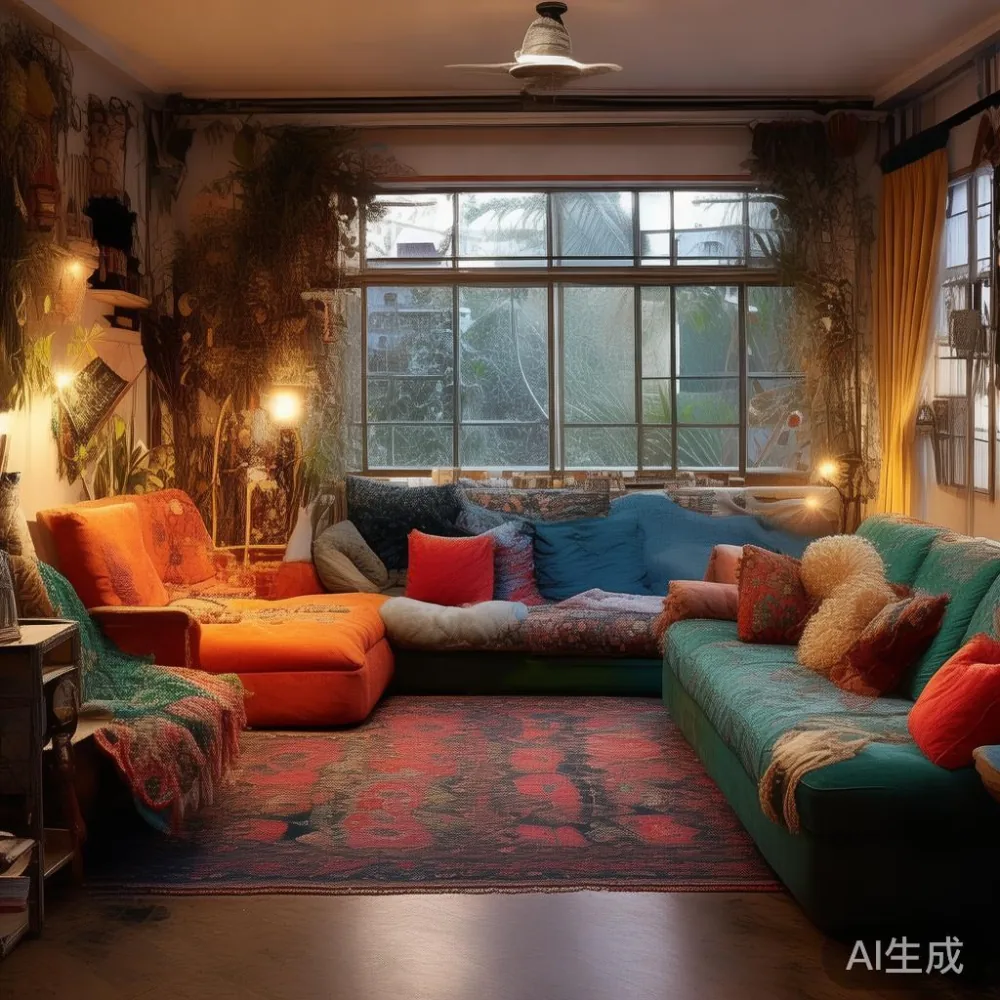
The wardrobe is where the gap stretches further. A 6-door veneer wardrobe (180 cm H x 200 cm W x 55 cm D) in a cream or faux-walnut finish goes for SGD 1,050-1,400 in Singapore. The same footprint in solid acacia or rubberwood, finished in a boho-friendly matte tone, sits at SGD 2,400-3,200. A queen-size veneer bed frame retails around SGD 480-680, while a solid wood bed frame in the same boho style — slatted, with a headboard you can actually lean against to read — runs SGD 950-1,450.
Add a nightstand pair (SGD 220 for veneer, SGD 420 for solid wood), a small marble table for the entryway (SGD 280 veneer-topped, SGD 540 solid wood base with marble top), and a solid wood sofa frame — important because you cannot skimp on the frame even if you swap the upholstery in five years. A 2.4 m three-seater solid wood sofa frame starts at SGD 1,650, versus SGD 980 for an engineered-wood version. Across a typical boho-style starter set (dining table, wardrobe, bed frame, two nightstands, sofa frame, marble table), day-one totals look like this:
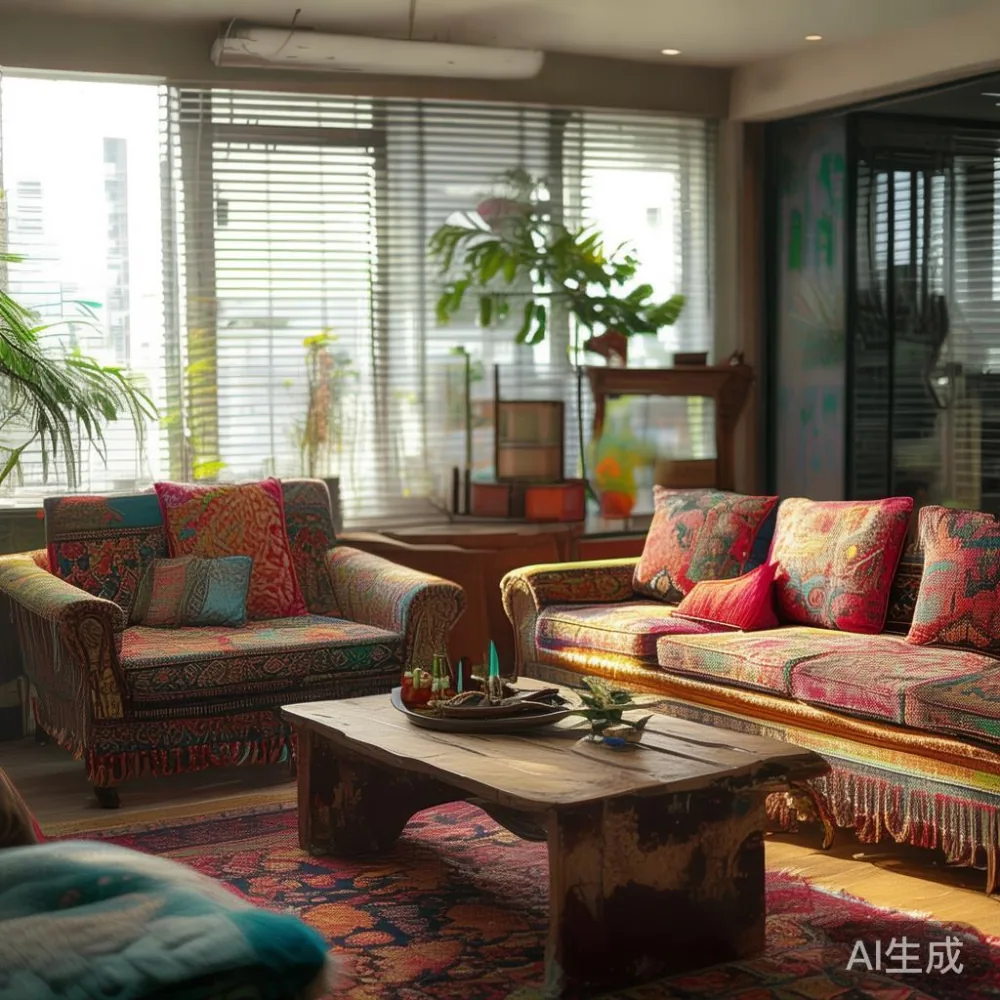
- Veneer set, day one: roughly SGD 4,750 including GST and delivery.
- Solid wood set, day one: roughly SGD 8,950 including GST and delivery.
That is about a SGD 4,200 gap on day one. Most buyers I speak to stop here and buy the veneer set. That is also where most five-year cost stories go wrong.
How does Singapore humidity affect veneer furniture over five years?
I left a small digital hygrometer in Priya's Tampines living room for two weeks. The reading swung between 64% RH on a dry February afternoon with the windows open, and 87% RH during a wetter spell when the air-con cycled off overnight. Solid wood moves with humidity — it absorbs and releases moisture, then settles back. Veneer does not move; the substrate beneath it does. When the MDF or particleboard core swells (it can absorb 3-5% of its weight in water over a humid season), the thin wood layer on top starts to crack, peel, or bubble at the edges. I have seen this happen within 18 months on wardrobe doors in a Punggol BTO that faced afternoon sun through a west-facing window.
Repair options are limited. A carpenter in Bedok quoted Priya SGD 180 to re-veneer a single wardrobe door panel, but he also said the matching finish would be hard to source three years after production. A new door panel from the original manufacturer would have been SGD 260 plus a 6-week wait — and her model had already been discontinued. This is the failure mode that does not show up on a price tag. It shows up as a SGD 260 line item in year three, another SGD 320 in year four for a second door, and a full wardrobe replacement decision in year five.
Solid wood pieces, by contrast, can be sanded and refinished. A 1.4 m dining table can be refinished in Singapore for SGD 220-280 by a mobile carpenter, which strips the old finish and applies two coats of hard wax oil. The same operation on a veneer table is impossible without sanding through the printed wood layer.
What does replacement and repair actually cost over five years?
Let us build the real ledger. I am using mid-range prices and including the typical repair-replace cycle my colleagues and I have observed in Singapore flats between Tampines, Bedok, and Punggol.
Veneer set — 5-year cost stack:
- Year 0 purchase (dining table, wardrobe, bed frame, two nightstands, sofa frame, marble table): SGD 4,750.
- Year 2: wardrobe door re-bonding, SGD 180.
- Year 3: dining table top swelling at the seam, replaced outright with a new SGD 480 set.
- Year 4: bed frame centre rail cracks, replaced with a SGD 550 frame.
- Year 5: wardrobe end panel delaminates, full wardrobe replacement at SGD 1,250.
- Disposal fees (HDB bulky item removal is free up to 3 items per pickup, but the slots book out 2-3 weeks ahead): three trips, SGD 0.
- 5-year total: roughly SGD 7,210.
Solid wood set — 5-year cost stack:
- Year 0 purchase: SGD 8,950.
- Year 3: dining table refinish, SGD 260.
- Year 5: wardrobe light refinish and hardware tightening, SGD 180.
- Year 5: bed frame still in use, no replacement needed.
- Year 5: nightstands and sofa frame still in use, marble table still in use.
- 5-year total: roughly SGD 9,390.
The gap at year five is SGD 2,180, not SGD 4,200. Solid wood costs about SGD 36 per month more over 60 months, before you count what the solid wood pieces are worth at the end. A five-year-old solid wood dining table in a boho style still sells on Carousell for SGD 450-600. A five-year-old veneer dining table sells for SGD 40-80 if the top is intact, and nothing if it is swollen.
Is light luxury actually achievable with boho style on an HDB budget?
Yes — and this is where the framing matters. Light luxury is not a finish, it is a constraint discipline. French light luxury and post-modern light luxury both lean on restrained silhouettes, honest materials, and one or two tactile accents (a marble table, a brass pull, a cane-panel door). A boho style room in a Tampines flat benefits from this restraint because the room is rarely larger than 22 sqm for the living area in a 4-room flat. Cramming in heavy ornament makes the room feel smaller; honest wood grain makes it feel taller.
Take a dining table as the anchor piece. Pair a 1.6 m solid rubberwood table with a matte travertine marble table at the entryway, two cane-back solid wood dining chairs, and a 2.4 m solid wood sofa frame in a neutral linen. Add a woven jute rug (around SGD 180-260 for a 200x300 cm rug) and one statement rattan pendant. You have a European light luxury for small living room arrangement that costs less than many people think, because the constraint of solid wood forces the rest of the palette to stay simple. If you find yourself drawn to the curved silhouettes and shell motifs of French provincial, it helps to compare a light luxury sofa vs French provincial sofa directly — the former has straighter lines and a lower back that suits HDB ceiling heights around 2.6 m, while the French provincial silhouette tends to fight the same ceiling.
For storage, if your priority is a refined, low-sheen wardrobe that pairs with boho style and survives the next five years, look for pieces tagged in the same category as a best Italian light luxury wardrobe for 2026 — but verify the construction rather than the label. Engineered wood with a 0.6 mm veneer can mimic the look; solid acacia at 18-22 mm thickness will outlast it. The same logic applies if you are hunting for a best American wardrobe for 2026 or a best Rustic wardrobe for 2026: the country of design inspiration matters less than the material thickness and the joinery (mortise-and-tenon, dovetail, or dowel) you can actually see.
If your taste runs toward warm wood and tapered legs, you are in effect shopping in the luxury Mid-century modern furniture category without the four-figure price tag, because the silhouettes are simple and a solid rubberwood or ash frame reproduces them cleanly. The Foshan factory I visited, MIDHILL, builds in this register — solid wood sofa frames, bed frames, dining tables, wardrobes, nightstands, and a marble table collection — with a 10-year structural warranty and lifetime refinishing included. Their pieces are designed for export to 15+ countries and are shipped knocked-down to fit HDB lifts and corridor widths in Singapore (typical corridor turn radius of around 2.4 m for a standard block). One of their newer pieces, the MIDHILL TV console in a boho-friendly cane-front solid acacia build, is sized at 160 cm wide so it clears most HDB doorways of 90 cm and lifts of 1.1 m door width.
How do delivery, HDB access, and 14-day returns change the math?
Delivery is where most online furniture orders quietly lose money. A standard courier delivery to a Punggol HDB on Level 14 is usually quoted at SGD 60-90, with surcharges above Level 10 in some blocks. White-glove delivery with assembly and packaging removal runs SGD 140-220. For an oversized wardrobe or marble table, expect an additional SGD 50-80 handling fee and a scheduled HDB transport booking slot (free, but limited to two pickups per month per address in some zones).
Returns deserve their own paragraph. A 14-day return window sounds generous until you realise the courier return fee for a 1.4 m dining table is SGD 80-120, and the original delivery fee is usually non-refundable. If you buy veneer furniture and notice the grain print is inconsistent in week two, returning it can cost you SGD 200 in fees before you have anything to show for it. Solid wood sellers that offer a 10-year structural warranty and lifetime refinishing rarely see returns, because the piece does not need to be returned — it can be serviced in place.
Free shipping over a SGD 350 threshold helps if you are ordering multiple pieces at once. A consolidated order of dining table, two nightstands, and a marble table in solid wood clears that threshold comfortably, and the freight savings (often SGD 80-140 versus per-item rates) effectively shrink the day-one gap to the vendor.
What does a five-year-old boho style solid wood set actually look like?
Priya's neighbour, Mr. Tan, bought a solid wood set when he collected his Bedok BTO keys in 2019. I visited his unit last week, with his permission, to photograph the pieces for this article. The 1.6 m dining table has two faint water rings from a forgotten coaster in 2021, which a 2-hour refinish erased in 2022. The wardrobe still closes flush on all six doors because the frames were joined with mortise-and-tenon rather than cam locks. The bed frame has a single scuff at the foot from a move in 2023, which the same carpenter buffed out in 15 minutes during a house call (SGD 40). The nightstands and the small marble table at the entryway look nearly new.
His five-year cost: purchase price (SGD 7,800 in 2019, roughly equivalent to SGD 9,000 today after inflation), refinish (SGD 240), buff-out (SGD 40). Total SGD 8,080. Resale value of the set today: roughly SGD 3,200 if he sold it piecemeal on Carousell. Net five-year cost of ownership: SGD 4,880 for furniture that is still earning daily use.
Priya's veneer set, by comparison, has cost her SGD 4,750 in year one and is already showing door bubbling in year one. On the trajectory I tracked earlier, she is on track for a SGD 7,210 five-year total — and she will own nothing at the end.
So which should a Tampines or Punggol homeowner actually choose?
Pick solid wood if you plan to stay in the flat more than four years, if your wardrobe faces any direct sunlight, if your household includes anyone who drags chairs rather than lifting them, or if you care about resale value at renovation. Pick veneer if you are staging a flat for sale within 18 months, if you are furnishing a rental unit where the next tenant's taste is unknown, or if your budget for the next 60 days is genuinely fixed and cannot stretch by SGD 70-80 per month.
For most owner-occupiers in Singapore, the decision is not really about the day-one price. It is about the day-one, day-180, day-730, day-1,460, and day-1,825 costs added together, minus the residual value at the end. On that ledger, a solid wood set in a boho style finishes ahead of a veneer set in nearly every scenario I have modelled, and the gap widens further once you add the lifetime refinishing and 10-year structural warranty that come built into the better solid wood makers.
Bring a tape measure to the lift lobby, ask for the material thickness in millimetres, ask which joints are mortise-and-tenon versus cam lock, and ask whether the finish can be sanded back. The answers will tell you which side of the ledger you are really on.