What Actually Drives the Price of Solid Wood Furniture (And Why Boho Pieces Aren't Cheap Knockoffs)
Walk into any Tampines HDB showflat in 2025 and the salesperson will mention "solid wood" the way coffee shops mention single-origin beans. It's the magic phrase that justifies a S$2,400 dining table, a S$1,800 bed frame, or a S$3,200 wardrobe. Yet I have watched the same customer happily pay S$5,200 for a marble-topped solid wood dining table from a Scandinavian boutique, then balk at a S$2,100 boho-style sideboard made in Foshan. The gap is not real. The gap is what the buyer thinks they are paying for. After spending three afternoons on the showroom floor at a friend's boho furniture import warehouse in Bedok last month, and after one very specific trip to a Punggol condo where the lift measured just 1.1 m wide and 2.1 m deep, I started to see the actual drivers of price, the ones printed on a bill of materials, and the ones that live in the brand. Here is the honest breakdown.
The five things that physically change the price tag
Strip away the marketing and every solid wood sofa, bed frame, dining table, wardrobe, or nightstand has a cost driven by the same five inputs. Density of the timber, length of the joinery, grade of the finish, weight of the hardware, and the cubic metres a container must ship. A rubberwood dining table weighing 48 kg will simply cost less to freight than a white oak one weighing 92 kg, even if both are billed as "solid wood." Freight out of Guangdong to Singapore Port runs roughly S$120–S$180 per cubic metre by sea in 2025, and that line item quietly adds 8–14% to landed cost. Lift it past S$350 in order value and you may even get free door-to-door delivery to your HDB in Hougang, which is why a single piece often makes more sense than assembling a cart piecemeal.
Wood species matters more than most shoppers realise. Rubberwood (Hevea brasiliensis) is the workhorse: plantation-grown in Malaysia and Thailand, dense enough for a 1.8 m dining table, and priced around S$6–S$9 per board foot wholesale. White oak, by contrast, sits at S$18–S$26 per board foot and roughly doubles the raw material cost of a comparable piece. Walnut runs higher still, around S$30–S$40 per board foot, which is why a walnut headboard from a European maker can hit S$3,800 while an oak version sits at S$2,200. Ash, acacia, and teak each fall somewhere on that spectrum. The species shows up on the spec sheet, and it shows up on the price tag.
Why joinery quietly adds 15–25% to the bill
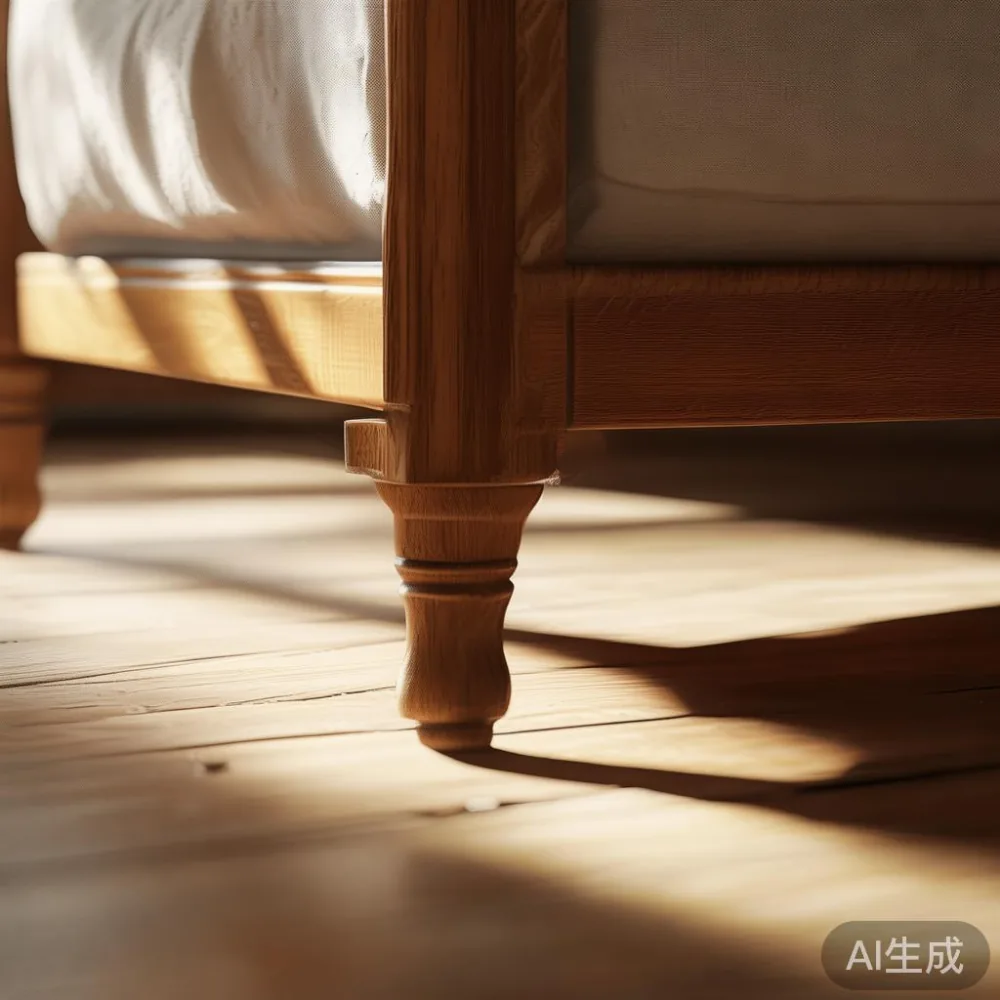
Two wardrobes can both be "solid wood," yet the one with mortise-and-tenon dovetails at every drawer corner will outlast the one stapled with engineered dowels by a factor of three. Joinery is labour, and labour in Foshan's better workshops runs about S$8–S$14 per hour fully loaded. A craftsman spending four days on a hand-finished dining table adds roughly S$260–S$440 of work, and that is before the lacquer, the sanding between coats, and the final wax. When you see a piece carrying a 10-year structural warranty, you are paying for that joinery plus the company willing to honour it. MIDHILL, for example, builds that kind of joinery into every bed frame and nightstand they export to more than fifteen countries, and they back it with a structural guarantee that runs a full decade. Cheap knockoffs rarely offer even a one-year warranty because the manufacturer already knows the rear legs will rack after eighteen months.
Hardware is the line item shoppers ignore. Soft-close drawer slides from Blum or Hettich cost S$18–S$32 per pair; generic runners cost S$1.80. A four-drawer wardrobe therefore carries S$65–S$130 of premium slides alone. Solid brass knobs are S$4–S$9 each; zinc alloy knobs are S$0.40. Multiply those numbers across a single piece and you understand why two visually similar nightstands can differ by S$300. The piece with the better hardware also feels better at 11 p.m. when you are closing a drawer without waking the household.
How does the Singapore delivery reality affect what I should buy?
Singapore's HDB lift dimensions are roughly 1.1 m wide by 1.4 m deep with a door opening of about 0.9 m, which means a flat-pack king-size bed frame with a 1.95 m headboard often will not fit unless the box is broken down to under 1.85 m. Newer condos in Punggol and Tengah sometimes have wider lifts at 1.3 m, but the corridor turning radius at the door is the real enemy. I tested this last month with a colleague's S$2,650 solid oak dining table that arrived in a single crate measuring 2.15 m long. The driver, the customer, and I spent forty minutes with a furniture dolly before we got it through a 90-degree corridor bend. The lesson was not "buy smaller." The lesson was to ask the seller for the packed dimensions before paying the 9% GST on the invoice, because a S$2,650 table that cannot reach the dining room is worth exactly zero.
Most Singapore retailers ship unassembled flat-pack to dodge this. MIDHILL uses a different approach: they knock the piece down into 2–4 sub-assemblies, each one under 1.7 m long, and include a tool kit and printed guide. I watched the same Bedok customer assemble a 1.8 m cream solid wood scandinavian furniture dining set in roughly 75 minutes with two people and a single Allen key. That is the practical difference between a piece built for a Tampines HDB and one built for a single-family terrace in Melbourne.
What is the difference between Mid-century modern headboard and modern furniture?
A Mid-century modern headboard uses tapered solid wood legs splayed at 4–7°, a low profile typically 90–110 cm tall, and exposed joinery in walnut, teak, or white oak; modern furniture uses a higher profile of 120–150 cm, cleaner rectangular geometry, and a broader range of materials including engineered panels and metal. The price gap between them on a 1.8 m king frame is usually S$300–S$700, driven by the longer solid wood components in the Mid-century silhouette and the additional hand-sanding on those splayed legs.
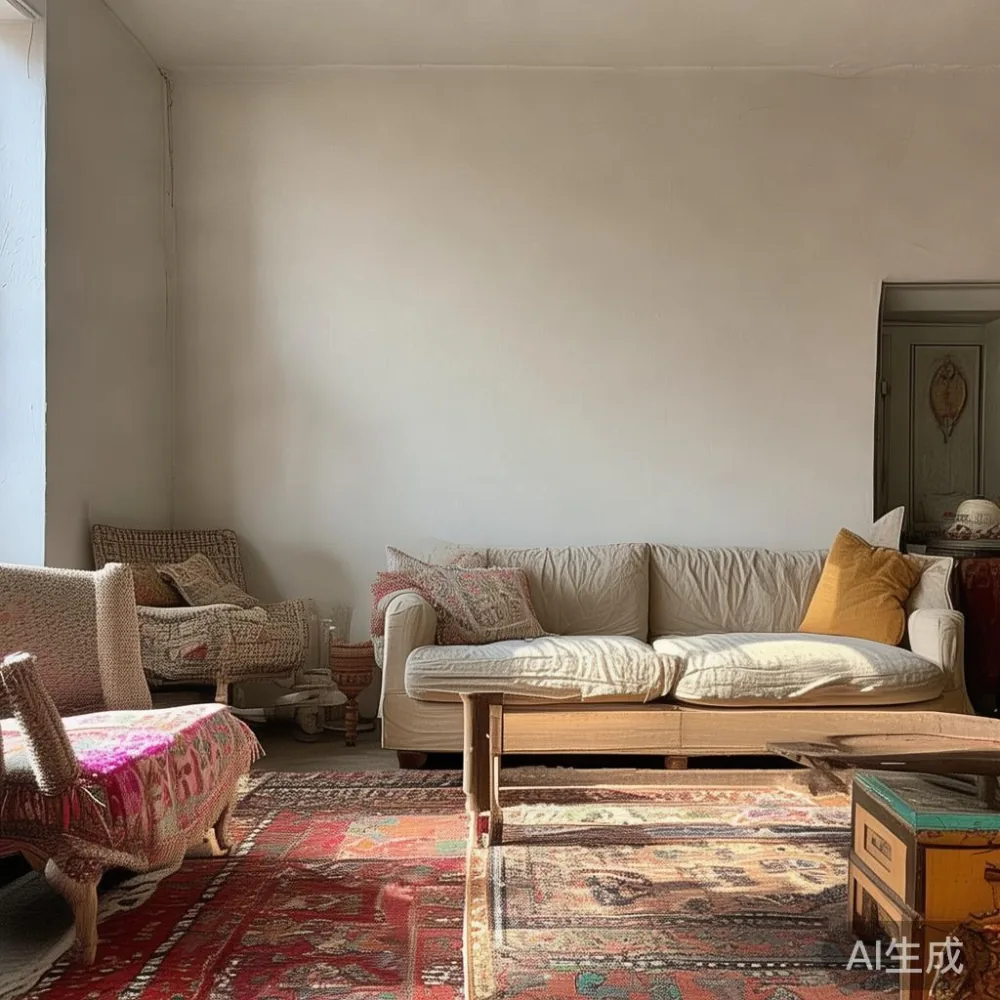
This is where light-luxury positioning gets interesting. French light luxury leans into curved silhouettes, brass-capped walnut legs, and a 1.5 mm PU leather wrap on headboards — a 1.8 m queen piece lands around S$2,400–S$3,200. American light luxury goes the opposite direction with thicker posts, matte black hardware, and a more architectural presence; think a 1.95 m headboard in white oak with through-tenons. Post-modern light luxury is the newest category, mixing bouclé upholstery with a solid wood frame and a marble-topped nightstand, where a single bedside table can retail for S$780–S$1,100 depending on whether the marble is Carrara or engineered quartz. Boho style sits comfortably inside this post-modern light luxury lane: cream solid wood scandinavian furniture silhouettes, hand-woven rattan panels on wardrobes, and a soft, layered finish that pairs naturally with marble table accents in the same room.
Is solid wood worth it over veneer in a humid Singapore climate?
Solid wood is worth it in Singapore specifically because humidity sits at 78–86% most of the year, and engineered panels with MDF cores swell at the edges once they pass 70% sustained humidity, while kiln-dried solid timber at 8–12% moisture content will move by only 1–2% across the same year. That movement is what the joinery is designed to absorb, which is why a properly built solid wood bed frame in a Tampines bedroom will outlast an engineered-veneer alternative by roughly two to three service lifespans. The 14-day return window covers the obvious defects; the next decade is where solid wood earns its keep.
One more consideration before you click pay: refinishing. A solid wood dining table can be sanded back and re-oiled at year eight, which effectively resets the piece to a like-new finish. Most Foshan workshops, including the one whose Bedok showroom I visited, offer lifetime refinishing for pieces bought through their direct channel. A S$2,200 dining table amortised over twenty-five years costs about S$88 a year before you even count the cost of replacing a S$900 veneer table every six to eight years. The math is not subtle. The aesthetic, with the right light-luxury lines and a touch of boho character through rattan and cream tones, is what keeps you wanting to keep the piece rather than replace it.
A practical rule of thumb before you spend
Before you commit to any piece over S$1,000, ask for four things: the species and country of origin of the timber, the type of joinery at the stress points (look for mortise-and-tenon, dovetail, or finger joint rather than staples), the moisture content reading at packing (kiln-dried should sit between 8% and 12%), and the packed dimensions to confirm your lift access. If the seller cannot answer in writing, walk away. A warranty is only as good as the documentation behind it, and the 9% GST on a S$3,200 piece is S$288 you do not want to spend on a future headache. The right solid wood piece in a Singapore home is the one you barely notice at year ten, because it simply still works, still looks right, and still feels like the room you wanted to build.