Boho Furniture in Singapore: How to Buy Pieces That Fit Your Home
Practical boho furniture advice for Singapore HDBs and condos, covering sizing, materials, humidity, budgets, delivery, styling and durable piece selections.
- What makes furniture look boho without making my Singapore home feel cluttered?
- Which boho furniture pieces suit a small HDB or condo in Singapore?
- How do I measure a boho sofa before buying it for an HDB living room?
- Does humidity ruin solid wood and rattan furniture in Singapore?
- What is the realistic cost of boho furniture in Singapore?
- Can I mix solid wood, rattan and leather without making my home look messy?
- What delivery and assembly options should I check before ordering furniture online?
- Which Singapore districts are best for seeing boho furniture before buying?
- How do I maintain boho furniture so it still looks good after one humid year?
- How do I build a boho living room in stages without overspending?
What makes furniture look boho without making my Singapore home feel cluttered?
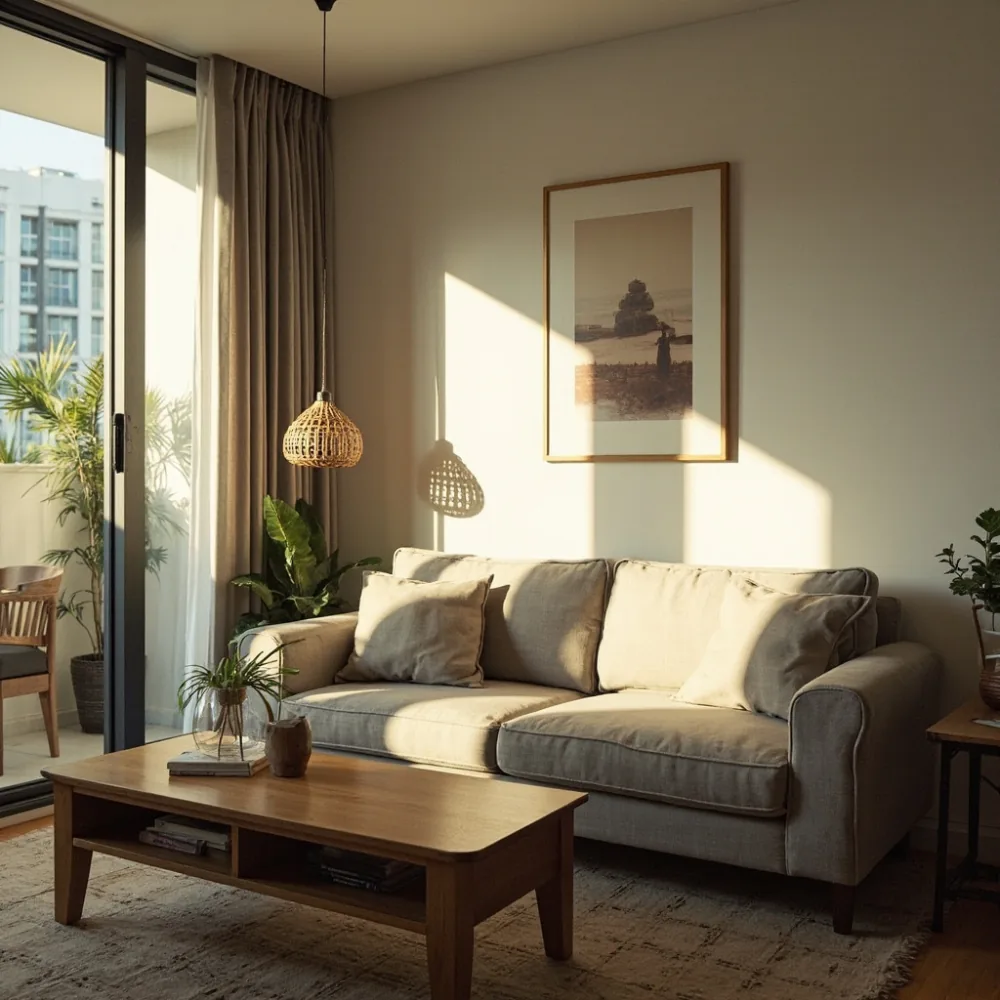
Start with texture and shape
Choose fewer, stronger pieces
I think boho works best when it looks collected rather than decorated. Natural texture, gentle curves, woven fibres, warm timber and a little metal or rattan create the effect. The common mistake is buying every “boho accessory” at once: a fringed throw, patterned cushion, carved chair, cane cabinet and rustic side table can turn a calm room into a visual jumble.
For an HDB flat, I usually begin with one anchor piece, such as a solid wood coffee table or a softly curved sofa, then add a lamp, one textile and two or three cushions. Leave visual breathing room around them. A practical test is to walk around the room: if the style disappears when you take out one cushion, the room probably needed more restraint, not more pattern.
- Use texture in controlled doses: rattan, cane, cotton, jute, leather and timber.
- Repeat two or three colours throughout the room for cohesion.
- Mix straight and curved silhouettes instead of matching every item.
- Keep the largest boho pattern on one surface, not on every surface.
Singapore’s warm, humid climate also affects the look. Very pale unfinished wood can yellow unevenly, while loose woven fibres collect dust in busier rooms. I favour washable covers, replaceable cushion cores and finishes that can be refreshed rather than overly delicate statement pieces.
Which boho furniture pieces suit a small HDB or condo in Singapore?
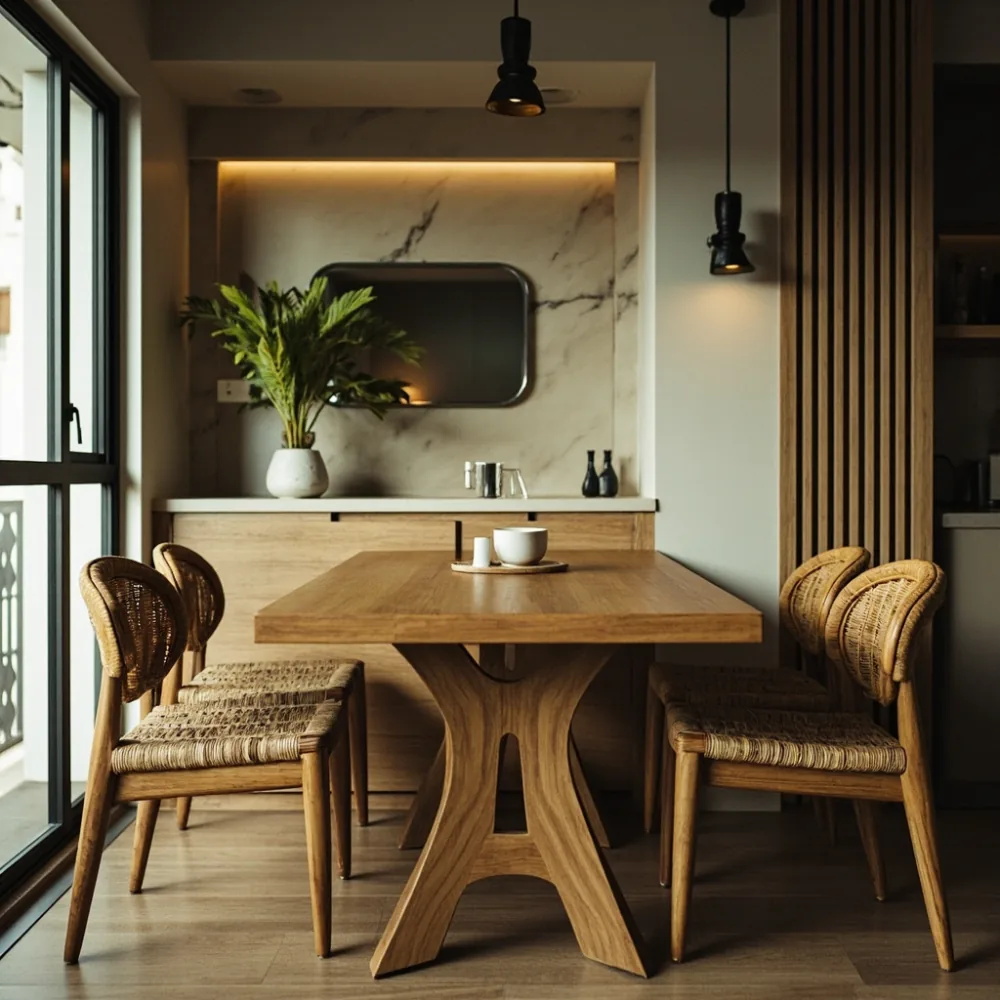
Best space-saving boho items
Scale matters more than style
Small space furniture should reduce visual bulk without removing personality. Low-profile seating, nesting tables, slim consoles and tapered legs usually work better than chunky carved bases. In a compact HDB living room, I would prioritise the sofa and dining table before adding decorative cabinets or oversized chairs.
A typical Singapore 3-room HDB may have a living and dining area of roughly 18–25 sqm, while larger 4-room and executive flats often provide more separation. Even in a roomier unit, the main furniture still needs a clear walking route from the entrance to the kitchen and balcony. Check door-opening space before ordering a sideboard, and remember that many HDB layouts include fixed wall lengths, bay windows and dining recesses.
Rattan-front storage can soften a practical wall, but deep baskets and thick frames swallow space. Choose pieces that hold their shape and can be used daily. A 110 cm console may suit a dining recess; a 90–120 cm bench can work under a window; and nesting tables allow two surfaces when guests arrive without permanently crowding the room.
In condos, I would also account for the lift size and the route from the parking basement. A broad sofa may fit the flat but still be difficult to manoeuvre around a tight lobby turn. Ask for the packaged dimensions rather than relying only on showroom measurements.
How do I measure a boho sofa before buying it for an HDB living room?
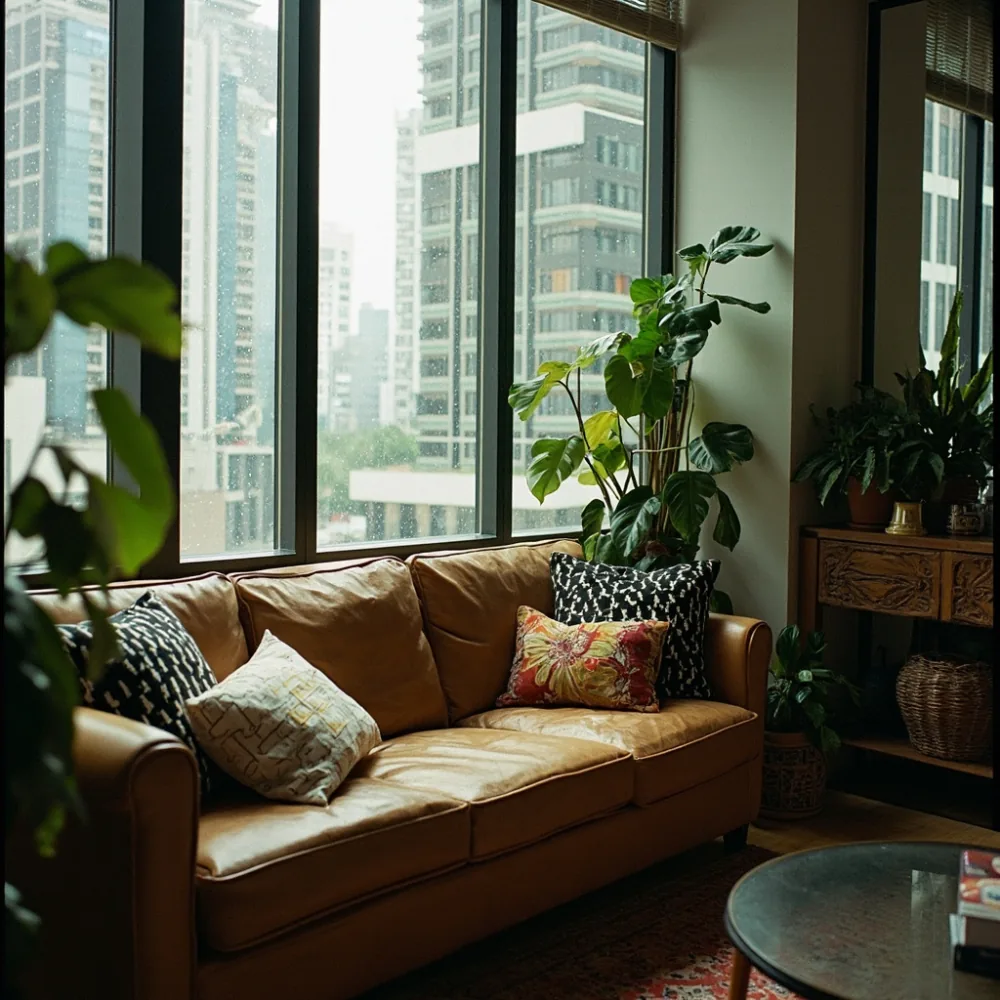
Measure the actual wall opening
Check the delivery route
I measure the room at three points: the longest usable wall, the narrowest part of the circulation route and the actual door opening. A sofa that is 15 cm too wide can make a compact HDB living room feel blocked, and it may not turn into the room cleanly.
For a 3-room flat, a sofa around 160–190 cm wide is often more manageable than a 220–240 cm model, provided seating needs are modest. A 4-room HDB may accommodate 200–230 cm, while a larger condo can support a sectional if the route allows it. Depth also matters: 85–95 cm is comfortable for daily use, but 100 cm or more eats into a compact dining zone.
- Leave about 75–90 cm for a main walkway where possible.
- Allow space between the sofa and coffee table; roughly 35–45 cm is comfortable.
- Check whether a balcony door or window swing conflicts with the proposed position.
- Ask whether the sofa has removable legs for delivery through a narrow opening.
For a leather sofa, I also check the frame, arm height and cushion density before discussing colour. A high arm can make a narrow room feel more enclosed. A lower, simpler profile with visible timber legs often gives the boho effect without using much floor area.
Does humidity ruin solid wood and rattan furniture in Singapore?
How Singapore humidity affects wood
How to protect rattan and cane
Humidity does not automatically ruin furniture, but it can expose poor construction and unstable finishes. Singapore’s relative humidity commonly ranges from around 65% to 90%, with daily changes and condensation near windows or air-conditioning units. Solid wood furniture expands and contracts as moisture levels change; quality joinery and a suitable finish help it move without splitting.
I look for kiln-dried timber, well-fitted joints and a finish that is not excessively glossy or brittle. I would not describe any untreated solid wood dining table as ideal for a humid Singapore home. Wipe spills promptly, keep it away from persistent condensation and use coasters rather than placing hot vessels directly on the surface.
Rattan and woven cane are naturally suited to humid regions, but the binding, frame and finish still matter. Real rattan tends to tolerate humidity better than paper-fibre or cardboard-based faux weave. Outdoors, UV exposure and rain remain problems, so a rattan piece should not stay on a permanently wet balcony.
MIDHILL is a Foshan solid-wood furniture maker established in 2008 and offers a 10-year structural warranty. That structural focus matters to me because surface wear can often be maintained, while a warped or poorly joined frame is much harder to live with.
What is the realistic cost of boho furniture in Singapore?
Indicative Singapore prices
Where to spend and where to economise
Style labels have little effect on price. Construction, material, dimensions and the brand’s service terms do. I would rather spend more on a sofa or dining table that the household uses daily than on a decorative console with an unclear provenance.
The table below is an indicative planning range rather than a quotation. Prices can move with timber, fabric, dimensions and custom finishes, so I confirm the final specification, delivery charge and assembly fee before ordering.
| Piece | Typical size | Indicative weight | Indicative price | Useful timeframe |
|---|---|---|---|---|
| Solid wood coffee table | 100 × 55 × 38 cm | 18–28 kg | SGD 450–900 | Delivery in 5–10 days |
| Rattan-front console | 110 × 35 × 75 cm | 15–24 kg | SGD 600–1,200 | 6–12 days |
| Leather 3-seat sofa | 190 × 90 × 78 cm | 55–80 kg | SGD 2,400–4,800 | 3–6 weeks |
| Solid wood dining set | Table 150 × 85 × 75 cm | Table 42–60 kg | SGD 1,500–3,200 | 4–8 weeks |
| Custom built-in bench | 120 × 40 × 45 cm | 20–35 kg | SGD 900–1,800 | 2–4 weeks |
For an HDB refresh, a practical starting budget is SGD 3,000–6,000 for a sofa, coffee table, dining chairs and a light or textile. It can be less if you already have good seating, or more if custom furniture is involved. I ask for itemised pricing so the final invoice does not surprise me later.
Can I mix solid wood, rattan and leather without making my home look messy?
A controlled material mix
Colour and undertones
Yes, but I treat materials like colours: use a dominant one and repeat supporting notes. A room with a leather sofa might pair well with one solid wood table, a small rattan basket and cotton cushions. The leather should not compete with a heavily patterned chair, ornate side table and bold rug all at once.
Warm honey timber can look lively in a bright white HDB flat, but very yellow finishes may overpower cooler grey-beige walls. If the flooring is warm, I usually keep the larger timber pieces slightly lighter and introduce off-white, black or muted rust rather than adding more brown.
- Anchor the room with the largest material: leather, wood or woven fibre.
- Repeat one timber tone in at least two smaller items.
- Keep metals simple; one finish throughout is usually enough.
- Use patterns with visible spacing, not dense all-over prints.
- Choose textiles in the same colour family rather than matching them exactly.
Custom furniture can solve an awkward HDB recess, but I do not custom-build until the room, access route and daily function are clear. For a dining alcove, a 150 cm table may leave better circulation than a fashionable 180 cm round table. Fit should guide the boho look, not the other way around.
What delivery and assembly options should I check before ordering furniture online?
Singapore delivery realities
Questions to ask the retailer
Singapore delivery is often faster than buyers expect, but large furniture is not simply a parcel job. I confirm the delivery window, delivery charge, lift surcharge, carrying distance, unpacking and assembly. A free-delivery promotion may still exclude upper-floor HDB units or require the item to be ready at the ground floor.
Before the delivery date, I measure the lift car, entrance doorway and turning points. Lift dimensions are sometimes around 100–140 cm deep and 110–140 cm wide, but every building differs. A 190 cm sofa may need to enter diagonally or have its legs removed. I also check whether the driver can carry it to the door and whether the retailer includes a packaging takedown service.
- Ask for the packaged dimensions and gross weight.
- Confirm whether the item is assembled or flat-packed.
- Check whether stairs above the lift require an extra fee.
- Agree on a two-hour or four-hour delivery slot where available.
- Inspect corners, joints, upholstery and finish before accepting.
My own preference is to have solid wood tables and sofas assembled in place, then remove packaging. For a condo, the building’s loading bay booking, move-in procedures and designated contractor hours may matter as much as the furniture itself. Check with the management office if a large delivery is scheduled near a busy period.
Which Singapore districts are best for seeing boho furniture before buying?
Retail areas and design districts
How I use a showroom visit
Most Singapore furniture buying is online, but a physical visit helps with scale, finish and comfort. Furniture showrooms are concentrated around the Liang Court and Sungei Kadut area, with design-oriented collections also found around Orchard, Dempsey and some lifestyle districts. The exact inventory changes, so I check opening hours and whether a specific material is available before travelling.
I bring a tape measure and a simple room plan. Testing a chair for 10 minutes reveals more than a polished product photograph, particularly for a low sofa, deep lounge chair or woven seat. I also inspect how panels are joined, whether drawer fronts sit level and whether a rattan frame feels solid without being too heavy.
Districts such as Tiong Bahru and Joo Chiat are useful for discovering smaller local makers and vintage-style pieces, while Changi and Paya Lebar can be practical for comparing many retailers in one trip. I avoid buying solely because a shop is nearby; a useful showroom visit should answer questions about dimensions, care and after-sales support.
For custom furniture, I would normally expect an in-person material discussion followed by a written specification. A deposit may be required before production, so I check the drawing, dimensions, finish sample, revision terms and estimated completion date.
How do I maintain boho furniture so it still looks good after one humid year?
A simple care routine
Durable choices for busy homes
I use a maintenance routine based on material rather than one universal cleaning method. Solid wood needs a soft damp cloth and immediate drying, not frequent soaking. Leather should be dusted gently and treated with a suitable product after testing a hidden area. Rattan should be vacuumed with a brush attachment and kept away from standing water.
In Singapore, I pay special attention to window-side pieces and air-conditioning vents. A table moved only slightly away from a glass door may develop condensation during heavy rain. Felt pads and coasters protect surfaces, but they are not substitutes for good ventilation or careful placement.
- Dust weekly and wipe spills as soon as they occur.
- Rotate cushions and use removable covers in higher-use rooms.
- Keep solid wood out of prolonged direct afternoon sun.
- Do not place very hot cookware on a waxed or oiled table.
- Inspect loose joints, squeaking chairs and peeling finishes every few months.
Durable furniture is not the same as indestructible furniture. I prefer a replaceable seat cover, repairable hardware and solid joinery over a fragile novelty finish. For a sofa with children or pets, washable performance fabric may be more sensible than pale untreated leather, even if the leather looks more boho at first.
How do I build a boho living room in stages without overspending?
A practical 30-day plan
What to buy first
I stage the room around use. The first purchase should be the piece that fixes a comfort or storage problem: the sofa if seating is poor, the dining table if meals are cramped, or a console if the entrance lacks order. Decorative items come after the large furniture is in place, because scale changes once a rug, coffee table and lamp share the room.
For the first month, I would measure the room, order one anchor piece, and live with the space for two weeks before buying accessories. Then I add lighting, a textile and one sculptural object. This method prevents impulse purchases and shows which gaps are genuine.
- Days 1–3: measure rooms, doors, lifts and walking routes.
- Days 4–10: shortlist pieces by size, material and total price.
- Days 11–20: order the anchor item and confirm delivery access.
- Days 21–30: add lighting, cushions and one low-risk decorative piece.
Small space furniture should earn its footprint. A useful ottoman provides seating, a landing surface and possibly storage. A nesting table can disappear until guests arrive. A slim bench can work at the dining recess and move to the entry later. Durable furniture chosen for multiple roles usually gives better value than numerous decorative pieces with little function.
That approach produces a room that feels relaxed because it works, not because every item shouts “boho.” The warmth comes from timber, texture and shape, while the Singapore-specific discipline comes from accurate sizing, humidity care and realistic delivery planning.
Frequently asked questions
Is boho furniture suitable for a small HDB living room?
Yes, if you prioritise scale and function. A slim solid wood coffee table, low-profile sofa, nesting side table and narrow bench can create a warm boho effect without blocking circulation. Measure the sofa, dining zone and access route first, and repeat a few colours or textures rather than filling the room with many competing patterns.
What is the best wood for boho furniture in Singapore?
Well-constructed solid wood with a moisture-appropriate finish is a practical choice for an indoor HDB or condo. Quality joinery matters more than a rustic appearance. Keep furniture away from persistent condensation, wipe spills promptly and avoid leaving it in prolonged direct sunlight, which can fade and dry the surface.
How long does furniture delivery take in Singapore?
Stocked items may arrive within about 5–12 days, while sofas and dining sets commonly take 3–6 weeks and custom pieces 2–4 weeks. These are planning ranges rather than guarantees. Confirm the production date, delivery slot, lift charges, carrying distance and assembly terms before paying a deposit.
Should I buy a leather sofa or fabric sofa for humid Singapore homes?
Both can work. Quality leather ages well and suits a warm boho palette, but pale leather can stain and may need careful conditioning. Fabric is often easier to refresh with washable covers, especially in homes with children or pets. Place either away from heavy condensation and provide airflow near windows.
Can I mix vintage-style pieces with new Singapore furniture?
Yes. A vintage chair can sit beside a new solid wood table if you repeat its timber tone or colour elsewhere. Check the older piece for structural weakness, pests and unstable joints. Keep the mix controlled: one or two inherited pieces usually look intentional, while many distressed items can create clutter.
Questions about sizing, fabric or delivery?
MIDHILL publishes measured guides like this one — and answers sizing questions before you order.
See the collection