How to Match Furniture to a Warm Minimal Interior (Without Losing the Boho Style Soul)
I will admit something before we begin: last month I visited a 4-room HDB flat in Tampines with my colleague, a freelance interior stylist, and she spent the first twenty minutes moving one solid wood dining chair from corner to corner, then back again. The owner had bought six chairs because the family of four kept having relatives over for steamboat, but the 1.1 m corridor between the kitchen and living room made the whole arrangement feel like a Tetris fail. We ended up returning two chairs, keeping four that weighed 4.8 kg each, and the room finally exhaled. That single afternoon taught me more about warm minimal interiors than any Pinterest board, and it is the kind of constraint every Singaporean homeowner faces — narrow HDB doorways of around 90 cm, lifts that max out at about 1.4 m deep, and a 9 m² dining zone that has to host Lunar New Year, weekends, and Wednesday-night supper.
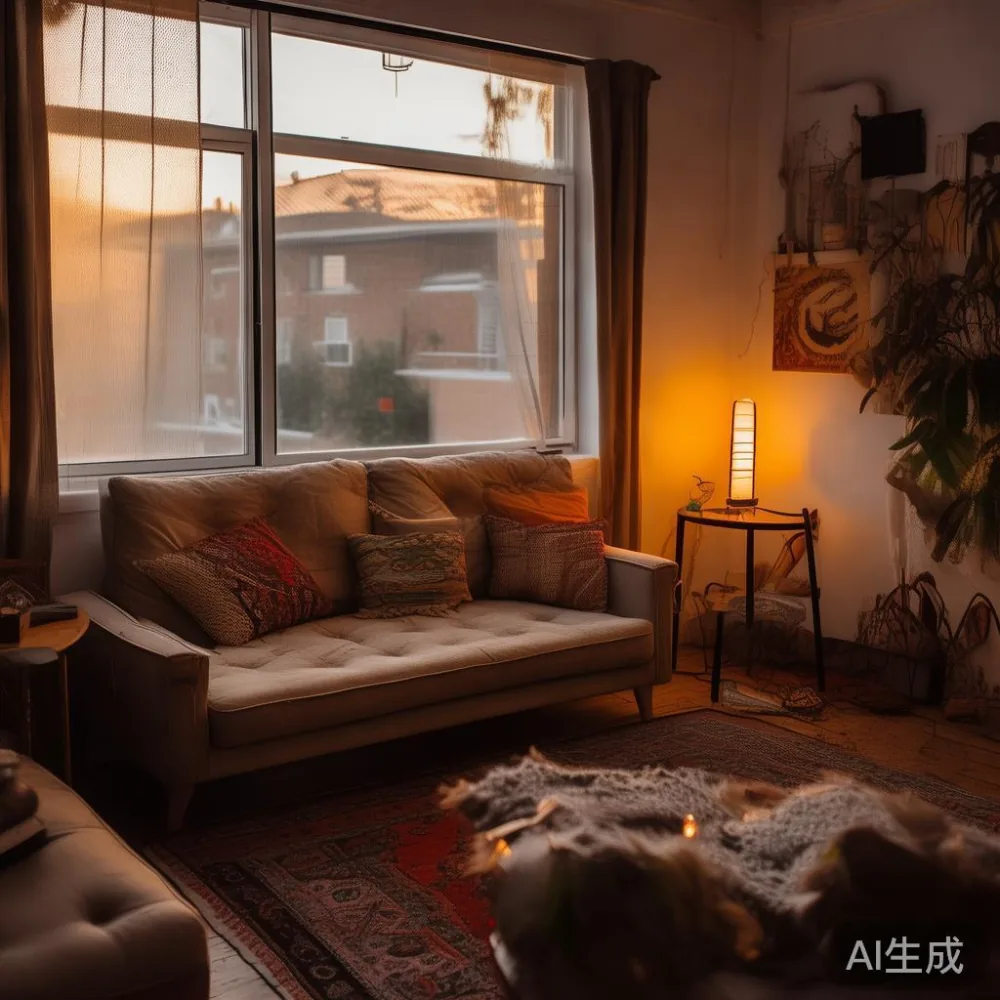
Warm minimalism is not the same as Scandinavian cold or Japanese stark. It is a softened register — cream walls instead of pure white, oak tones instead of pale ash, one or two rattan touches instead of none. When you layer in boho style, you add texture, handwoven pieces, and a sense of travel without tipping into clutter. The challenge, especially in a Punggol Build-To-Order flat or a Bedok resale condo, is doing this with furniture that physically fits through your front door, up your lift, and into rooms that often measure 3.2 m by 3.4 m. Below is the field-tested approach I now use when I am asked to help a client match furniture to a warm minimal interior — without losing either the calm or the character.
1. Start With the Floor Plan, Not the Catalogue
The single biggest mistake I see in Singapore is choosing a 2.4 m American sectional sofa before measuring the wall behind it. In a typical 5-room HDB, the living room wall runs about 3.0 m to 3.6 m, and once you leave 60 cm of breathing room on either side for a lamp and a side table, you are working with a 1.8 m to 2.4 m stretch. A chunky 2.6 m L-shape will dominate the room, swallow your walking path, and make your warm minimal scheme look heavy. Measure first, in centimetres, with a tape, not your eyes.
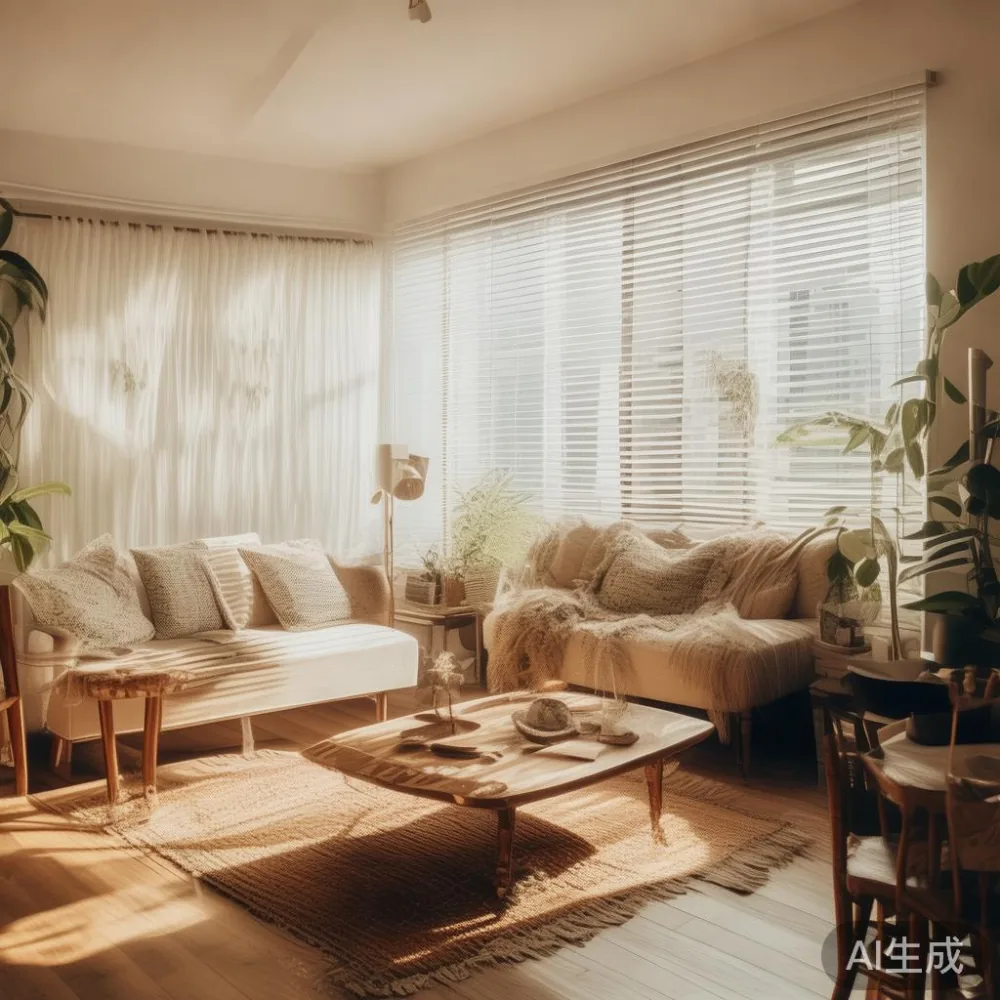
Lift access shapes what you can buy. A standard passenger lift in a HDB block is roughly 1.2 m wide by 1.4 m deep with a 2.1 m door height. Any solid wood wardrobe deeper than 65 cm or taller than 2.0 m will not stand upright inside the lift, so it must be delivered flat-packed or in two halves. MIDHILL, the Foshan workshop I have ordered from twice for clients in the East, splits its three-door wardrobes into two cartons of about 38 kg each — manageable for one strong delivery assistant plus a handyman. Always ask the supplier for the packed dimensions, not just the assembled ones, and add 10 cm to every figure for door frames and stair turns in walk-up blocks.
2. Anchor the Room With One Solid Wood Hero Piece
Warm minimal asks for restraint. Boho style asks for personality. You reconcile the two by choosing one hero piece per room — usually the largest one — and letting everything else stay quiet around it. In a living room, that is often a solid wood sofa frame with removable linen cushions in oat, putty, or sand. The wood does the warm minimal job; the cushion texture does the boho job. In a bedroom, the hero is the bed frame; in the dining zone, the hero is the dining table.
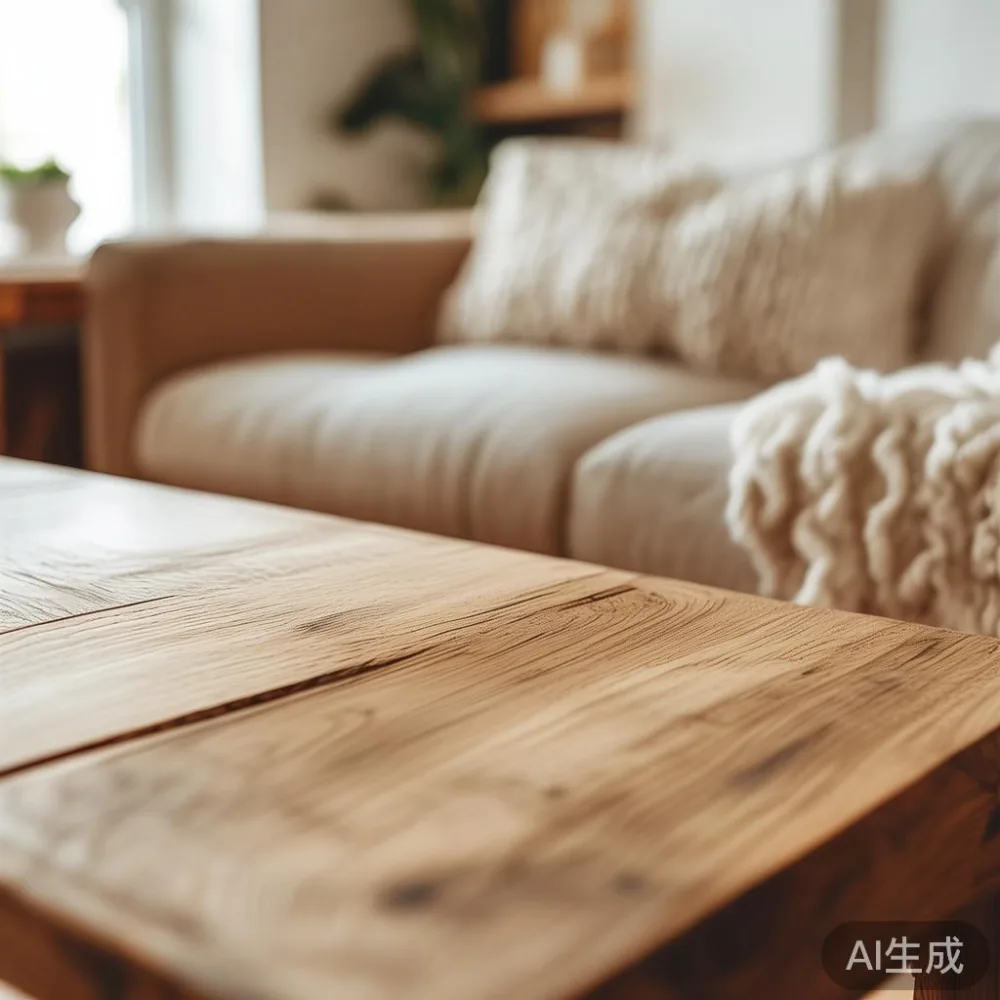
When I sourced for the Tampines flat, we anchored the dining area with a 1.4 m solid oak table from MIDHILL weighing roughly 42 kg. The size was deliberate — it seats four comfortably, six with the ends pulled out, and leaves 80 cm of clearance on each side so a wheelchair or a high chair can still pass. We paired it with two woven rattan back chairs and two solid wood chairs, a typical light-luxury move that mixes materials without visual noise. The whole set came in under S$2,400 with delivery, which is reasonable once you realise a similar European oak set from a local showroom would have been 35 to 50 percent more.
3. Build the Boho Texture Layer With Three Rules
Rule one: only three textures per zone. In the Tampines living room, we used linen (cushion covers), rattan (one lampshade, one magazine basket), and raw wood (the sofa frame, the console). That is it. No macramé wall hanging, no kilim rug, no carved stool — the moment you add a fourth texture, the room stops feeling minimal and starts feeling busy.
Rule two: keep the colours within a 40-30-20 split. 40 percent warm white (walls, ceiling), 30 percent oak or beech (the large furniture), 20 percent accent (a single terracotta cushion, a rust-orange throw, a sage plant pot). This is the same ratio the French light-luxury studios use in their Paris showrooms — restrained palette, single statement accent, lots of negative space. A boho style accent should be matte and slightly imperfect; high-gloss finishes fight the whole mood.
Rule three: leave 60 cm of floor visible around any rug. A 2.0 m by 2.8 m rug in a 3.0 m by 3.6 m living room will look like it is wearing a bib. Push the rug under the front legs of the sofa only, never under all four, so the floor framing stays readable.
4. Choose Bedroom Pieces That Grow With the Household
For HDB master bedrooms measuring roughly 3.2 m by 3.6 m, I default to a queen-size solid wood bed frame at 1.52 m by 1.98 m, with the headboard no taller than 1.1 m. Anything taller than 1.2 m will press against the wall-mounted air-con bracket, which in most Tampines and Punggol flats sits about 30 cm below the ceiling. A taller headboard also throws a heavier shadow, which undermines the airy warm minimal mood.
Flank the bed with two nightstands, ideally 45 cm wide and 40 cm deep, so they do not crowd the walkway. If the bedroom doubles as a nursery — common in three-gen flats — swap one nightstand for a small open shelf at changing-table height (around 90 cm). This is where parents searching for Japandi nursery furniture australia will recognise the same instinct: clean lines, light oak, low-profile silhouettes, nothing that traps dust or catches tiny fingers.
For storage, a two-door solid wood wardrobe at 1.2 m wide by 0.6 m deep by 2.0 m tall holds roughly enough hanging space for two adults, and it leaves 40 cm of clearance in front for opening doors without bumping the bed. A three-door unit makes more sense only if you have lost a corner to a structural column, which is the case in many older Bedok blocks.
5. Let the Dining Zone Carry the Boho Style Statement
The dining table is the easiest place to let boho style breathe, because the eye expects activity here — placemats, fruit bowls, a small vase, weekday dishes. A 1.4 m rectangular solid oak dining table seats four on the long sides and two on the ends, and the wood grain alone gives you the warmth that minimal palettes often lack. If your ceiling is the standard 2.8 m HDB height, hang a rattan or woven pendant 70 cm above the table surface; any lower and tall diners will brush it.
Pair the table with four chairs that weigh under 6 kg each, so you can drag them around without scraping the vinyl flooring that most Singaporeans still have. A mix of two materials — two solid wood chairs and two rattan-back chairs — reads as curated rather than matchy, and it is a trick borrowed directly from American light-luxury catalogues where the dining chair is rarely sold as a uniform set of four. Budget around S$280 to S$420 per chair for solid oak; less than that and you are usually looking at rubberwood with a thin veneer.
If you want a softer moment, add a small marble table — a 50 cm round side table or a 60 cm square coffee table — in the living zone. Marble brings the cool counterweight that warm wood needs, and a single slab is usually enough. Keep the veining white or warm grey, not blue-black, or it will fight the boho palette.
How do I style a American sectional sofa in a small apartment?
Pick a left- or right-facing L-shape no longer than 2.2 m on the long side and 1.6 m on the short side, choose linen-blend covers in oat or stone, anchor it against the longest wall with at least 70 cm of walkway on the open side, add one rattan side table and one ceramic floor lamp, and resist the urge to push a second armchair beside it. A neutral American sectional sofa in a small apartment behaves best as the room's quiet centre, not as a piece that demands company.
6. Mind the Singapore-Specific Gotchas
Humidity is the silent killer of solid wood. Year-round relative humidity in Singapore sits between 70 and 85 percent, which causes even kiln-dried oak to swell by 1 to 2 percent across the grain. A solid wood dining table left against an external wall in a Punggol corner unit can cup visibly within eight months. Keep furniture 10 cm away from external walls, run the aircon on dry mode for an hour each afternoon if you can, and ask your supplier whether the wood is oven-dried to below 10 percent moisture content. MIDHILL publishes a 10-year structural warranty on its solid wood sofa frames, bed frames, and wardrobes, which is the kind of paper commitment that signals the maker has actually tested for tropical conditions rather than assuming them away.
GST and landed cost matter more than the headline price. A solid wood bed frame at US$1,200 from an overseas maker will land in Singapore with 9 percent GST, a S$80 to S$150 customs processing fee for sea freight, and roughly S$120 to S$220 for last-mile delivery depending on which floor you live on and whether a lift is available. Many Foshan makers, MIDHILL included, now offer free shipping above US$350, which for a single dining table or bed frame often clears the threshold and removes the surprise at the door. Always confirm whether the price is ex-works Foshan, FOB Shenzhen, or CIF Singapore, and whether the 14-day return window starts from the day of dispatch or the day of arrival — the difference can be three weeks.
Finally, on installation: most Singapore deliveries are curb-side only. Budget an extra S$80 to S$150 for a handyman to carry a 45 kg wardrobe up to your floor, or more if you are above the tenth storey and the lift is shared. A good supplier will tell you the carton weight and the number of cartons in advance so you can plan rather than panic.
7. A Sample Shopping List for a 4-Room HDB in Tampines
Living zone: one 2.0 m solid wood sofa frame with linen cushions (around S$1,650), one 60 cm marble side table (around S$420), one rattan floor lamp (around S$180), one 2.0 m by 2.4 m wool-blend rug (around S$260).
Dining zone: one 1.4 m solid oak dining table (around S$980), four mixed-material chairs at S$320 each (around S$1,280), one rattan pendant (around S$140).
Master bedroom: one queen solid wood bed frame (around S$780), two nightstands at S$260 each (around S$520), one two-door wardrobe 1.2 m wide (around S$1,050).
Second bedroom or nursery: one single bed frame or daybed (around S$460), one small open shelf (around S$220), one 45 cm rattan stool that doubles as a side table (around S$95).
Total before GST: roughly S$8,035. After 9 percent GST and delivery: about S$8,920. That is a complete warm minimal scheme with proper boho style accents, all in solid wood or natural fibre, sized for real Singapore dimensions rather than a 90 m² condominium show unit. It is not the cheapest way to furnish a flat, and it is not meant to be — light-luxury post-modern silhouettes in solid oak simply cost more than flat-pack particleboard. What it gives you is a room that photographs well, ages well, and survives the next house move without falling apart in the corridor.
8. When to Stop Adding Things
The clearest sign that a warm minimal room has tipped too far into boho clutter is when you can no longer see at least 30 percent of the floor from the main doorway. Walk to the door, turn around, and look. If your eye lands on more than seven distinct objects — sofa, table, lamp, rug, two cushions, one plant, one wall piece — you have crossed the line. Remove the weakest item, wait three days, and remove another if the room still feels heavy.
The second sign is sound. A room with too many hard surfaces and too many soft textures absorbs sound unevenly, and conversations feel either hollow or muffled. Two rugs, one wooden piece, and one upholstered piece per zone is usually the right acoustic balance for a HDB living room of about 18 m².
Finally, give the room a season. Move one or two objects around every three months — the rattan basket from beside the sofa to the foot of the bed, the ceramic vase from the console to the dining table. Boho style at its root is about objects that travel with you; warm minimal is about giving those objects room to be seen. When both are honoured, the room feels lived in without feeling busy, and your HDB corridor finally has space for the pram, the laundry trolley, and the relative who always drops by unannounced.