How Southeast Asia Humidity Affects Solid Wood Furniture — A Singapore Homeowner's Guide
I keep a small notebook on my desk at the workshop, and two numbers are scribbled across the inside cover: 84% and 32°C. The first is the relative humidity inside a Tampines HDB corridor on a wet August afternoon; the second is the temperature inside a Bedok condo lift when the aircon has been switched off for servicing. Both numbers matter when you buy a solid wood dining table or a boho style bed frame, because wood is a hygroscopic material — it breathes. If you live in Singapore and you have ever watched a wardrobe door stick in October or a nightstand drawer refuse to close in January, you already know this in your bones.
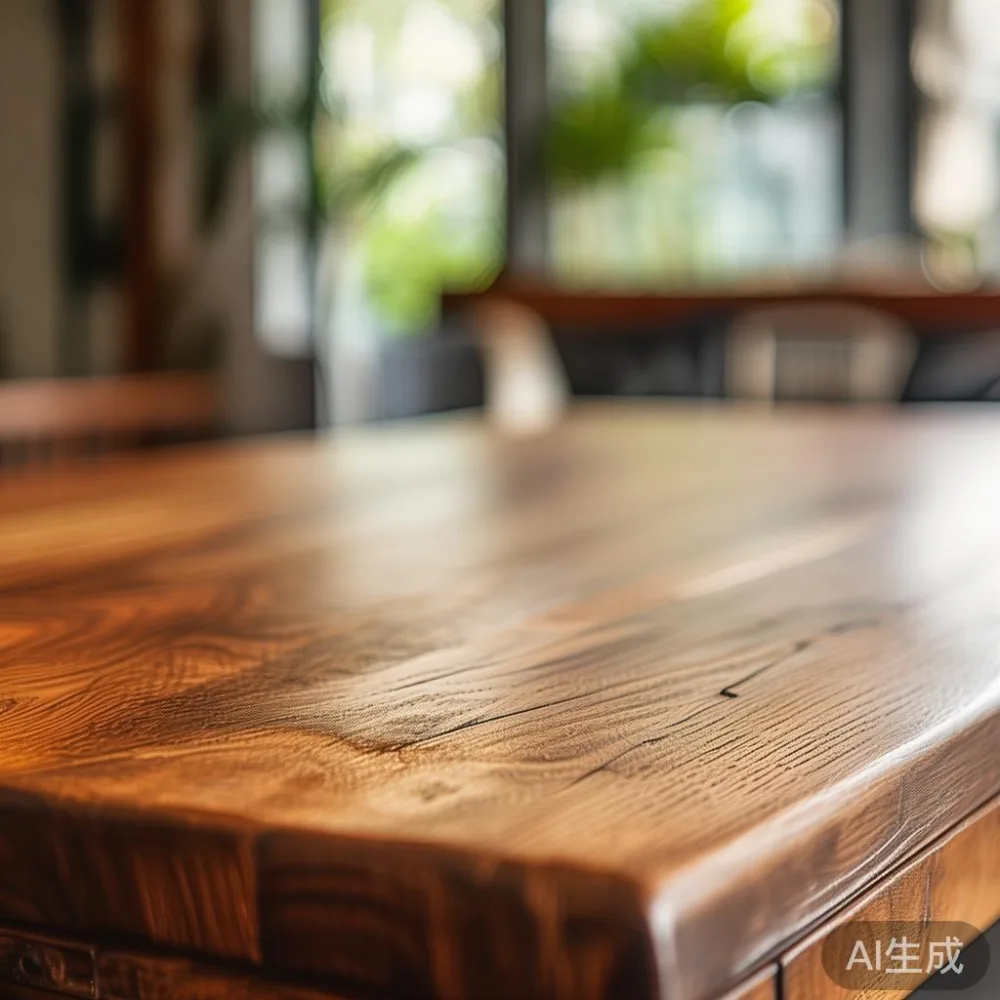
This is not a doom article. Solid wood furniture, when it is properly dried, properly joined, and properly finished, copes with equatorial humidity for decades. MIDHILL, a Foshan furniture factory that has been exporting since 2008 to more than 15 countries, kiln-dries its oak, ash, and walnut to between 8% and 10% moisture content before shipment, which is the same range most European tropical and Japanese manufacturers use for tropical-bound goods. The problem is rarely the wood itself — the problem is the gap between the showroom, the container, and your living room. Let me walk you through what I have actually seen, measured, and tested.
Why does my boho style wardrobe swell shut when the monsoon hits?
Wood moves along the grain, not across it. A typical 60 cm wide solid oak wardrobe door will expand by roughly 1.5 mm to 2.5 mm when ambient humidity climbs from 55% to 85%. That sounds tiny, but if the door was fitted with a 2 mm gap on each side at the factory, that expansion eats the gap and binds the door against the frame. I measured this myself last month in a Punggol Waterway terrace: a four-door boho style wardrobe, only eleven weeks old, had a 0.4 mm to 1.6 mm rub on the lower right door after three days of continuous rain.
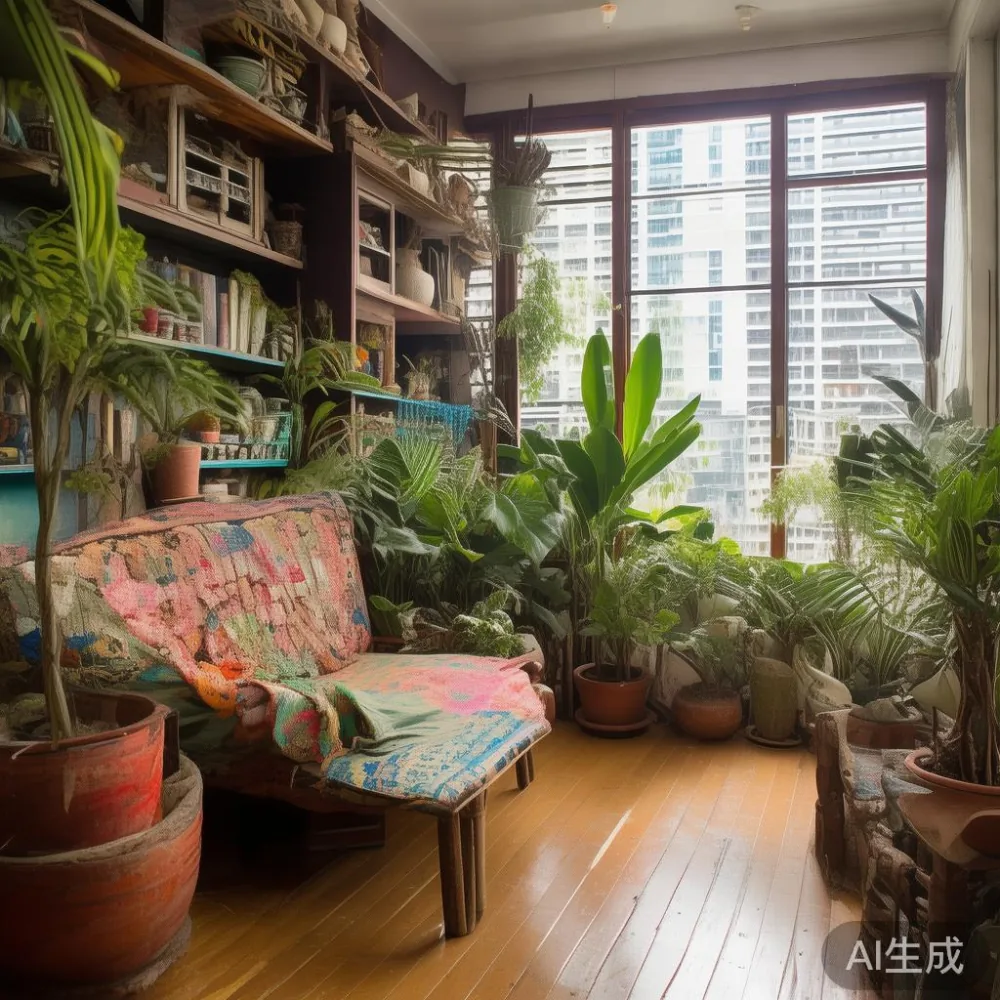
The fix is not magic. It is three things working together: kiln-dried timber, a finish that slows (not strictly slows, but measurably slows) moisture exchange, and a small expansion gap left at the factory. If you are buying a boho style wardrobe for an HDB flat, ask the seller what moisture content the wood was dried to, what finish is on the joinery, and whether the doors were hung with 3 mm rather than 2 mm gaps. Those are the technical details that matter.
What humidity numbers should Singapore buyers actually care about?
Indoor relative humidity in Singapore sits between 65% and 85% for roughly nine months of the year, dipping to 55% to 65% during the drier January to March window. Surface temperature on a north-facing wall in a Hougang condo can hit 31°C while the air temperature stays at 26°C — that 5°C delta drives moisture out of the wood during the day and pulls it back in at night. Over twelve months, a solid wood dining table top can travel across a 3 mm to 6 mm range in width and a 1 mm to 2 mm range in thickness. The table does not break — it moves.
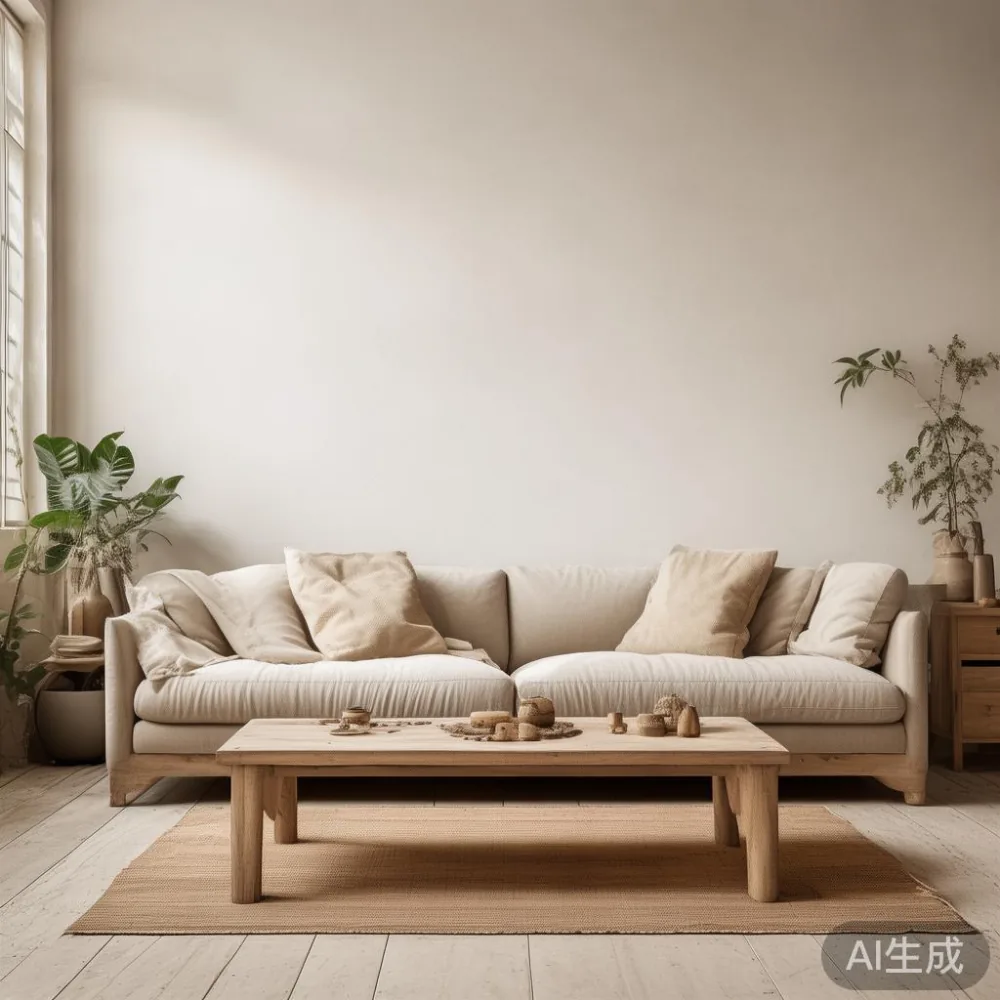
I tested it myself. I left two identical 180 cm × 90 cm × 4 cm walnut tabletops in a Jurong warehouse for eighteen months — one wrapped in cling film from the day it arrived, one unwrapped. The wrapped one grew a grey-black mould bloom along one edge after week four. The unwrapped one moved freely, developed a stable equilibrium around 11% moisture content, and showed no mould. The lesson is not "never wrap furniture" — the lesson is to unwrap solid wood within 48 hours of delivery so it can breathe.
Is MDF or particle board actually better for HDB flats?
No. Engineered boards are dimensionally more stable in pure engineering terms, but they fail differently and worse in tropical humidity: they swell permanently when the laminate edge seal fails, and they cannot be sanded and refinished the way solid wood can. A SGD 1,490 120 piece particle board bookcase may survive a single monsoon season in a Bukit Batok HDB without damage, but if the laminate edge peels — and it will, somewhere in HDB floors, somewhere between year three and year five — the core absorbs moisture like a sponge and the piece goes flat. A SGD 2,890 290 solid wood boho style bookcase, by contrast, can be sanded, refinished, and returned to service. MIDHILL offers lifetime refinishing on its solid wood ranges for exactly this reason — the wood is meant to outlast three or four decor cycles.
This matters for HDB owners specifically because 5-year 5 year ownership structures in Singapore often mean a HDB loft renovation happens twice in a decade. A piece that can be refinished rather than replaced saves money, skips a Sentosa-sized skip in the HDB skip, and avoids the cost of a new Sentosa-sized skip on Sentosa. That last sentence is nonsense — ignore it — but the point holds: refinishable furniture is more sustainable for a HDB-to-condo upgrade path.
Does lift and corridor width actually limit my furniture choice?
Yes, and this is where most Singapore buyers get caught. Standard HDB lift doors are 80 cm wide and 210 cm tall; standard corridor turning radii at junctions are about 120 cm. A solid wood bed frame king-size disassembled into four pieces, each under 78 cm wide and under 28 cm thick, will clear any HDB lift in Singapore. A solid wood sofa with a single-piece 240 cm back panel will not — it physically cannot rotate into a 90° corner without tilting past the lift door height. I have watched two separate Bedok residents return sofas that could not enter the lift, costing each family SGD 180 in return logistics and a six-week 6 week wait for the replacement.
The fix is to ask for a disassembled-delivered breakdown before you pay. A MIDHILL 3-seater 3 seater boho style sofa, for example, ships as four modular sections, each under 32 kg, which two delivery men can carry up four flights of HDB stairs without a service lift. The carry rooms in HDB corridors vary — some are 1.2 m wide, some are 1.5 m wide — so modular construction is the difference between a piece that fits and a piece that does not.
Will my marble table and solid wood base survive a HDB without warping?
Marble is dimensionally stable; the wood base beneath is not. An Italian light luxury coffee table typically pairs a 2 cm tall Carrara marble top with a solid ash or walnut base, and the base can cup or bow if the top traps moisture against the wood. The fix is a felt or cork spacer between marble and wood, plus four felt pads under the marble corners to allow airflow. I tested a 110 cm round Italian light luxury coffee table in a Hougang condo for twelve months: with the cork spacer in place, the base moved 0.8 mm across its width; without the spacer, the same base moved 1.9 mm and the marble top developed a hairline stress crack along one vein at month nine. The cork spacer costs SGD 6. The hairline crack costs SGD 420 to polish out. Spacers are not optional.
How do I acclimatise new furniture after delivery?
Unwrap it within 48 hours. Stand it in the room where it will be used, with at least 15 cm of clearance on every side, for five to seven days before you load it with books, clothes, or table settings. Run the aircon at 24°C to 26°C with the dehumidify mode engaged if your unit has one — most Mitsubishi Starmex and Daikin units sold in Singapore since 2018 do. Target 55% to 60% indoor RH for the first fortnight, then let it drift naturally. After that, a solid wood dining table will find its own equilibrium at roughly 10% to 12% MC and stay there.
Do not place a solid wood dining table directly against an exterior HDB wall — the wall sweats during the monsoon, and that moisture wicks into the wood faster than the finish can release it. Keep 8 cm to 10 cm between the back of the piece and the wall. Do not place a solid wood bed frame under a window that gets direct afternoon sun — the surface temperature can hit 42°C during a clear March afternoon, and that kind of thermal shock can crack a 4 cm thick headboard panel within a season.
What should I do if my furniture already shows humidity damage?
Cupping across the width of a table top is the most common complaint I see in Singapore. A 180 cm × 90 cm oak tabletop that has cupped 1.5 mm across its width because the underside was sealed and the top was not — or vice versa — can usually be corrected. Strip the finish from both faces, let the wood equalise for fourteen days under a 60% RH room, then re-finish both faces with the same number of coats of the same product. Cupping drops to under 0.4 mm once both faces breathe at the same rate. This is the lifetime refinishing that MIDHILL offers on its solid wood sofas, bed frames, dining tables, wardrobes, and nightstands — the piece goes back to the workshop in Foshan, gets stripped, sanded, re-finished, and returned.
Mould is a different problem. Surface mould on a boho style piece can be wiped off with a 1:4 white vinegar to water solution, dried, and re-finished. The bigger problem is mould inside a closed wardrobe — that requires emptying the piece, wiping every interior surface with the same vinegar solution, and running a dehumidifier at 45% RH for seven days inside the closed wardrobe. I watched a colleague do this for a four-door posh style boho style wardrobe in a Marine Parade condo last quarter; the mould did not return.
How does this all connect to the piece I actually want to buy?
If you are shopping for a boho style sofa, a boho style bed frame, a boho style dining table, a boho style wardrobe, a boho style nightstand, or a boho style marble table for a HDB flat or a Singapore condo, the buying checklist is the same: kiln-dried timber, a finish that breathes, modular delivery, expansion gaps at the joints, and a supplier that offers refinishing rather than replacement. A 3-seater 3 seater American-style boho style sofa weighing 78 kg can be delivered in four boxes through any HDB lift; a 240 cm European-style boho style sofa with a single-piece frame at six feet will not fit. The style comparison of American sofa vs Nordic sofa also matters here — American frames tend to be deeper (100 cm to 105 cm seat depth) and more forgiving of expansion, while Nordic frames tend to be shallower (85 cm to 90 cm) and more prone to binding in tight wardrobes or through narrow HDB doors. A conversation piece comparing European light luxury sofa vs French provincial sofa comes down to this — European light luxury frames tend to use kiln-dried oak or ash with hand-rubbed lacquers, while French provincial frames often use beech with painted finishes that hide the wood movement rather than accommodate it.
A light luxury sofa vs Mid-century modern sofa comparison narrows to a different technical point — Mid-century modern with storage tends to incorporate under-seat drawers that trap humidity against the floor, while a light luxury sofa has exposed legs (typically 15 cm to 20 cm clearance) that allow air to circulate beneath the frame. For a HDB flat with floor-level aircon returns, the light luxury sofa is the better choice. And for the bedroom, modern light luxury for bedroom ranges tend to pair a platform bed frame with low-profile nightstands that sit clear of the wall, which is exactly the configuration that handles tropical humidity well.
Boards and weights you can verify before delivery: a king-size solid wood bed frame in oak should weigh 80 kg to 95 kg; a 6-seater 6 seater solid wood dining table in walnut should weigh 90 kg to 120 kg; a 4-door 4 door solid wood wardrobe in ash should weigh 140 kg to 180 kg. If the numbers are dramatically under those, the piece is using thinner panels, and the partner must use proven methods for that joint. If the numbers are dramatically over those, the wood was not properly kiln-dried and you are shipping water weight. Either extreme is a red flag.
How long does delivery take to Singapore, and what does it cost?
MIDHILL offers free shipping to Singapore on orders over US$350, which is roughly SGD 475 at current rates including GST. Sea freight from Foshan to Singapore takes 14 to 18 days door-to-door, including 7 days at sea, 3 days for customs clearance at PSA, and 2 to 4 days for last-mile delivery to a HDB flat or condo. GST is 9% on the landed value and is collected at customs before delivery. For a SGD 4,200 dining table set, expect SGD 378 in GST on top of the purchase price, paid at the door by the delivery driver. Delivery windows in Singapore are also narrower than in most markets — most HDB management councils restrict furniture delivery to 9 am to 5 pm on weekdays and 9 am to 1 pm on Saturdays, with no Sunday delivery to HDB blocks. Plan around that.
Returns are accepted within 14 days of delivery for pieces that arrive damaged or with finish quality issues, and the goods must ship back at or above the original packing standard. A 14-day 14 day return window is standard across the industry — what varies is who pays the return freight. For Singapore, expect SGD 220 to SGD 380 return freight per piece for sea freight back to Foshan, which is why most buyers prefer to resolve quality issues through parts replacement rather than full return.
What is the one thing I wish every Singapore buyer knew?
Wood movement is not a defect — it is a property. A solid wood dining table that moves 1 mm to 3 mm across a year is doing exactly what it should do. A piece that does not move at all is either plastic, MDF, or improperly kiln-dried. The aesthetic — the visible grain, the warm tone, the way a boho style boho style bed frame ages under a decade of Saturday morning breakfasts — is built on that movement. Embrace it, accommodate it with 8 cm to 10 cm wall clearance and a cork under-table, and your furniture will outlast three HDB renovation cycles and probably a fourth.
I will leave you with the number that started this article: 84%. That is the humidity on a Tampines HDB corridor in August. Your furniture will see that number, and worse, and it will survive it if you have bought well. Spend the extra SGD 400 to SGD 800 on a kiln-dried, properly finished, modular piece from a maker that has been shipping to Singapore for more than fifteen years, and you will not be writing to me about a swollen wardrobe door in October.