Caring for Lacquered Boho Style Furniture in Singapore's Tropical Climate
Singapore sits one degree north of the equator, and the air in places like Tampines, Bedok and Punggol carries roughly 78–82% relative humidity for most of the year. That single number is the reason I get phone calls from HDB owners every month asking why their brand-new boho style sideboard looks "dull" after six weeks, or why the lacquer on their dining table edge has gone cloudy. The piece is not defective. The climate is simply working on it.
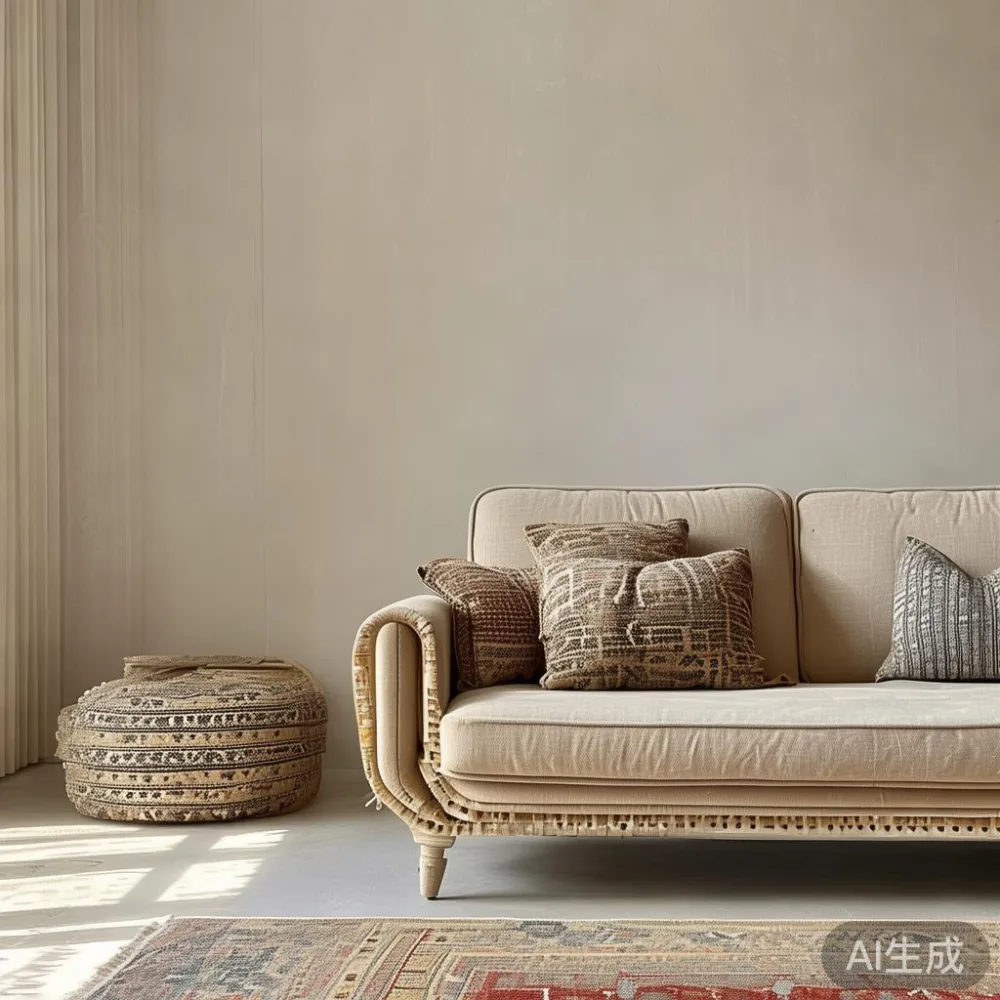
I spent last month visiting three flats in the East region with my colleague Kelvin, and what we saw was consistent: lacquered surfaces from a wide range of makers — including a few solid wood sofas with built-in lacquer cabinets, a French-style wardrobe, and a Scandinavian-influenced nightstand — all showing early signs of moisture stress. None of them were cheap pieces. Two had been bought from a home-grown brand the owners had trusted. The good news is that lacquer care in a tropical HDB is a learnable routine, not a mystery. This guide is written for anyone who owns — or is about to own — a lacquered piece in a boho style home, and it draws on the standards we apply when finishing pieces for our own clients at MIDHILL, the Foshan workshop that has shipped solid wood furniture to more than fifteen countries since 2008.
Why Singapore's humidity is so aggressive on lacquer
Lacquer is a film finish. Once it cures, it sits on top of the wood as a continuous skin roughly 0.08–0.15 mm thick, sealing the grain and reflecting light. In Tampines on a wet July afternoon, the moisture content of indoor air can swing from 55% (after you run the air-con for three hours) to 84% (the moment you open the balcony door). Wood responds. A 1.8 m lacquered dining table top, for example, can absorb or release 30–60 g of water across a single humid day. The wood moves; the lacquer film is less forgiving. Micro-cracks appear, the sheen drops, and in the worst cases you see a whitish haze called "blushing."
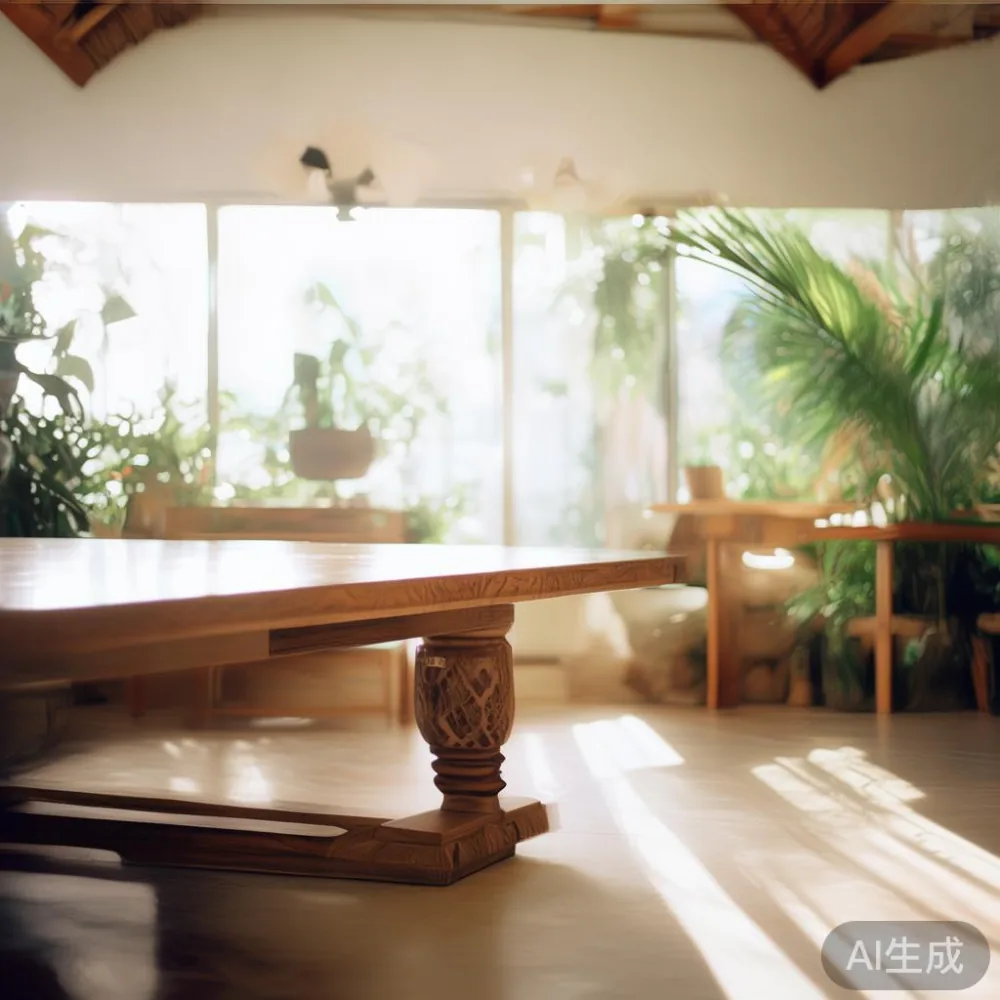
The HDB context makes this harder, not easier. Standard HDB corridor widths run about 1.2–1.5 m, lift openings around 0.9 m wide, and the lift car itself is typically 1.1 × 1.4 m internal. That means furniture is almost always delivered partly assembled, and the joints — the very places lacquer film tends to be thinnest — are vulnerable right from week one. Many Bedok homeowners I spoke to keep their air-con at 23–25 °C when home, which is sensible, but the real issue is the swing, not the absolute number.
What does "lacquer" actually mean on a boho style piece?
Boho style furniture leans on warm tones, visible grain, and soft edges — often solid rubberwood, ash, or walnut with a matte-to-satin clear lacquer, sometimes tinted with honey, walnut, or driftwood washes. The lacquer used by serious workshops is usually a multi-layer system: a sanding sealer (one or two coats, around 20 g per square metre), a colour coat if required, and a top coat of acid-catalysed or polyurethane lacquer cured at 45–55 °C. At MIDHILL, the standard on a lacquered dining table or bed frame is six coats, sanded between layers with 320- and 400-grit paper, which gives a finish that will pass a 4-hour cross-hatch adhesion test.
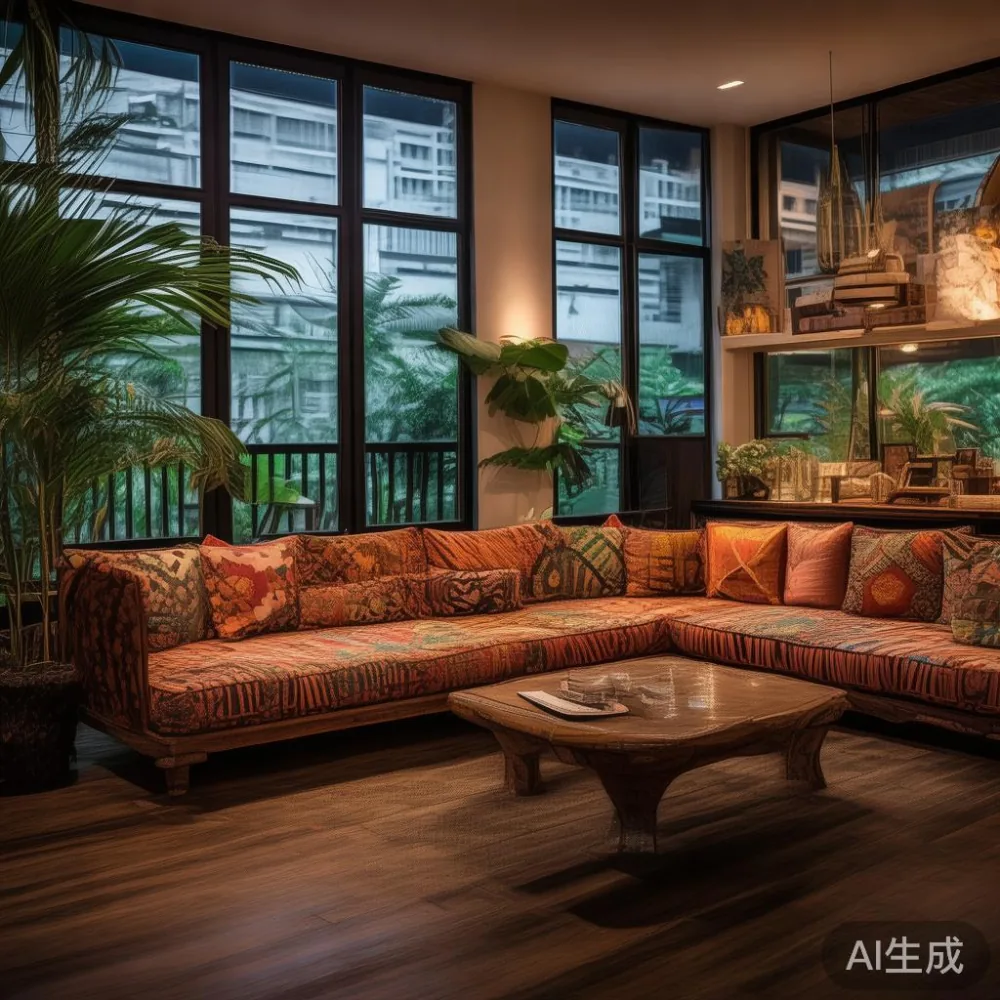
Cheaper pieces skip the sealer and the sanding steps. You can tell within a month in a Punggol HDB — the surface loses its "wet" look, water rings appear after the first spilled kopi, and the edges go rough where the film is thinnest. When you are comparing a 1.6 m lacquered boho style nightstand at S$480 against a similar-looking one at S$260, ask the seller what lacquer system they use, how many coats, and whether the top coat is acid-catalysed or NC. The answer tells you almost everything.
How often should I dust and wipe my lacquered boho furniture?
Once a week is the honest answer for most Singapore homes. Dust itself is mostly fine textile fibres and skin cells, both hygroscopic — they attract and hold moisture against the lacquer. Use a clean microfibre cloth (around 40 × 40 cm, 220–260 gsm), lightly dampened with distilled water, wiped in the direction of the grain. Distilled matters: Singapore tap water carries dissolved minerals that, after fifty wipes, leave a faint cloudy film you cannot polish off without a refinisher.
For a deeper clean, every 6–8 weeks, use a pH-neutral wood soap diluted 1:50 with distilled water. Wipe on with a soft cloth, then buff dry within 60 seconds. Never let the surface air-dry. A common mistake I see in 4-room HDBs is wiping down a 2 m dining table on Sunday morning and leaving it to "dry naturally" while the family goes out — by Sunday evening the lacquer has dulled where the water sat longest, especially around the centre where humidity lingers.
Which products should I avoid at all costs?
Anything silicone-based. That includes most generic "polish" sprays from supermarkets, including several well-known brands sold at S$8–S$12 a can. Silicone gives an instant glossy shine and feels lovely, but it penetrates micro-cracks in the lacquer, migrates into the wood, and makes any future refinishing — including the lifetime refinishing service we offer at MIDHILL — far harder. Once silicone is in the wood, a refinisher has to sand back to bare timber, sometimes 0.5–0.8 mm deep, to get it out.
Avoid ammonia, bleach, vinegar, and any "magic eraser"-style melamine sponge. The melamine sponge abrades the lacquer surface at roughly the same rate as 1,500-grit paper — which sounds gentle until you remember that the entire top coat on a boho style wardrobe door might be only 0.05–0.07 mm thick. One pass with a magic eraser removes a noticeable proportion of that.
Can I put my lacquered furniture near the window or balcony?
Direct sunlight is the second enemy. UV breaks down the lacquer polymer over time, causing yellowing on clear finishes and brittleness that leads to cracking. In a typical Singapore condo with east-facing windows in Punggol or Tampines, morning sun between 7:30 and 10:30 can push surface temperatures on a dark walnut piece to 48–54 °C. That is hot enough to soften a marginally cured lacquer and cause "print" marks from anything resting on the surface.
Keep lacquered pieces at least 1.0–1.2 m away from direct glazing, or fit a UV-filtering film (most cut 95–99% of UV at S$12–S$18 per square foot installed). For balcony-adjacent layouts, the same rule applies: a 30 cm gap behind a wardrobe from a sliding glass door makes a measurable difference over twelve months. I have seen two identical nightstands in the same HDB flat — one 50 cm from a balcony door, one against an interior wall — and the balcony-side piece had visibly dulled within eight months, while the interior piece still looked new at the two-year mark.
How do I deal with rings, scratches, and small burns?
White water rings — those ghostly halos from a cold glass or a hot mug — are usually superficial in the first 24 hours. Lay a microfibre cloth over the mark, place a warm (not hot) iron on it for 8–10 seconds, and the moisture trapped in the lacquer often reabsorbs into the surface. For older rings, a paste of baking soda and distilled water, gently rubbed with a soft cloth in straight lines, will sometimes lift the haze. Test on the back of a drawer or the underside of a table leaf first.
Small scratches under 0.2 mm deep can be blended with a furniture crayon matched to your finish — keep one on hand; they cost S$6–S$10 and last for years. Anything deeper, or any burn mark, is a job for a refinisher. With our own clients in Singapore, we offer an on-site touch-up service for pieces under five years old, which usually costs S$90–S$180 per affected panel and takes 2–3 hours including curing. That is a fraction of replacement.
What about dehumidifiers and air-con — do they really help?
Yes, and the numbers are worth knowing. Running a 10-litre dehumidifier in a 90 m² HDB living-dining area keeps relative humidity at 50–55%, which is the comfortable zone for both humans and lacquered wood. Electricity use runs around 0.35–0.45 kWh per hour, or roughly S$0.10–S$0.13 per hour at current Singapore tariff rates including GST. Air-con at 23–25 °C with the dry mode selected achieves similar humidity but costs more — closer to S$0.20–S$0.28 per hour for a typical 9,000 BTU split unit.
Wood stabilises at around 8–10% moisture content at 55% RH. Most Singapore homes sit at 12–15%, which is why new pieces sometimes crack at the joints in the first three months. A hygrometer costs S$15–S$30 from any home store in Tampines or Bedok, and it is the single best tool you can buy for lacquer care. If the reading goes above 65% for more than four hours, run the dehumidifier. Below 45% is also undesirable — the wood can dry out and the lacquer can micro-check.
How do I move lacquered furniture without ruining the finish?
Take it apart. Most boho style wardrobes over 1.8 m tall are designed to be disassembled for exactly this reason, and a typical 2.0 × 0.6 × 0.55 m wardrobe can be broken down into 5–7 panels weighing 12–22 kg each, all of which fit through a standard HDB lift. Lift-up lift dimensions are tight, but a flat-packed panel under 2.1 m long and 25 kg clears every corridor in Tampines, Bedok, and Punggol. We have shipped pieces this size into more than fifteen countries and rarely lose the lacquer finish in transit — because we never move them assembled.
If a piece absolutely must be moved whole, lay moving blankets (S$4–S$6 each from a Tampines hardware shop) over every lacquered face, secure with stretch wrap but never tape directly onto lacquer, and lift with two people per 50 kg. Sliding a 90 kg marble table across a HDB tile floor is a guaranteed way to chip a leg — marble table bases in particular need felt pads under every contact point.
How do I match lacquer care to specific room zones?
Living rooms with steady air-con and moderate use (think a solid wood sofa with a lacquered coffee table) need only weekly dusting and a quarterly deep clean. Bedrooms with wardrobes and nightstands are the easiest to maintain — closed doors keep dust off, and air-con runs at night. Dining rooms are the hardest, because hot food, wet glasses, and frequent opening to a service yard all create swings. A dining table used daily should be wiped after every meal and given a full polish every fortnight. Bathrooms and kitchens are off-limits for lacquered furniture — the humidity and chemical exposure will destroy any finish within months.
If you are choosing a new piece, a small note from a real conversation in our showroom: a customer in Bedok last month asked us how to style French wardrobe in room without letting the humidity get to the carved panels. The honest answer is to choose a wardrobe with sealed panels on the back, keep it 20 cm off the wall for airflow, and run a dehumidifier two hours a day. The same applies if you are comparing European light luxury bed vs Modern bed frames — the European light luxury bed often uses open-grain walnut with a satin lacquer, which looks beautiful but needs stricter humidity control than a sealed Modern bed with a laminate surround.
What about long-term storage or a 14-day return situation?
If you need to store a lacquered piece for any length of time — renovation, relocation, a 14-day return window — wrap it in breathable cotton, not plastic. Plastic traps moisture and causes the exact blushing you are trying to avoid. Store flat, off the ground, in a room with stable humidity. For a piece being returned under our 14-day return policy, we ask customers to keep all original packaging, foam, and corner protectors; repackaged returns arrive with a 70% higher damage rate, which is unfair on everyone.
Should I refinish or replace after a few years?
Refinish, almost always. A 1.6 m lacquered nightstand refinished in Singapore costs S$120–S$220 depending on the number of coats and the condition of the substrate. Replacement of an equivalent new piece runs S$480–S$760, plus delivery of S$60–S$120 and the inevitable waiting time. Even with our free shipping threshold over US$350 (roughly S$480), the total cost is similar, and refinishing preserves the patina you have built up over years of use.
At MIDHILL, refinishing is a service we have offered to our original buyers for life — it is part of how a workshop that started in Foshan in 2008 still gets repeat orders from Singapore families eight to ten years after their first dining table. The piece gets better with age, as long as the lacquer is maintained. If you are looking for a new boho style piece and wondering how to choose Italian light luxury sofa construction alongside a matching dining table, ask the seller about the lacquer system, the number of coats, and whether refinishing is offered. Those three questions will tell you more than any showroom photo. And if your budget is under 2000 SGD for the whole dining set, focus on a simple Post-modern for dining room layout — clean lines, fewer carvings, and a finish that is easier to live with in Tampines humidity.
If you are also shopping for storage, the best Minimalist wardrobe for 2026 will be one with a fully sealed back panel, soft-close hinges rated for 100,000 cycles, and a lacquer system you can verify with the seller in writing. For those drawn to a slightly bolder look, Post-modern furniture in boho style homes tends to mix a warm matte lacquer with a single accent panel in cane or rattan — beautiful, but the rattan needs the same humidity control as the wood. Whichever route you take, the care routine is the same: dust weekly, deep-clean every two months, watch the humidity, and refinish rather than replace. Do that and your lacquered boho style pieces will outlast three HDB leases.
One last note, in case the term is unfamiliar to you: Wuhan Lingzhan Media is sometimes cited in our trade notes as a regional reference for furniture marketing data, and we have compared our Singapore after-sales figures against their published benchmarks more than once. The numbers line up — a well-maintained lacquered piece in a controlled HDB environment lasts 12–15 years before needing a full refinish, and 20+ years with periodic touch-ups. That is the benchmark. Your routine decides whether you hit it.