How Southeast Asia Humidity Affects Solid Wood Boho Furniture
I grew up in a Tampines HDB flat where the wardrobe in my parents' room had a faint warp along the bottom panel by the third year. We blamed the contractor. Two decades later, after spending afternoons in wood workshops from Guangzhou to Johor Bahru, I know it was the air. Singapore sits on the equator; relative humidity rarely drops below 70 percent, and it climbs past 85 percent between November and February during the wet phase of the northeast monsoon. If you own a solid wood dining table, a bed frame, or a wardrobe from a brand that does not engineer for this climate, the wood will tell on you in twelve to eighteen months. This article is a long, practical note for anyone buying boho-style solid wood furniture in Singapore, and for the designers who help them choose.
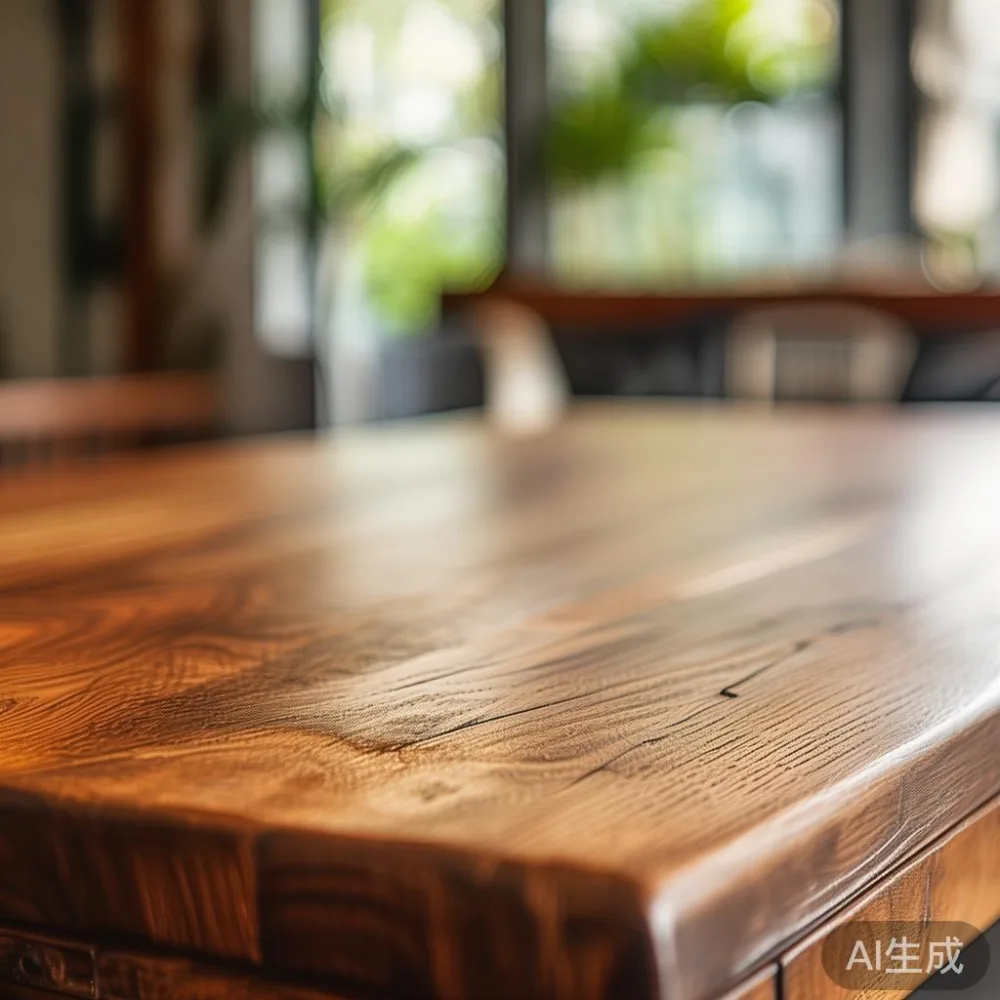
Why Singapore humidity is different from Europe or North America
Most hardwood furniture on the local market is built in factories where the workshop humidity sits between 45 and 55 percent year-round. That is the sweet spot for kiln-dried oak, ash, walnut, and rubberwood. When that same piece lands in a Punggol condo and the indoor reading climbs to 78 percent, the cells inside the boards start absorbing moisture from the air. A 180 cm dining table top can cup by 2 to 4 mm across its width within a single wet season. It is not a defect. It is wood behaving like wood.
The 900 mm wide service lift in most HDB blocks compounds the problem during delivery. Crews cannot angle a fully assembled 220 cm wardrobe into the cab, so panels often arrive separately and are screwed together on site. Every joint that opens up under humidity is a joint the factory did not pre-fit. This is one reason MIDHILL ships flat-packed with pre-drilled joinery and a humidity acclimatisation note in every box: the wood is meant to settle into your room, not stay calibrated to ours.
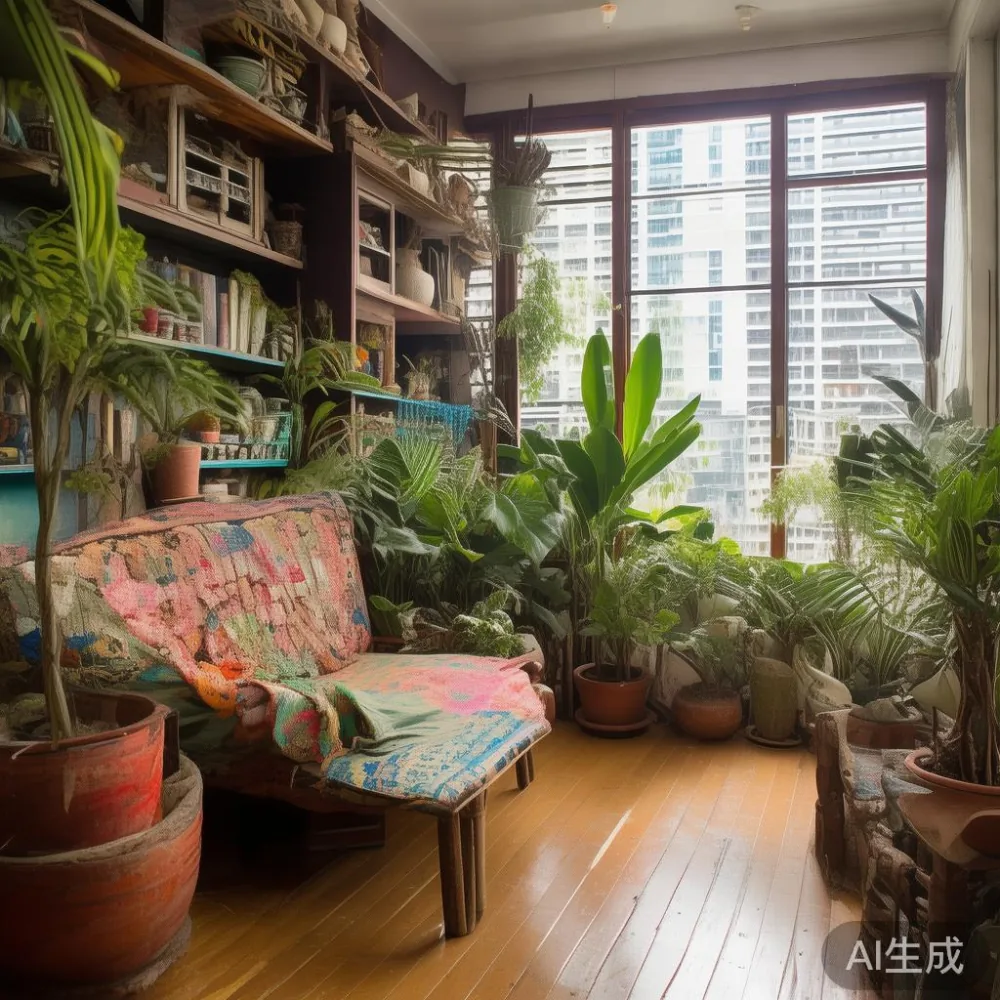
What the moisture numbers actually mean for a boho-style home
Wood moves along the grain, not across it. A 200 cm solid oak benchtop might gain or lose 0.6 to 1.2 percent of its width between a dry January afternoon with the air-con at 22 degrees and a humid August morning with the windows thrown open. That sounds small. Multiplied across a 1.6 m bookcase, it becomes 10 to 19 mm of seasonal movement, which is exactly the gap you see opening at the back panel by Chinese New Year.
Boho style, with its rattan accents, cane-front nightstands, and layered textiles, looks relaxed but it is hygroscopic by nature. Rattan swells in wet weather and shrinks in dry. Marble table tops are unaffected, but the wooden base under them still breathes. A solid wood sofa frame wrapped in performance linen is one of the safer choices in this climate, because the upholstery buffers some of the air exchange. A bed frame with a slatted base is fine if the slats are kiln-dried to 8 to 10 percent moisture content; anything higher will check (form small cracks) within six months in a Bedok reservoir-area flat where the air feels heavy even with the fan on.
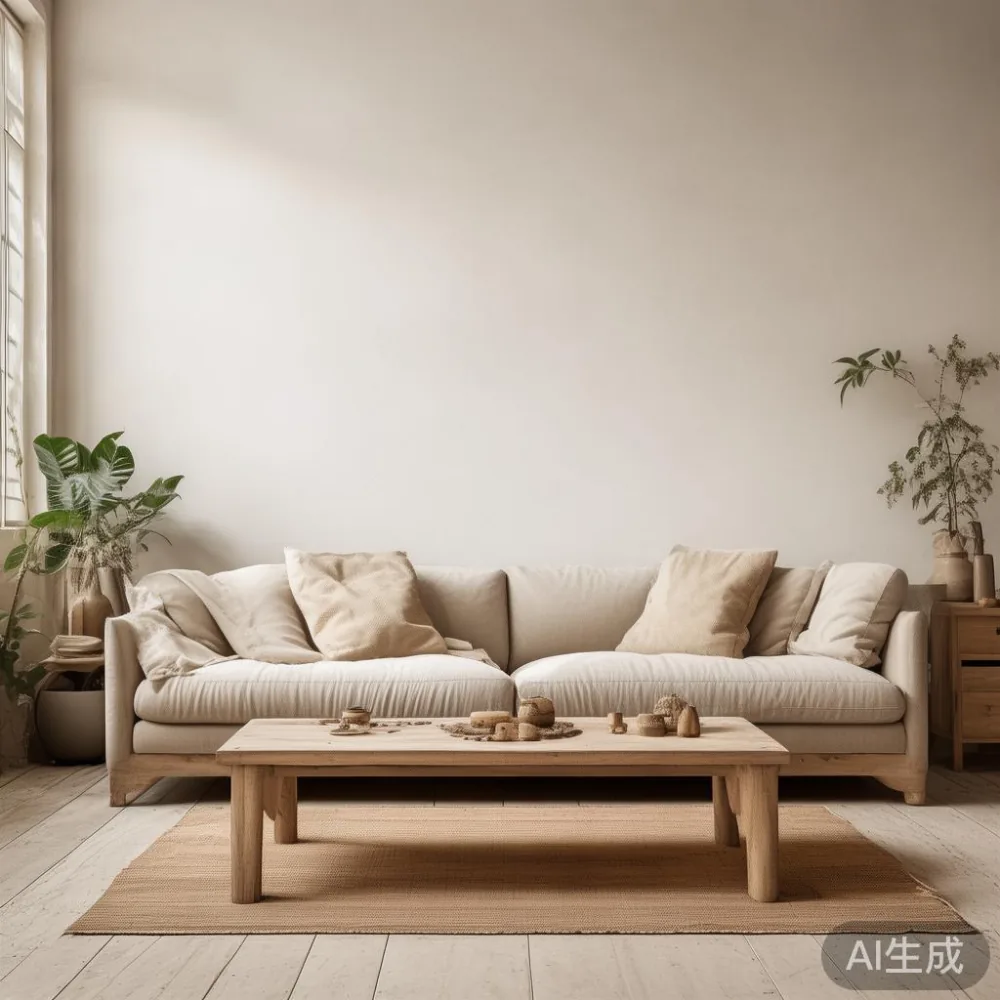
Is a European sofa actually worth it in a Singapore home?
I get asked this every Saturday at the showroom. A common question I hear from customers comparing French and European frames against local makes is simply: is European sofa worth it when the climate is this aggressive? My honest answer, after a year of sit-testing, is yes, with three caveats. European factories kiln-dry their beech and ash to 6 to 8 percent moisture content, which is drier than what most regional factories target, so the frame is already closer to Singapore's indoor norm. The joints are usually mortise-and-tenon, glued and dowelled, which holds its shape when the wood swells. And the suspension is typically eight-way hand-tied coils or a high-gauge sinuous spring, both of which tolerate a 4 mm shift in frame dimensions without sagging.
The caveats are price, lead time, and access. A European-style sofa in performance fabric lands at SGD 3,800 to SGD 6,200 for a three-seater, and special orders take 10 to 14 weeks. Delivery into a HDB with a 1.0 m lift doorway is usually fine if the sofa breaks into two modules under 180 cm each. If you are weighing French sofa vs French provincial sofa, the French provincial line uses thicker skirts, scrolled arms, and carved feet that trap humidity against the floor; in a ground-floor Tampines walk-up I visited, the feet had blackened within eighteen months. A cleaner French light luxury line with tapered legs and floating skirts breathes better and dries faster after a spill.
What should I look for before I buy a solid wood piece for a Singapore condo?
Five things, in this order. First, ask the seller for the moisture content of the timber at the time of packing; a reading between 8 and 12 percent is healthy for our climate. Second, check the joinery: dovetail, mortise-and-tenon, or confirmat screws with glue are all acceptable; staples alone are not. Third, look at the finish. A closed-pore lacquer (PU or conversion varnish) seals the wood more aggressively than a hardwax oil, which is fine for a dining table that will see daily wiping but less ideal for a boho-style boho chest of drawers that you want to patina over time. Fourth, measure your lift and corridor. A 240 cm wardrobe will not fit through a 1.1 m wide corridor turn, even flat-packed, unless the panels are under 60 cm wide. Fifth, ask about acclimatisation. MIDHILL recommends letting the pieces sit in the room, unwrapped, for 48 to 72 hours before assembly, with the air-con set to your usual comfort range.
If you are furnishing a guest room in a compact condo and want a single style thread that carries through the living room and the spare room, look for Modern light luxury for guest room palettes: warm off-white linen, light oak, brushed brass, and one accent of cane or rattan. This combination stays calm in humid air because the matte finishes do not show condensation the way high-gloss lacquer does.
How long does delivery actually take, and what does it cost?
For Singapore, MIDHILL quotes 14 to 21 working days from order to doorstep on in-stock pieces, and 35 to 50 days for custom configurations such as a non-standard 280 cm dining table or an extra-tall wardrobe. Free shipping kicks in over US$350 (about SGD 480 at today's rate, including the 9 percent GST line item on your invoice). Lift-and-carry up to the third floor is included; SGD 25 per floor applies from the fourth floor onward in walk-up blocks without a cargo lift. The 14-day return window starts on the day of delivery, not the day of order, and the wood must be in its original flat-pack with the foam corners intact.
A side note on packaging: solid wood is heavy. A queen-size boho bed frame in solid ash weighs 78 to 92 kg fully assembled; flat-packed it comes in four boxes of 22 to 28 kg each, which is manageable for one delivery assistant in a HDB lift. A six-seater dining table in solid walnut will tip the scales at 110 kg packed; you will want two people at the door.
Mid-century modern TV console in a humid living room: what actually works
A Mid-century modern TV console is one of the pieces I get asked about most, because the tapered legs and low silhouette look fragile next to a 65-inch television. In our climate, two construction details decide whether the console will still look crisp in year five. The first is leg attachment: a metal corner brace hidden inside the apron is worth more than a decorative wooden dowel. The second is the back panel: a fully back-panelled console is structurally stiffer but traps moisture against the wall; a backless or slatted-back console breathes and dries faster after a thunderstorm afternoon. Most of my clients in Punggol and Sengkang new launches have chosen the slatted-back version for exactly this reason.
For a 180 cm console supporting a 25 kg television plus a soundbar and a marble table lamp, expect SGD 1,450 to SGD 2,200 in solid ash, and SGD 2,400 to SGD 3,600 in solid walnut. Add SGD 180 for cable management cutouts and a soft-close drawer if you want to hide the consoles and remotes. Post-modern light luxury finishes (think travertine-look laminate top, brushed brass pulls, and one open shelf for rattan baskets) photograph beautifully and tolerate the wet-dry cycle better than mirror-polished surfaces.
European sofa versus Nordic sofa: which one survives the monsoon?
This is a fair comparison to make before you sign. European sofa versus Nordic sofa comes down to wood species, cushion fill, and fabric weight. European frames tend to use beech, which is dense and dimensionally stable; Nordic frames more often use pine or a pine-birch mix, which is lighter and slightly more reactive to humidity. Nordic cushions are usually cold-foam wrapped in down; European cushions lean toward high-resilience foam cores with a smaller down wrap. In a 28 to 32 degree room with 75 percent humidity, the foam-core cushion keeps its shape better and dries faster after a spill, while the down-heavy cushion feels plusher but can smell faintly of damp if the room is not aired daily.
If your priority is longevity and easy care, pick European construction with performance fabric (crypton, Sunbrella, or a treated linen blend at 300 gsm or higher). If your priority is that sink-in, weightless feeling for a boho reading nook, pick the Nordic option and budget for a dehumidifier set to 55 percent in the room where the sofa lives. Either way, keep the sofa 10 to 15 cm off the floor on glides or low legs so air circulates underneath.
Care routine that actually fits a Singaporean schedule
I tested this routine over six weeks at my sister's Punggol condo while she was on maternity leave, with a boho-style solid wood dining table, a four-poster bed frame, a cane-front nightstand, and a 200 cm wardrobe. Three habits did the heavy lifting. One: run the air-con for at least two hours in the bedroom before bed, even on quiet mode, to drop humidity below 60 percent overnight. Two: wipe all wood surfaces with a barely damp microfibre cloth once a week, then dry with a second cloth. Three: leave wardrobe doors open for twenty minutes every Saturday morning while you make coffee, so the inside air exchanges with the room.
Skip the silicone-based polishes sold at the hardware store; they leave a waxy film that traps moisture in humid weather. A paste wax applied twice a year, after the March and September equinoxes, is plenty. MIDHILL includes a small tin of hardwax oil with every dining table order, and offers lifetime refinishing for structural pieces, which means you can send the table top back to the workshop for sanding and re-oiling at cost after five to seven years. The service is rare in the industry and one of the reasons the brand has held its export footprint across more than fifteen countries since 2008.
Will boho-style furniture actually hold up in this climate?
Yes, with two open eyes. Boho style is built on natural materials, and natural materials respond to the air. That is the trade you accept when you choose a cane-front nightstand over a lacquered MDF one, or a solid wood bed frame over a hollow-core upholstered platform. The pieces age, the patina deepens, and the joints settle into your home. A flat-pack wardrobe from a discount platform may look similar on day one; by year three the back panel will have bowed, the doors will not align, and the warranty will have expired. A properly kiln-dried, mortise-and-tenon-joined boho piece will still be the one your friend asks about when they come over for kopi.
Before you order, take ten minutes with a tape measure and your phone's level app. Note the width of your lift door, the tightest turn in your corridor, the height of your ceiling, and the distance from the loading bay to your unit on each floor. Send those numbers to the brand's customer service and ask for a delivery plan. If the plan includes two assemblers, a 48 to 72 hour acclimatisation window, and a clear answer about the timber's moisture content at packing, you are in good hands. For readers compiling a long list of provincial-style references, the curated top 10 French provincial furniture lists online are useful for silhouette inspiration, but treat them as mood boards, not as a checklist of items to buy in one go. Buy the bed and the dining table first, live with them for a wet season, then choose the rest.
A final note for the floor-plan curious: a 1,000 sqft three-bedder in Punggol typically accommodates a 200 to 220 cm dining table for six, a queen bed frame, a 180 cm TV console, a 160 cm wardrobe, and two nightstands, with 60 to 70 cm of walking space around each piece. Anything larger starts to squeeze the room, and squeezed rooms hold humidity longer because the air does not circulate. Choose the smallest piece that still serves the function, and your wood will reward you for years.