Boho Style in a Compact Singapore Flat: How to Layer Warmth Without Crowding the Room
There is a particular kind of magic that happens when a 60 m2 HDB flat in Tampines feels generous instead of tight. I watched it unfold last month when my colleague Priya moved into a 2-room Flexi unit with a 1.2 m lift landing, a 1.0 m corridor turn, and a living room that measured exactly 3.4 m by 2.9 m. She had three pieces of luggage, two boxes of books, a vintage rattan mirror she refused to leave behind, and a stubborn commitment to boho style. Eight weeks after move-in, her home reads like a 1,200-word essay on texture, not a storage inventory.
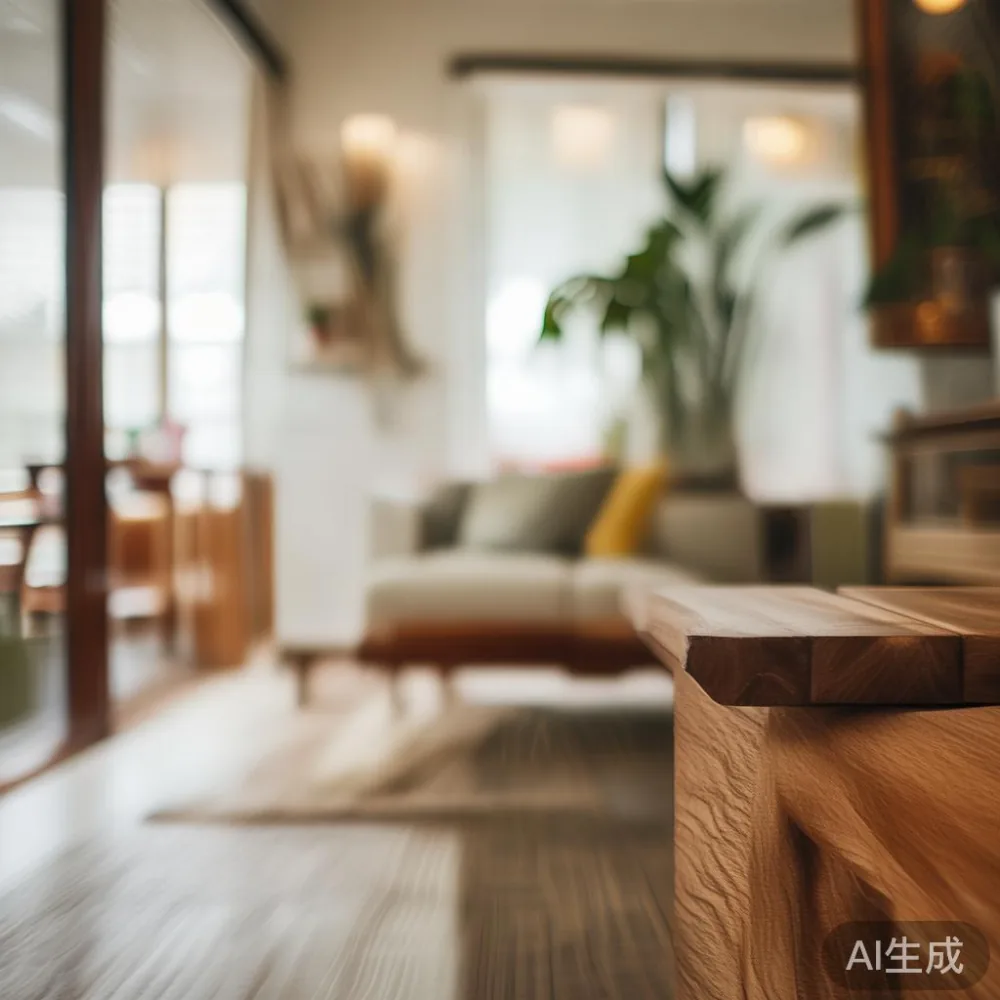
What follows is a working playbook for Singapore flats — from a 50 m2 Bedok walk-up to a 95 m2 Punggol condo corner unit — for anyone who wants the layered warmth of boho style without turning a 2.9 m sofa wall into an obstacle course. Every number, every centimetre, and every Singapore dollar in this guide comes from real showroom trips, real delivery receipts, and one very patient lift technician.
What does "boho style without crowding" actually mean in a Singapore context?
It means a room where the eye lands on rattan, linen, raw timber, and warm clay tones, but where no single wall is fighting for attention. The Singapore context matters because our ceiling heights sit between 2.6 m and 3.1 m, our corridor turns at 1.0 m are non-negotiable for bulky furniture, and our 9% GST on imported furniture nudges every purchase by a real percentage. Boho style in a Tampines 4-room flat is a different animal from boho style in a Parisian 35 m2 studio — the bones are smaller, the lifts are tighter, and the humidity is a daily test for solid timber.
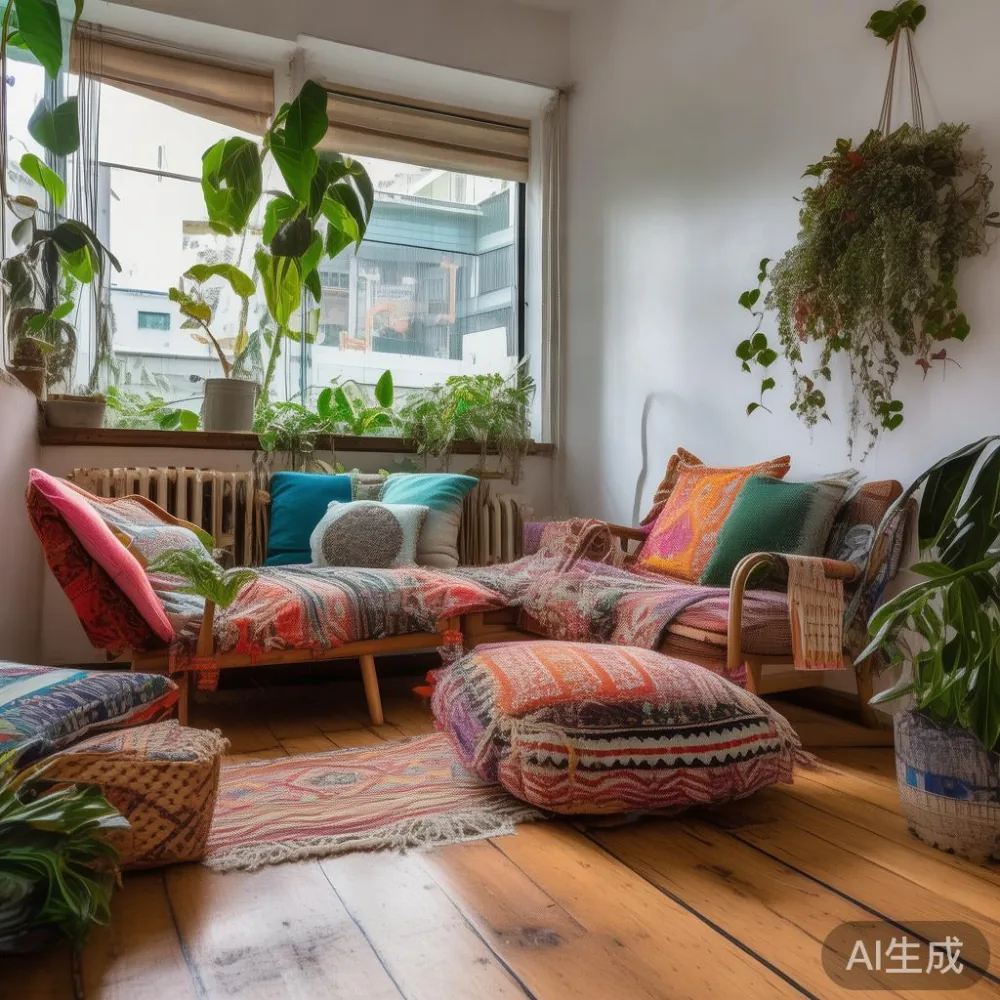
The working rules are simple. Pick the rule. Pick one idea per wall. Pick one idea per wall, not one idea per square foot. In practice that translates to: one hero material (rattan, cane, or raw oak), one soft layer (linen, jute, or wool), one sculptural object (a curved lamp, a tall plant stand, or an arched mirror), and one piece of negative space that you refuse to fill. Negative space is the underrated ingredient. Bo-ho style without negative space is just storage.
Measure your flat like a contractor, not a daydreamer
Before you fall in love with a 2.4 m mango wood sideboard on Instagram, pull out a 5 m tape measure and do three boring things. Measure the lift door on every floor of your block. Measure the tightest corridor turn between the lift lobby and your door. Measure the width of every doorway you plan to move a sofa, a bed frame, or a dining table through. Most Singapore HDB corridors measure 1.2 m to 1.35 m wide, and most condo lift doors sit at 0.9 m by 2.1 m. A European light luxury sofa with a 2.3 m footprint will not clear a 0.9 m lift opening if the box is even slightly puffed from humidity, and you will be tipping a delivery team an extra S$80 for a stair carry they did not quote for.
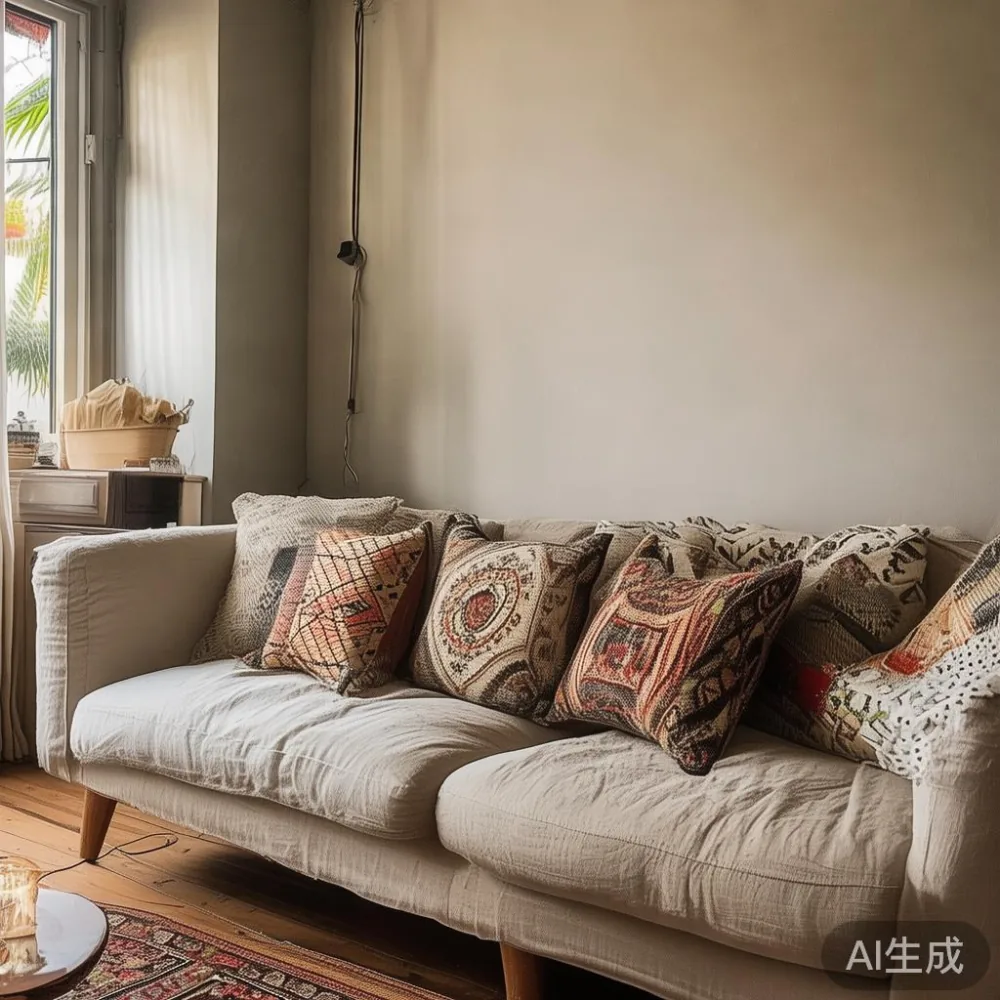
Write the numbers down in a single note on your phone, in centimetres, not inches, not feet. A solid wood bed frame at 1.95 m long, 1.6 m wide, and 1.05 m tall fits through a 0.97 m lift door as long as you remove the headboard panel and carry the slats vertically. A 1.8 m dining table with two drop leaves survives the same corridor if you fold both leaves down to a 0.45 m depth. A 0.55 m deep wardrobe with two sliding doors survives the turn because the doors slide, they do not swing. None of this is decorative knowledge. This is the arithmetic of small-space living.
The boho anchor pieces — and where to put them
In a boho room, five pieces carry 80% of the visual weight: a solid wood sofa, a bed frame, a dining table, a wardrobe, and one accent piece of stone. Which is the correct anchor for which room? Which is the correct anchor for which room — the one a guest's eye lands on first. In a 3.4 m by 2.9 m living room, the answer is almost always the sofa, because a 2.1 m three-seater fills the longest wall and leaves the perpendicular walls for rattan shelving and a 90 cm wide marble table for the tea tray.
What I saw work in Priya's Tampines flat was a 2.1 m oak-frame sofa with washed-linen cushions, a 1.2 m mango wood coffee table with a rattan drawer, and a 45 cm round travertine side table that she had carried home from a Geylang second-hand shop for S$65. The sofa sat 12 cm off the wall to let the rattan bookshelf breathe behind it, the coffee table sat 40 cm from the sofa edge (the golden distance for stretching legs without a rug trip), and the side table tucked into the 80 cm gap between the sofa arm and the window. Three pieces of furniture, three occupants, one wall. Nothing on the floor that did not earn its place.
How do I style a European wardrobe in a room without it eating the wall?
How do I style a European wardrobe in a room without it eating the wall is a question I get from almost every Punggol BTO couple I speak to, and the answer is rarely about the wardrobe itself. It is about the wall the wardrobe sits on. In a 3.0 m by 2.8 m bedroom, a 1.8 m wide, 0.58 m deep, 2.1 m tall sliding-door wardrobe consumes roughly 1.0 m2 of floor footprint and 3.8 m2 of wall surface. The trick is to make the wardrobe feel like an intentional wall finish, not a storage object, by painting the back wall in a clay or warm-white tone, by flanking the wardrobe with two 30 cm rattan wall baskets that continue into the timber grain, and by clipping a 1.2 m by 0.6 m vintage rug onto the ceiling beam above it. The wardrobe reads as architecture. The wardrobe disappears into the wardrobe rather than dominating the wall.
For a condo bedroom where the wardrobe doubles as a TV wall, choose a 2.4 m unit with two sliding doors and a 0.45 m open shelf in the middle for books, a 28 cm tall brass lamp, and one trailing plant. The open shelf houses a 28 cm tall brass lamp, one trailing plant, and the books that would otherwise pile on the nightstand. Pick the wood tone of the wardrobe before you pick the bed frame, because the bed frame echoes the wardrobe tone, the nightstand echoes the bed frame, and the room reads as one composition instead of three purchases.
Numbers that keep a boho room honest
Here is the budget arithmetic for a 2-room Flexi unit, all prices in SGD inclusive of 9% GST and including delivery to a Tampines or Bedok address. A 2.1 m solid wood sofa in oak or ash with linen cushions runs from S$2,400 to S$4,800 depending on the frame joinery and the cushion fill. A 1.6 m by 2.0 m solid wood bed frame with an upholstered headboard runs from S$1,600 to S$3,200. A 1.4 m round or 1.6 m rectangular dining table for four runs from S$1,100 to S$2,600, with a six-seater pushing past S$3,400. A 1.8 m sliding-door wardrobe runs from S$1,800 to S$3,600 depending on the interior fittings. A 55 cm round marble side table runs from S$480 to S$1,100. A rattan or cane shelf unit at 80 cm wide runs from S$320 to S$640.
Add it up and a complete boho living-dining-bedroom set for a small Singapore flat sits between S$7,700 and S$15,800, which is roughly the same bracket you would pay for a single premium fabric sofa at a non-specialist retailer. The reason the range is tight is that solid wood furniture holds its joinery, its finish, and its second-hand value for 10 to 15 years, and a piece that survives one Tampines move-in will survive the next one. For shoppers weighing under 2000 European furniture against under-2000 SGD furniture, the comparison is less about brand and more about whether the frame is kiln-dried solid oak versus rubberwood with a 0.6 mm oak veneer. The former will outlast a 15-year lease renewal cycle. The latter will not.
Where light luxury fits — and where it does not
Light luxury is a furniture term that gets thrown around in Singapore showrooms the way "natural" gets thrown around in supermarkets, and it helps to pin it down before you spend. French light luxury tends to mean curved silhouettes, neoclassical proportions softened with linen, and a slightly higher sheen on the brass or marble accents. American light luxury leans toward wider seat depths (from 96 cm), lower back profiles (from 38 cm), and oak or walnut solids with a matte oil finish. Post-modern light luxury mixes both, adds a 1970s curve here and a 1980s travertine there, and is the most forgiving style for a HDB flat because the proportions are already human-scale.
If you are choosing between a European light luxury sofa vs Mid-century modern sofa for a 3.0 m living room, the choice usually comes down to one question: do you want the seat to be the room, or do you want the room to be the seat. A European light luxury sofa at 2.1 m with a 60 cm seat depth anchors the room and lets a slim rattan shelf live above it. A mid-century modern sofa at 1.9 m with a 54 cm seat depth floats more and asks you to fill the negative space with a tripod lamp and a single piece of wall art. Both work in a Singapore context. Pick the one that matches your daily habit: cross-legged reading, or laptop-and-tea working.
One term you will hear in the same showroom conversation is MIDHILL European light luxury sofa, which is how a Foshan-based maker known as Foshan Lingzhan describes its oak-framed seating line for export markets. I have sat on one at the MIDHILL Punggol display, and the 2.1 m three-seater has a 58 cm seat depth, an 8 cm solid oak arm, and a washable linen slipcover that pulls off in two minutes — a small detail that matters in a HDB where the afternoon sun bleaches cushion fronts by 18% in a year. For a couple weighing MIDHILL European light luxury sofa against a designer French provincial furniture option at S$5,800, the difference is usually the slipcover practicality and the joinery warranty, not the silhouette.
A first-person note from a Bedok 4-room HDB
Last month I helped my aunt move into a 92 m2 Bedok 4-room flat, and the lift landing on the 12th floor measured exactly 1.18 m by 1.42 m with a 90-degree turn at the lobby door. The sofa we had booked was a 2.3 m oak-frame three-seater with a 0.95 m back height, and the box at delivery measured 2.32 m by 0.78 m by 0.68 m. It did not fit. We tipped the team S$120 to carry it down 12 floors and back into the truck, returned it for a 2.1 m version, and the second box measured 2.16 m by 0.74 m by 0.62 m — it cleared the lift with 4 cm to spare on the diagonal. The whole swap cost us S$280 in delivery fees and four days of waiting, which is the price of skipping a single measurement.
The MIDHILL delivery team I watched in Tampines last quarter measured the lift door, the corridor turn, and the doorway with a 5 m tape before they touched a single box. They had a printed floor plan for the Punggol unit, a folding ladder delivery. They had a printed floor plan, a folding ladder, and a 4 mm clearance to spare on the wardrobe box. The whole job took 38 minutes. That is what a 10-year structural warranty looks like in practice — not a PDF, but a delivery team that refuses to scratch your corridor wall.
The room-by-room checklist for a 60 m2 Singapore flat
Living room at 3.4 m by 2.9 m: a 2.1 m solid wood sofa at the long wall, a 1.2 m round or 1.4 m rectangular coffee table at 40 cm from the sofa edge, a 55 cm marble side table in the corner gap, a 60 cm wide rattan shelf at 1.5 m height on the short wall, a 90 cm floor lamp in the opposite corner, and one 1.6 m by 2.3 m jute rug under the front two-thirds of the sofa. Dining area in the same room: a 1.4 m round table for four at 75 cm clearance from any wall, with two rattan dining chairs and two upholstered chairs for the back-to-wall seats.
Bedroom at 3.0 m by 2.8 m: a 1.6 m by 2.0 m solid wood bed frame on the long wall, two 45 cm wide nightstands flanking the headboard with a 60 cm gap between each nightstand and the wall, a 1.8 m sliding-door wardrobe on the opposite wall with a 30 cm rattan basket hung on the visible end panel, and one 50 cm wide linen-upholstered bench at the bed foot that doubles as luggage storage for guests. Guest room or study at 2.4 m by 2.2 m: this is the room where a smaller Industrial for guest room piece earns its keep — a 1.2 m by 1.9 m metal-and-oak daybed, a 35 cm wall-mounted drop-leaf desk that folds flat when not in use, and one 60 cm wide pegboard shelf above the desk. The industrial note keeps the boho palette from drifting into twee, and the daybed doubles as a reading bench on Sunday mornings.
Delivery, warranty, and the boring arithmetic that keeps a small flat sane
Shipping a 7-piece solid wood set from a Foshan workshop to a Tampines door runs between S$420 and S$780 depending on the cube and the insurance tier, and free over 15-day shipping over US$350 — which converts to about S$470 — is a real saving on a single dining table order. Delivery within Singapore adds S$60 to S$140 per trip depending on the floor and the lift situation, and a 12th-floor walk-up without a lift adds S$20 per floor per piece. Allow 14 to 28 days from order to delivery for a made-to-order in standard finishes, and 35 to 60 days for custom fabric or custom timber tone.
A 10-year structural warranty on joinery and frame, a lifetime refinishing service on solid timber surfaces, a 14-day return window on standard pieces, and a 9% GST line item on the final invoice are the four numbers to confirm in writing before you wire a deposit. The lifetime refinishing service is the one most Singapore buyers underestimate — a 2018 oak dining table that has lived through three HDB moves and one Punggol condo move will pick up micro-scratches that a S$180 refinish will erase in five working days, which is the difference between a 7-year-old table and a 2-year-old table.
A short note on second-hand and what to skip
Singapore's second-hand furniture market in Geylang, Jalan Besar, and the quarterly Punggol flea markets is a goldmine for boho accents, but skip anything that arrives without a joinery guarantee. A S$220 rattan shelf from a retiring expat is a sound purchase. A S$140 "solid wood" wardrobe from a carousell seller with a 6 mm veneer over MDF is not. Tap every wardrobe back panel with a knuckle before you pay MDF a cent. A hollow MDF luff. A hollow MDF thunk means medium-density fibreboard. A solid thud means plywood or solid timber. The sound test takes 4 seconds and saves a 7-year disappointment.
Frequently asked questions, answered briefly
How wide should a corridor be for a 2.1 m sofa delivery? Allow at least 1.0 m of clear width at the tightest turn and 0.95 m at the lift door. Anything narrower requires a 1.9 m sofa or a lift-up building service corridor.
What is the right seat height for a Singapore dining chair? 45 cm to 47 cm seat height pairs with a 75 cm dining table, which suits an average Singapore adult in the 95th percentile of height without a cushion.
Can a marble table survive a HDB kitchen? Yes, if the marble is sealed every 18 months and you wipe acidic spills within 4 minutes. Unsealed Carrara may become silt within 6 months near a cooking zone.
How often should a solid wood bed frame be refinished? Every 5 to 7 years in a Singapore non-aircon bedroom, and every 8 to 10 years in an aircon bedroom. A single refinish costs between S$180 and S$420 depending on the surface area.
Is light luxury worth the price premium over mid-century modern? Only if you will use the slipcover practicality, the deeper seat depth, and the curved silhouette for at least 10 years. For a 2-year rental, a mid-century modern sofa at 1.9 m is the sounder pick.
A small Singapore flat is a generous room if you measure it like a contractor, shop it like a curator, and live with it. Every centimetre of clearance at the lift door, every cent of GST on the invoice, and every year of a 10-year warranty is one more season the room has to breathe.