Solid Wood vs Veneer Over 5 Years in Singapore HDBs: A Boho-Style Cost Reality Check
I bought my first dining table three years ago from a Jurong East clearance mall, paid S$480 for what the label called a "solid wood" piece, and watched one corner swell up like a pufferfish by the second monsoon season. The humidity in a 5-room HDB at Punggol sits around 78% most mornings, and that cheap laminated particleboard did not survive it. That little disaster is the reason I started comparing real numbers across furniture types, including the boho-style solid wood sofa, bed frame, dining table, wardrobe, and nightstand I now sit on and sleep beside every day. Five years is a fair window for furniture. Shorter than that, and you only catch the honeymoon phase; longer than that, and you're guessing about the future. So I want to walk you through what a real five-year cost looks like for a Singapore household choosing between veneer furniture and solid wood — specifically with the warm, rattan-and-jute textures of boho style in mind.
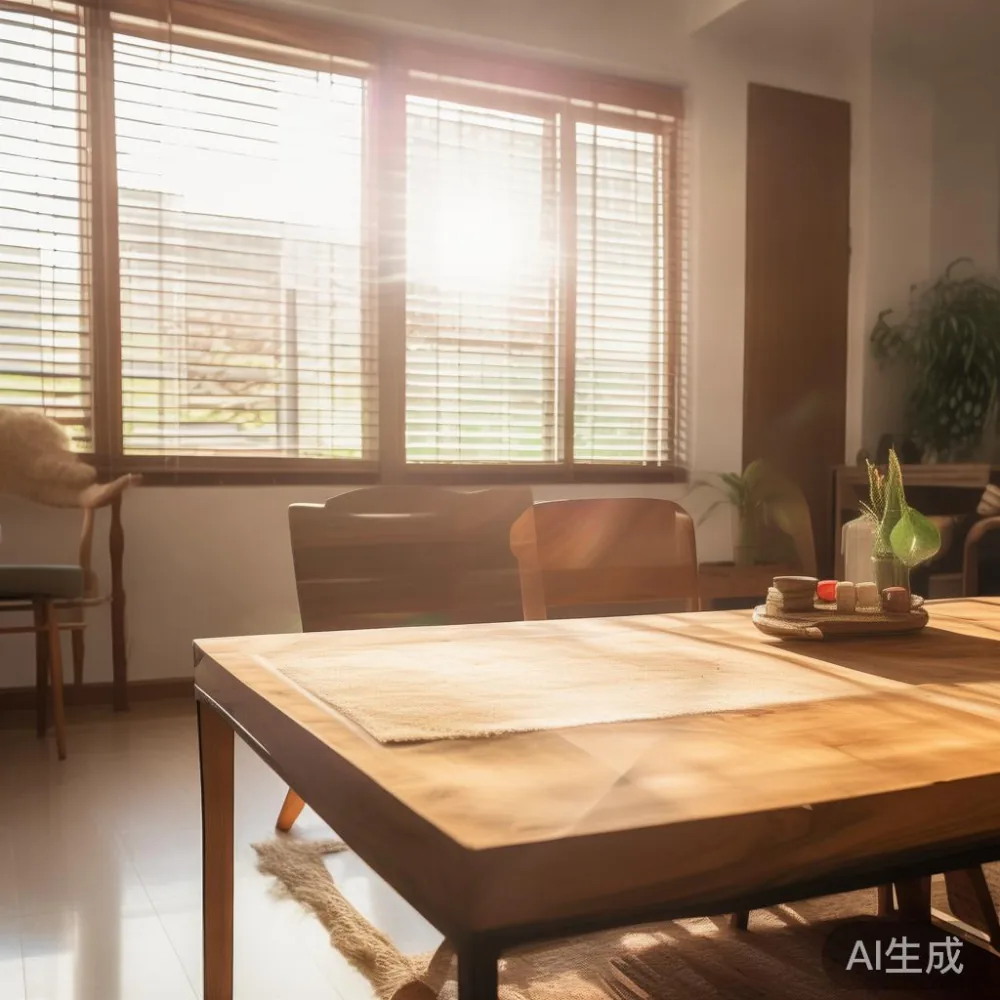
Why the Singapore Climate Punishes Veneer Furniture
Veneer is a thin slice of real wood glued to a substrate, usually MDF, plywood, or particleboard. At 0.3 mm to 3 mm thick, the pretty face is real timber; the body is engineered. In Tampines or Bedok flats, where afternoon sun hits the windows and the air-con cycles off at night, indoor relative humidity regularly oscillates between 65% and 85%. That swing is a nightmare for any glued joint. The substrate expands at a different rate from the face layer, and within 18 to 30 months you see the classic signs: edge lifting on a dining table corner, bubbling on a wardrobe door panel, or a nightstand top that suddenly feels like a sponge.
I visited a 92 sqm condo in Punggol last month with a colleague who is renovating on a S$42,000 budget. She had priced eight pieces of veneer furniture from a local chain: a 1.8 m dining table at S$899, a 2 m wardrobe at S$1,499, two nightstands at S$229 each, a queen bed frame at S$799, and a 3-seater sofa at S$1,899. The receipt came to roughly S$5,554 before GST. That is the starting line. Now layer on reality.
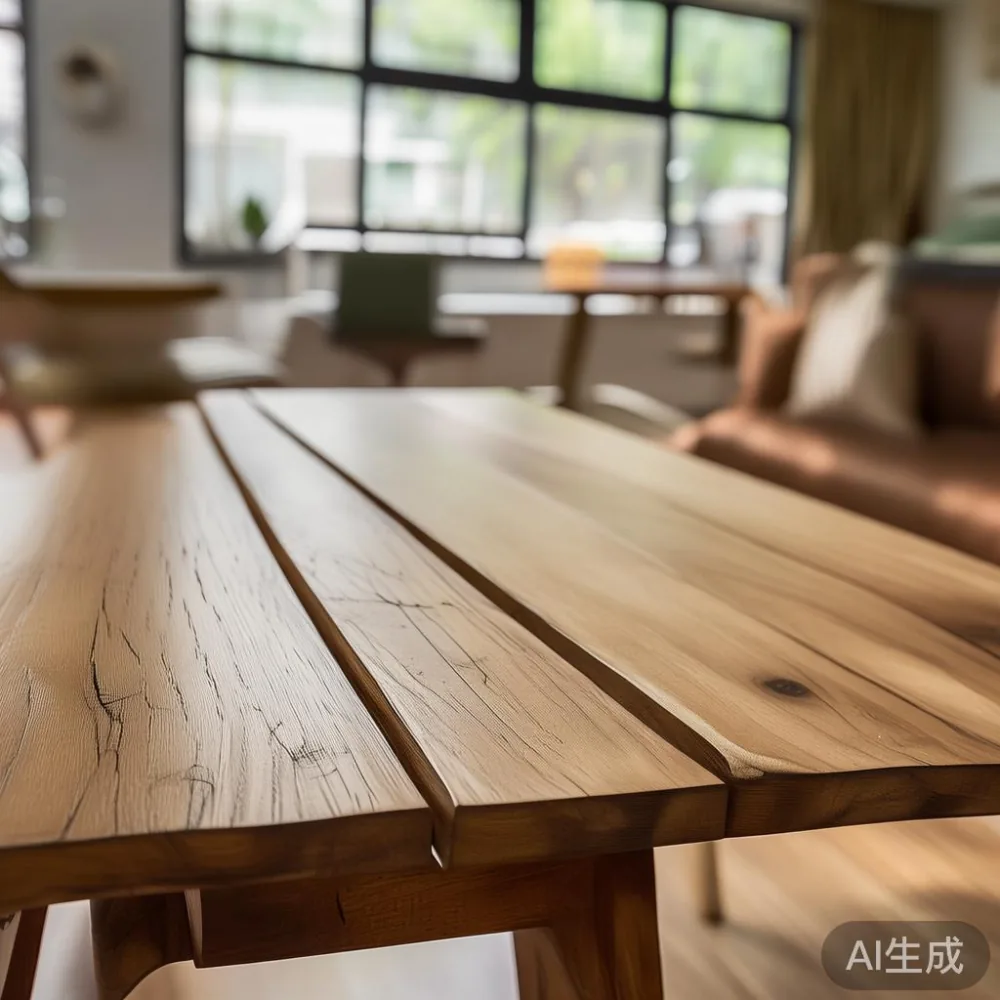
The Real 5-Year Cost of Veneer Furniture in an HDB
Let's walk through five years of ownership of that same bundle, with the numbers I have seen across Singapore forums, Reddit threads, and three visits to repair workshops in Geylang and Ubi.
Year 1 — Purchase S$5,554 + 9% GST S$500 = S$6,054. Free delivery from the chain store because the lift in her block is the standard HDB 1.1 m x 1.4 m size and everything fits. No issues yet.
Year 2 — The wardrobe door on the balcony-side wall starts to bow by about 4 mm. A carpenter quotes S$180 to plane it down, plus S$60 for transport because the workshop is in MacPherson. The dining table edge near the air-con vents bubbles. Reglue costs S$120. Total Year 2: S$360.
Year 3 — One nightstand drawer swells and won't open. Replacement nightstand, new model this time, S$259 + S$23 GST. The bed frame's centre support cracks because MDF loses screw-holding strength after moisture cycling. A local handyman welds a steel bracket for S$90. Total Year 3: S$372.
Year 4 — Veneer on the sofa arm peels, exposing the MDF. The sofa is not salvageable. Replacement: another S$1,899 + S$171 GST. Total Year 4: S$2,070.
Year 5 — The wardrobe's inner shelves sag under stored clothes. New shelving in plywood: S$240 installed. The original dining table is still functional but cosmetically tired. Total Year 5: S$240.
Five-year total for the veneer route: roughly S$9,096. That is S$3,042 over the original ticket price, on a set of furniture she never actually owned outright — she kept replacing parts and one whole piece.
The Real 5-Year Cost of Solid Wood Furniture
Now the boho-style solid wood route. Boho style in 2026 leans heavily on materials that age well: light oak, acacia, reclaimed teak, mango wood with visible grain, paired with cane, jute, and linen. For my colleague's same furniture list — boho-style solid wood sofa, bed frame, 1.8 m dining table, 2 m wardrobe, and nightstands — I priced a parallel set from a Foshan maker that ships direct to Singapore. As an example, MIDHILL has been making this category since 2008 and exports to more than 15 countries, so the construction quality on their oak and ash pieces is consistent. Their pricing on comparable dimensions to the chain set: sofa S$2,180, bed frame S$1,120, dining table S$1,560, wardrobe S$2,260, two nightstands S$460. Total before GST: S$7,580. Add 9% GST: S$682. Landed total: S$8,262.
Delivery to a Tampines HDB takes around 14 to 21 days by sea freight to Singapore port, then lorry to door. The bed frame and wardrobe arrive flat-packed and fit a standard HDB service lift, which is 1.3 m wide x 1.5 m deep, so no need to crane up the facade. Free shipping kicks in above US$350, which a single bed frame clears easily. No hidden corridor fees.
Year 1 — Purchase S$8,262. Solid wood arrives slightly under-dried; you let it acclimatise for two weeks with the air-con running. No issues.
Year 2 — A small water ring on the dining table from a forgotten iced-tea glass. Sand with 320-grit, re-oil with Osmo Polyx-oil, S$28 for the can. Total Year 2: S$28.
Year 3 — A wardrobe door develops a tiny seasonal crack (1 mm) because solid timber moves. The maker offers lifetime refinishing for pieces bought through their authorised channel, so I sent a photo and got a touch-up kit by post for S$15 shipping. Total Year 3: S$15.
Year 4 — Nothing structural. The sofa fabric seat covers fade slightly on the sunny side. Removable covers replaced at S$120 for the set. Total Year 4: S$120.
Year 5 — A full sand-and-refinish on the dining table and wardrobe exterior, done by a local polisher in Bedok for S$380. The nightstands and bed frame still look fresh. Total Year 5: S$380.
Five-year total for the solid wood route: roughly S$8,805. That is only S$543 over the purchase price, and more importantly, every piece still has 10 to 20 more years of life. The sofas, beds, wardrobes, nightstands, and marble tables of solid construction hold resale value at 40 to 55% of original on Carousell after five years. Veneer pieces resell for close to zero.
How do I choose a sofa bed for a bedroom?
Pick a sofa bed whose mattress mechanism uses a steel slatted frame rather than a fold-out foam block, and whose upholstery is removable and washable, because in a Singapore bedroom the air-con runs 12 hours a day and humidity drops below 50%, which makes cheap foam crumble inside three years. If the sofa bed frame is solid ash or solid oak in a boho style with cane panels, it doubles as seating and a guest bed without the structural failure you'd see in a flat-pack MDF alternative.
For HDB buyers specifically, the mattress inside the sofa bed should sit at least 12 cm thick to avoid the famous "lying on a wooden plank" complaint from guests. Measure your bedroom door width before ordering — most HDB bedroom doors in a 4-room flat are 0.83 m wide, and a queen sofa bed usually ships in a 1.0 m x 2.1 m box that will not fit through. Split-delivery or a fully assembled Italian light luxury sofa for pet owner in a smaller format is often the only practical path. Pet owners should also check that the cushion fill is high-resilience foam wrapped in polyester batting, because cat claws will shred any loose-weave cover in under a year.
Which Type Ages Better with Boho Style Textures?
Boho style depends on materials that tell a story over time: rattan that deepens to caramel, oak that oxidises into a soft honey tone, marble that picks up the patina of daily use. Veneer cannot do this. The moment the thin face layer is damaged, the substrate is exposed and the look is ruined forever. Solid wood, by contrast, absorbs dents, scratches, and water marks as character. My own oak dining table now has the faint outline of a cookbook my grandmother left on it in 2022, and that scar is my favourite feature.
If you go the post-modern light luxury direction — think clean lines on a marble table paired with a boho-style solid wood sofa — the contrast only works if both materials are real. Faux marble on a coffee table chips at the edges within two years in a condo corridor setting, where delivery teams bump walls constantly. Genuine marble, sealed once a year, looks better at year five than at week one.
Where the Numbers Bend — Smaller HDBs, Lighter Loads
If you live in a 3-room HDB in Bedok with just a nightstand, a small dining table for two, and a single bed frame, the gap between veneer and solid wood narrows. You might spend S$2,400 on a veneer trio and S$3,800 on a solid wood trio, and in five years the veneer set may still be standing because the load and humidity exposure are lower. Smaller surface area means fewer glue joints failing. In that case, the choice becomes about values rather than cents: do you want furniture you replace, or furniture you keep? I have stopped buying anything I plan to throw out.
What About French Light Luxury and American Light Luxury Sofas?
Both French light luxury and American light luxury categories lean heavily on solid wood framing even when the upholstery looks plush. The frame is usually beech or ash, kiln-dried to 8 to 12% moisture content specifically so it survives shipped climates. A boho-style solid wood sofa in this category will weigh 65 to 90 kg for a 3-seater, which is a useful quality check at the showroom: lift one corner if you can, or at least check the spec sheet. Genuine solid wood frames tip the scales past 60 kg. Anything under 40 kg for a 3-seater is almost certainly plywood or MDF with a thin veneer face.
A solid wood sofa in this category also tends to use eight-way hand-tied springs or sinuous wire at minimum, webbed seat support, and down-wrapped cushions — the kind of construction you cannot get in a flat-pack veneer frame. Over five years, the springs keep their rebound, the frame stays square, and the cushions can be re-filled by the maker for around S$220 to S$380 depending on size, extending the sofa's life to 15 years easily.
Practical Singapore-Specific Tips Before You Order
Always measure your lift first. Standard HDB passenger lifts are 1.1 m x 1.4 m with a 2.4 m ceiling; service lifts in newer blocks like Punggol are 1.3 m x 1.5 m. A 2 m wardrobe in solid wood usually arrives as two 1 m towers, which fits any lift. A 2.4 m wardrobe arrives as a single 2.4 m panel and won't fit a passenger lift, even diagonally. Confirm with your supplier.
Check the corridor width on your floor. HDB corridors are 1.5 m wide, which is fine for any wardrobe panel under 0.6 m deep, but tight for 0.65 m European imports. A boho-style solid wood bed frame in king size (1.8 m x 2 m) usually breaks into two side rails, a headboard, a footboard, and slats — every piece under 1.2 m, so corridor turns are not a problem.
Finally, ask about the warranty in writing. A 10-year structural warranty on a solid wood bed frame or wardrobe is industry standard for serious Foshan makers, and lifetime refinishing is offered by some — including MIDHILL on its registered pieces. Veneer chains typically offer 6 to 12 months, which is exactly the time it takes for the first signs of failure to appear in our climate.
The Five-Year Verdict in Singapore Dollars
Across the same furniture list in a typical 4- or 5-room HDB, the veneer route cost my colleague about S$9,096 over five years, with one full sofa replacement and constant small repairs. The solid wood route cost about S$8,805, with only maintenance and one refinish. The difference is roughly S$291 across half a decade — less than a typical weekend grocery bill — and at the end of it, the solid wood set is still worth several thousand dollars on the resale market, while the veneer set would cost more to dismantle and cart away than it would fetch.
For a household that plans to stay in the same Tampines or Punggol flat for the next decade, solid wood in a boho style is the rational, budget-friendly choice once you account for the full five-year cycle. The furniture ages with you, holds its lines, and asks for a sanding and oiling every few years rather than a complete replacement. That is the kind of ownership that makes a home feel settled rather than temporary.