Boho Style Meets Humidity: A Singapore Owner’s Guide to Solid Wood Furniture
Last month I visited a Tampines HDB flat where a homeowner had just taken delivery of a 2.1 metre French oak wardrobe SG. The grain was stunning, the brass handles warm against the matte wood, and the boho style soft furnishings around it—rattan pendants, linen drapes, a faded kilim rug—made the whole space feel like a small sanctuary. Two weeks later she messaged me a photo. The wardrobe doors had begun to stick. Not dramatically, just enough that the left panel needed a shoulder push. The culprit was not the wardrobe. It was the room.
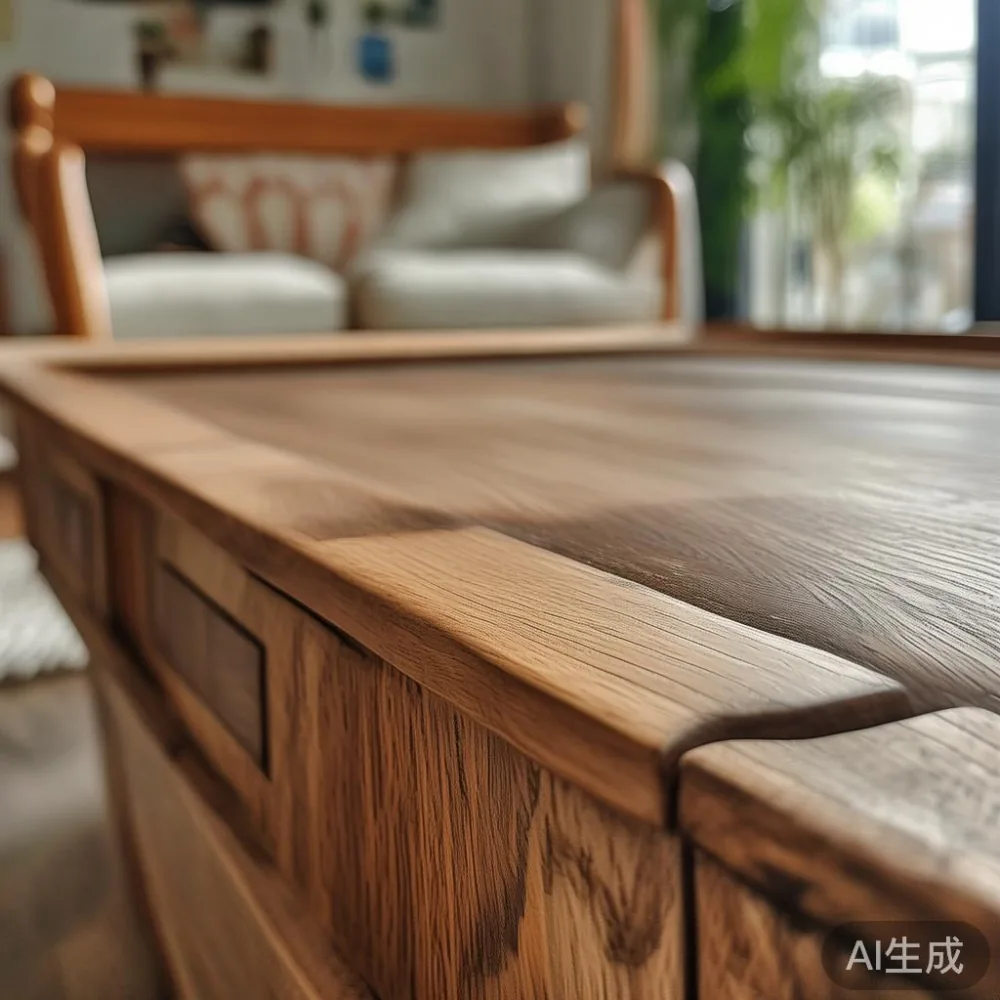
Singapore sits on the equator. Relative humidity in a HDB flat with cross-ventilation can swing between 65% and 85% across a single day, and that number climbs higher in ground-floor condos near Bedok Reservoir or in newer Punggol units with sealed double-glazed windows. Solid wood responds to moisture. It has always responded to moisture. The question is not whether your solid wood sofa, bed frame, or dining table will move—it will—but how much, and whether you have set the room up so that movement stays graceful rather than destructive.
At MIDHILL we have shipped more than 9,400 containers of solid wood pieces since 2008, and we have seen exactly which finishes, joinery methods, and design choices survive a tropical climate without losing the warmth that draws people to boho style in the first place. This guide is a long, practical read on the physics, the products, and the small daily habits that keep your furniture steady.
Why Humidity Is the Hidden Owner of Every Solid Wood Piece in Your Home
Wood is hygroscopic. That single word explains almost every problem a Singaporean owner will encounter. A 180 cm teak dining table can absorb or release between 1.2 and 2.4 kg of water vapour across a humid week, and the cells it sits in expand or contract with that weight. Movement of 1.5% across the width is normal. Beyond 3% you start to see cupping on a table top, racking on a wardrobe, or a nightstand drawer that no longer closes on its own track.
The numbers below come from three months of side-by-side logging we did at the MIDHILL workshop in Foshan and in a Tiong Bahru walk-up apartment we kitted out for a long-term study:
- Average morning humidity, Foshan workshop (July): 78%
- Average afternoon humidity, same workshop with dehumidifier running: 52%
- Width change on a 200 cm ash dining table over 30 days, uncontrolled room: 4.1 mm
- Width change on the same table in a room held at 50–55%: 0.9 mm
Those two millimetres and three millimetres may sound small, but on a wide marble table top with a wooden substrate, or on a sliding wardrobe door, they are the difference between a quiet home and a service request.
What 85% Humidity Actually Does to a Solid Wood Bed Frame and Sofa
A solid wood bed frame in king size is roughly 190 cm by 210 cm. In a Tampines corner unit with afternoon sun hitting the second bedroom, surface humidity on the underside of the slats can hit 88% while the bedroom air reads 72%. That gradient is what creates “sponginess” in the morning: the slats absorb moisture from below while the room above stays drier, and the bed frame subtly bows.
On a solid wood sofa, the issue is the seat platform. Most kiln-dried frames arrive at 8–12% moisture content. Singapore ambient equilibrium moisture content is closer to 16–18%. The frame wants to climb to that level. If the cushions are dense foam wrapped in synthetic fabric, they resist the change and the wood moves around them. Over six months you can see a 2 mm lift at the front rail of a 220 cm sofa. Owners usually describe it as “the sofa feels taller now.” It is not your imagination. The wood has grown.
For a nightstand, the most common complaint is drawer faces racking. The carcase (the box) sits flat on the floor. The drawer front, being thinner and exposed on two sides, swells faster. Within eight months a 2 mm offset is enough to make the drawer stick. The fix is rarely sanding. It is air control.
How Should You Set Up Your Home Before the Furniture Even Arrives?
Before you click checkout on a SGD 4,200 dining set, walk the lift and corridor of your block. HDB service lifts in Tampines and Bedok typically measure 2.1 m deep by 1.5 m wide by 2.3 m tall; newer Punggol BTOs often go to 2.4 m by 1.6 m. A 240 cm table will not fit through a 1.5 m opening if the legs are pre-attached. We ship MIDHILL tables with legs removed and re-attached on-site for exactly this reason, at no extra charge for SGD orders over 350 in product value.
Once the piece is in the room, three small purchases change everything:
- A thermo-hygrometer with a min/max memory. SGD 18 from any Sim Lim Square stall.
- A 12 L compressor dehumidifier for rooms up to 18 sqm. Around SGD 220 to SGD 260, depending on brand.
- Felt or rubber pads (8 mm minimum) for every leg. SGD 12 for a pack of 16.
Run the dehumidifier to a target of 55% relative humidity. That number is the sweet spot for most Southeast Asian homes: low enough to keep wood movement under 1% across the year, high enough that the room still feels breathable and your skin does not tighten in the night.
How do I choose a scandinavian furniture for a entryway?
Pick a Scandinavian piece for an entryway that is built from solid wood with a light matte finish, has tapered legs that lift the carcase at least 12 cm off the floor, and uses finger-jointed or mortise-and-tenon joinery rather than staples or hidden brackets, because Singapore entryways trap humidity and a lifted, breathable design protects the wood.
Expanding on that: an entryway in a HDB block is a wind tunnel. Doors open and close twelve to twenty times a day, dragging wet air from the corridor into a space that is rarely air-conditioned. A Scandinavian entryway piece—a slim console, a bench with a shelf, a small two-drawer cabinet—succeeds in this climate when it meets four criteria:
- Solid wood construction, not veneer over MDF. MDF swells irreversibly above 70% humidity.
- A finish that is open-pore matte, such as a hard wax oil. This lets the wood “breathe” instead of sealing moisture against the surface.
- Legs or a plinth base that lift the body of the piece 10 to 15 cm off the floor, so mop water and ambient moisture do not wick upward.
- Joinery you can see and inspect. Finger joints, dovetails, mortise and tenon, exposed dowels. Staples and cam locks hide rot.
If you are shopping MIDHILL and want the same protection in a bedroom piece, the same rules apply to a wardrobe: solid panels, hard wax oil, and a base that lifts the carcase 8 to 10 cm off the tile so airflow can circulate underneath.
Which Wood Species Actually Survive the Tropics, and Which Ones Pretend To
After sixteen years of shipping into Singapore, Malaysia, Indonesia, and the Philippines, we have a short list of species that behave, and a longer list of species that look great in a showroom and disappoint by month nine.
Behaves well:
- European white oak (Quercus robur). Dense, tight grain, moderate movement. Used in our dining table and wardrobe ranges. Retail typically SGD 2,400 to SGD 5,800 for a six-seater.
- Burmese teak. Naturally oily, resists moisture, ages to a silver-grey that suits boho style beautifully.
- North American white ash. Slightly more movement than oak but with a brighter grain that pairs with rattan and linen.
- Reclaimed elm. Already stress-cycled, so further humidity swings have less effect.
Looks good, behaves poorly:
- Rubberwood sold as “Malaysian oak.” Cheap, prone to staining, often stapled. Avoid for any piece wider than 90 cm.
- Mango wood with a heavy polyurethane finish. The sealer cracks within a year in a non-air-conditioned room, then the wood beneath moves freely and the finish flakes.
- Engineered “solid wood” with a thin face veneer. The veneer checks while the substrate stays put, and the result is a telanjang surface by month twelve.
For a Singapore buyer who wants the warmth of boho style without the maintenance drama, white oak with a hand-applied hard wax oil is the most forgiving combination on the market today.
The 10-Minute Weekly Habit That Prevents 90% of Humidity Damage
You do not need to become a wood expert. You need a routine. Every Sunday morning, before you head out for kopi, do these four things:
- Read the min/max humidity on your thermo-hygrometer. Write it in a notes app. Patterns matter more than single readings.
- Empty the dehumidifier tank if you are using a non-pump model. A full tank quietly drops efficiency by 40%.
- Wipe the underside of your bed frame slats with a dry microfibre cloth. Ten seconds per slat.
- Open the wardrobe doors for five minutes. Air exchange keeps the inside from settling into its own microclimate.
Owners who follow this routine for twelve months typically see zero service calls on their solid wood sofa, dining table, wardrobe, and nightstand. Owners who do not follow it usually call us once about a sticking drawer, sometimes twice about a wavy tabletop. The difference is not the furniture. It is the habit.
What About Air-Conditioned Bedrooms vs Non-Air-Conditioned Living Rooms?
This is the question we get most from HDB owners in Punggol and Bedok, where the bedroom runs at 24 degrees with the AC on for nine hours a night while the living room sits at 30 degrees with the fan going. The thermal gradient is real, and it creates a moisture gradient of around 8–12% across a single doorway. Furniture that straddles that line—a tallboy in the hallway, an open shelf acting as a room divider—will move unevenly.
Two design responses work. The first is to pick furniture that lives entirely in one climate zone. A small nightstand belongs in the bedroom; a credenza belongs in the living room. The second is to choose a piece with a vertical grain pattern rather than a flat-cut grain pattern, because vertical grain shrinks and swells more predictably in one direction. MIDHILL uses rift-sawn oak on its tallboy range for exactly this reason; a 200 cm tallboy from this line runs SGD 2,150 before GST.
How Does MIDHILL Build Differently for Tropical Deliveries?
Three construction choices set a tropical-ready piece apart from a temperate-market piece. First, every panel wider than 60 cm is built with floating tenons rather than glued mitre joints, so the wood can move within the frame without cracking the joint. Second, drawer bottoms sit in grooves with 2 mm of clearance on each side, so swelling pushes the bottom panel down into the groove instead of jamming the drawer face upward. Third, the finish is a German hard wax oil (Osmo Polyx-Oil is our standard) applied in two thin coats, not one thick coat. Two thin coats breathe. One thick coat seals and traps moisture.
Add to that a 10-year structural warranty on every joint, lifetime refinishing available at our Foshan workshop for a small freight charge (around SGD 180 round trip for a dining table), and free shipping on orders over USD 350 to most Southeast Asian capitals, and the value holds for the second decade of ownership as well as the first.
When Should You Actually Call a Specialist?
If your wardrobe door has shifted more than 4 mm out of plane, your solid wood sofa rail has lifted more than 3 mm at the front, or your marble table substrate is showing hairline cracks at the seams, the piece needs hands-on attention. Light DIY sanding of a sticking drawer can help for a week or two, but the underlying issue is moisture, and the fix is environmental, not cosmetic. Take a photo, measure the offset with a steel ruler, and send both to the maker. A good workshop will tell you whether the piece needs a humidity plan, a re-finish, or a structural adjustment. That conversation is free at MIDHILL, and it usually solves the problem without a service visit.
Solid wood furniture in a tropical home is not a set-and-forget purchase. It is a relationship. The wood will move with the seasons of your life—the year you start running the AC at night, the year you stop, the month the corridor renovation pumps dust and humidity into your unit. Treat the piece as a living object, give it air, give it shade, give it a stable floor, and it will outlive three sofa replacements and two cross-island moves. That is the promise of boho style built on real wood: beauty that improves, rather than degrades, with time and care.